Panciera Tito, Azzolin Luca, Cordenonsi Michelangelo, Piccolo Stefano
Department of Molecular Medicine, University of Padua School of Medicine, viale Colombo 3, 35126 Padua, Italy.
Nat Rev Mol Cell Biol. 2017 Dec;18(12):758-770. doi: 10.1038/nrm.2017.87. Epub 2017 Sep 27.
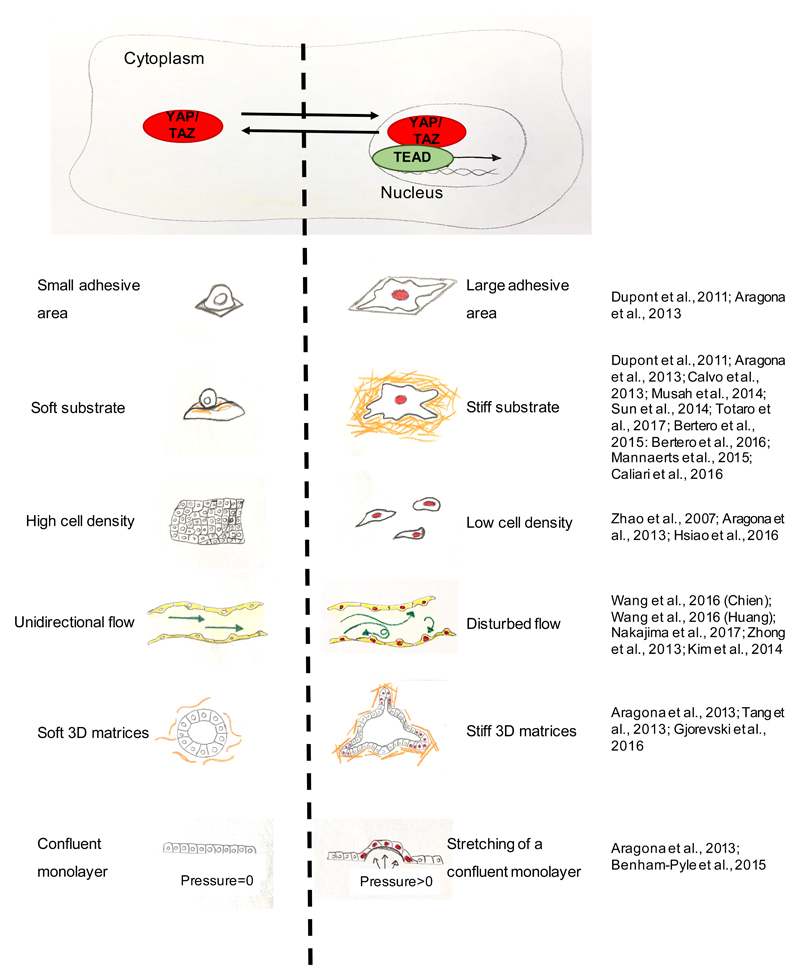
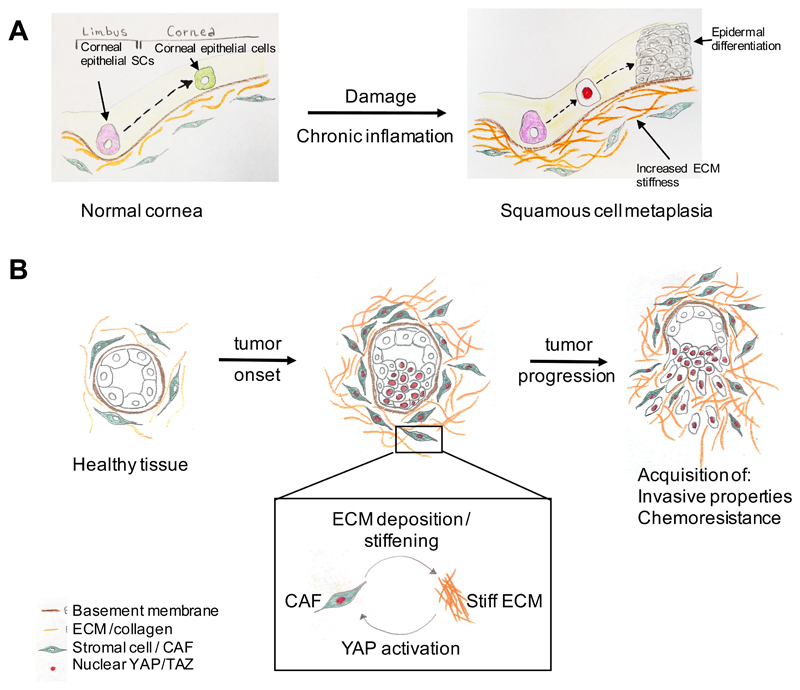
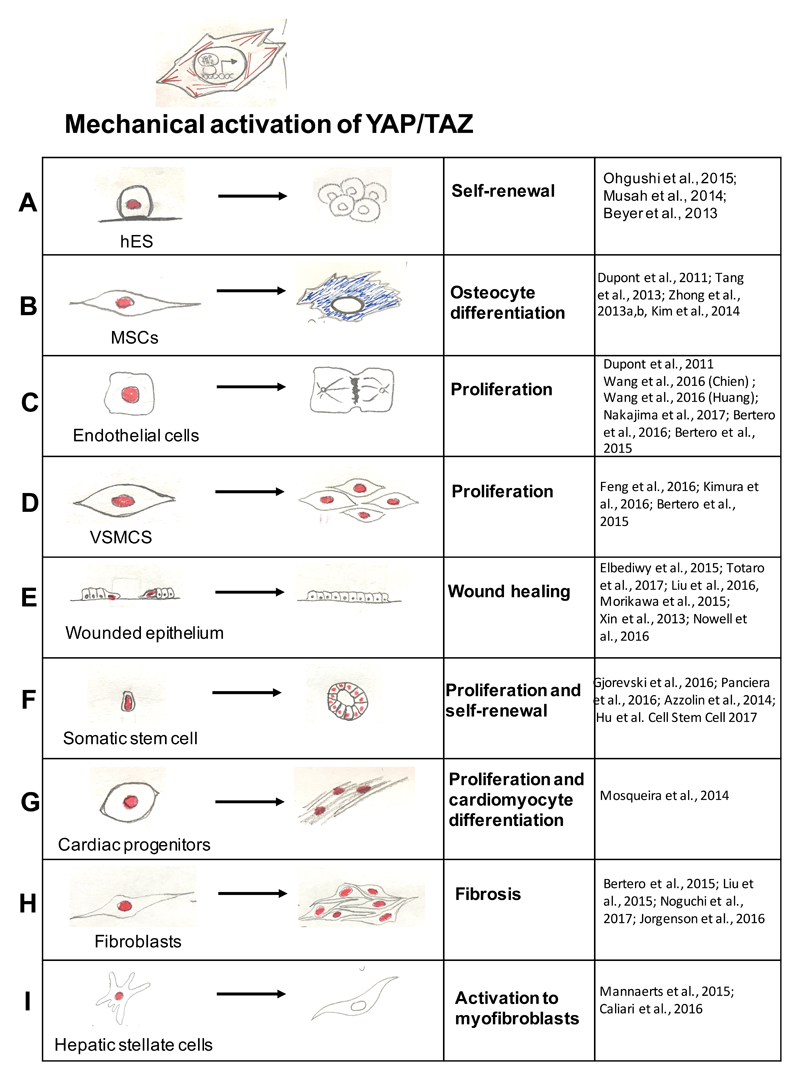
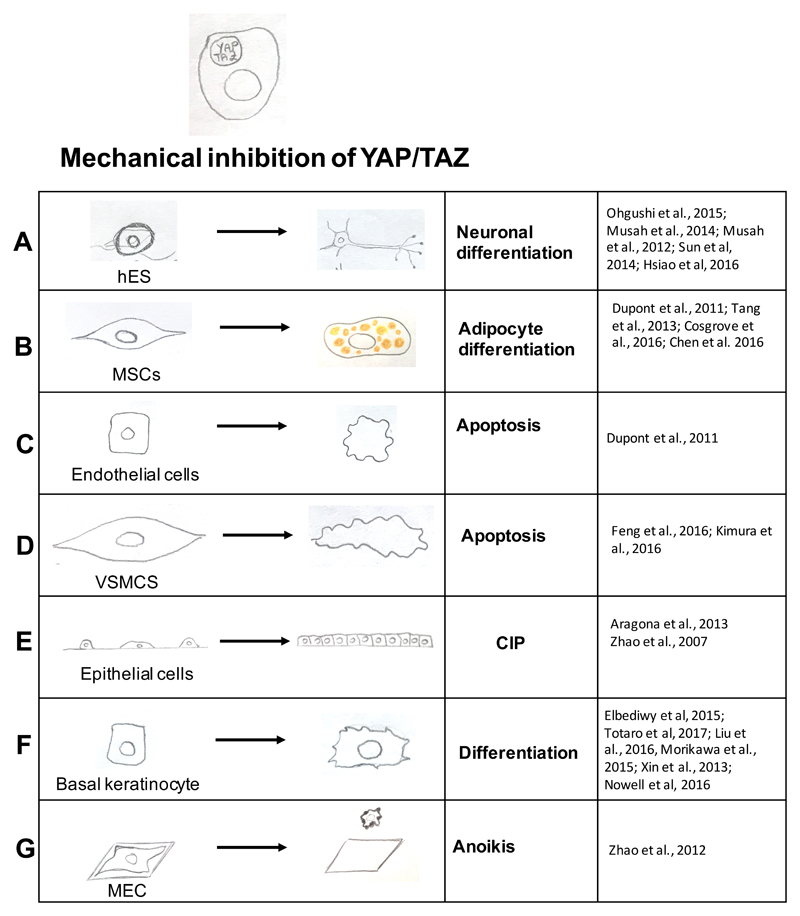
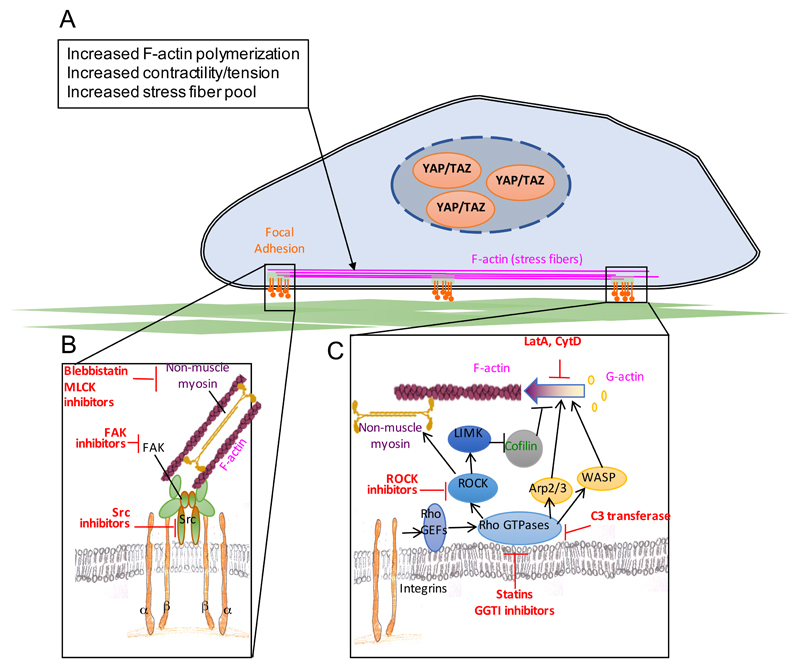
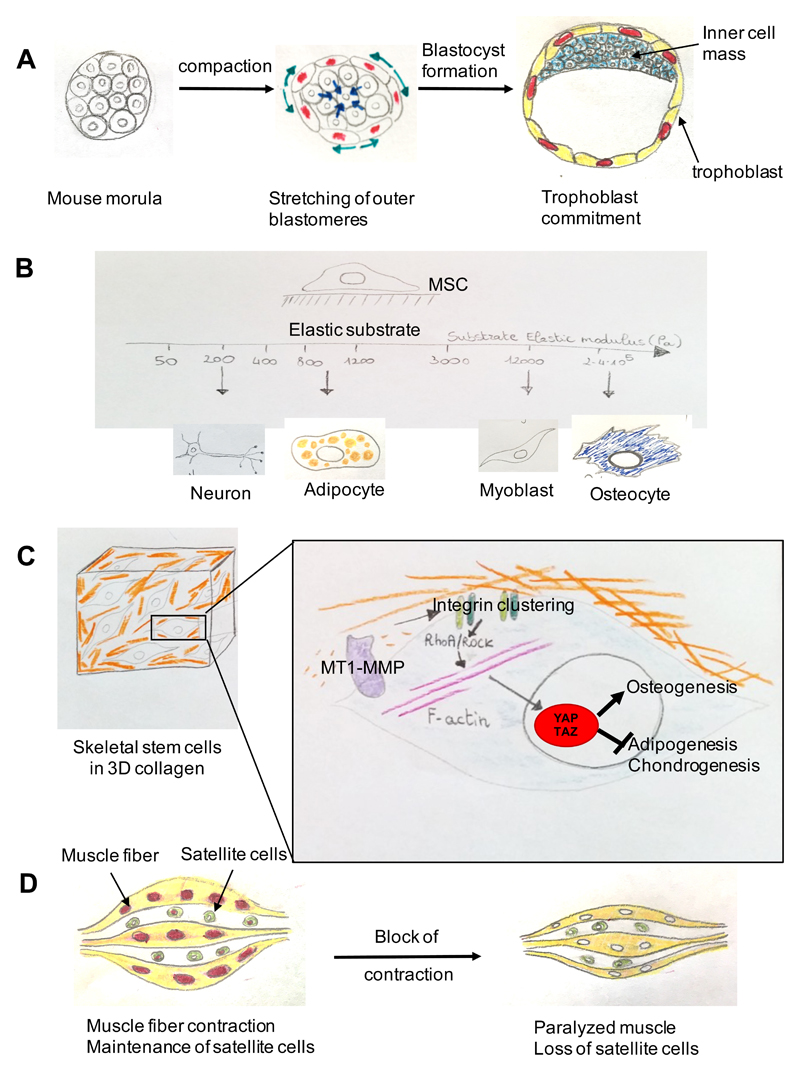
A growing body of evidence suggests that mechanical signals emanating from the cell's microenvironment are fundamental regulators of cell behaviour. Moreover, at the macroscopic scale, the influence of forces, such as the forces generated by blood flow, muscle contraction, gravity and overall tissue rigidity (for example, inside of a tumour lump), is central to our understanding of physiology and disease pathogenesis. Still, how mechanical cues are sensed and transduced at the molecular level to regulate gene expression has long remained enigmatic. The identification of the transcription factors YAP and TAZ as mechanotransducers started to fill this gap. YAP and TAZ read a broad range of mechanical cues, from shear stress to cell shape and extracellular matrix rigidity, and translate them into cell-specific transcriptional programmes. YAP and TAZ mechanotransduction is critical for driving stem cell behaviour and regeneration, and it sheds new light on the mechanisms by which aberrant cell mechanics is instrumental for the onset of multiple diseases, such as atherosclerosis, fibrosis, pulmonary hypertension, inflammation, muscular dystrophy and cancer.
越来越多的证据表明,细胞微环境发出的机械信号是细胞行为的基本调节因子。此外,在宏观尺度上,诸如血流产生的力、肌肉收缩、重力和整体组织硬度(例如肿瘤块内部)等力的影响,对于我们理解生理学和疾病发病机制至关重要。然而,机械信号如何在分子水平上被感知和转导以调节基因表达,长期以来一直是个谜。转录因子YAP和TAZ作为机械转导分子的发现开始填补了这一空白。YAP和TAZ读取从剪切应力到细胞形状和细胞外基质硬度等广泛的机械信号,并将它们转化为细胞特异性转录程序。YAP和TAZ的机械转导对于驱动干细胞行为和再生至关重要,并且它为异常细胞力学在多种疾病(如动脉粥样硬化、纤维化、肺动脉高压、炎症、肌肉萎缩症和癌症)发病中起作用的机制提供了新的线索。