Li Chengcheng, Chen Yanxi, Zhou Xing, Lin Jiuxiu, Luo Zhen
Department of Immunology and Microbiology, College of Life Science and Technology, Jinan University, Guangzhou, China.
Department of Microbiology and Immunology, Basic Medicine College, Jinan University, Guangzhou, China.
Virulence. 2025 Dec;16(1):2542455. doi: 10.1080/21505594.2025.2542455. Epub 2025 Aug 4.
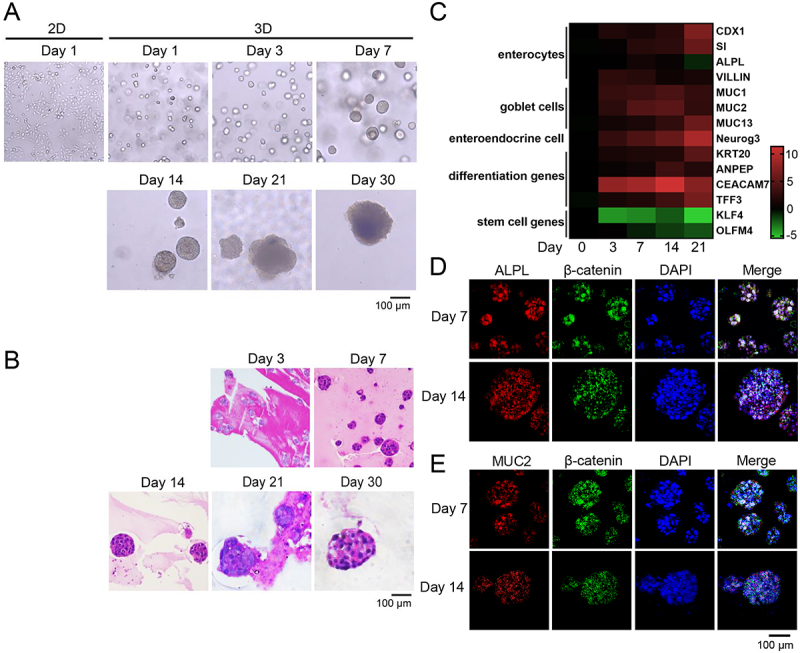
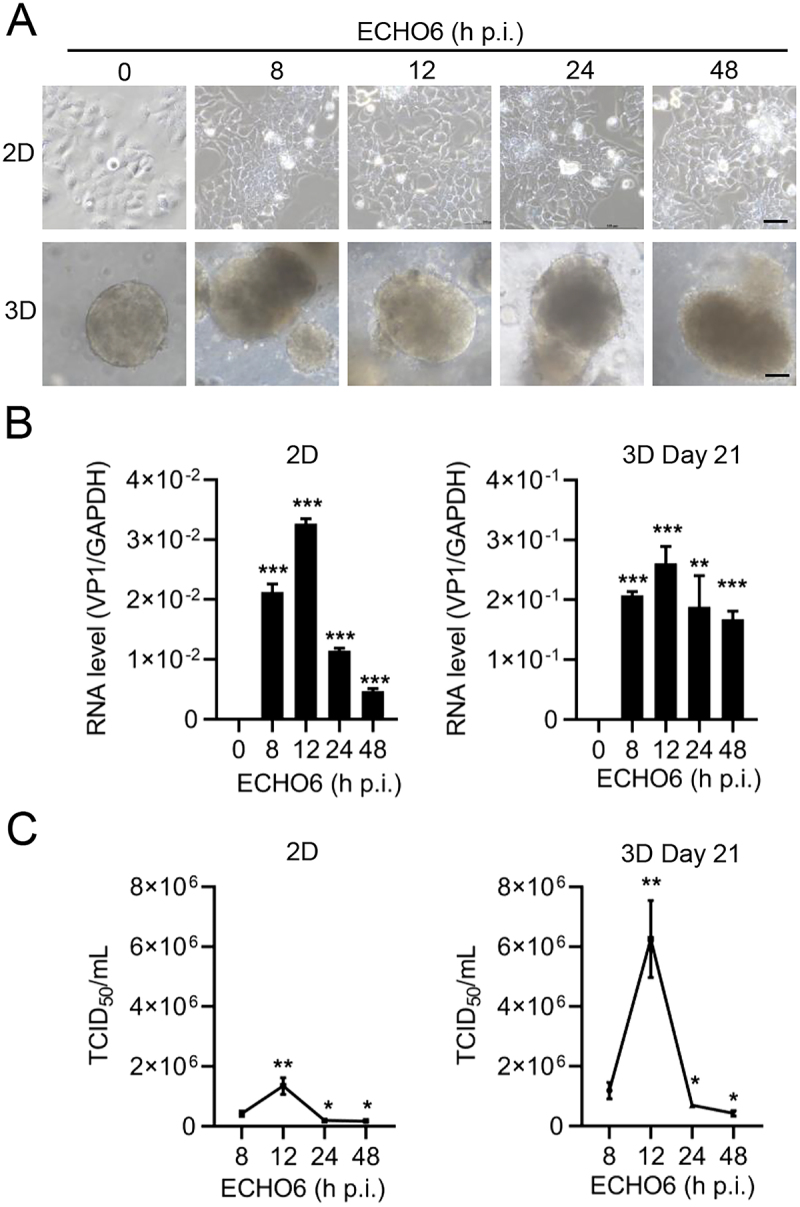
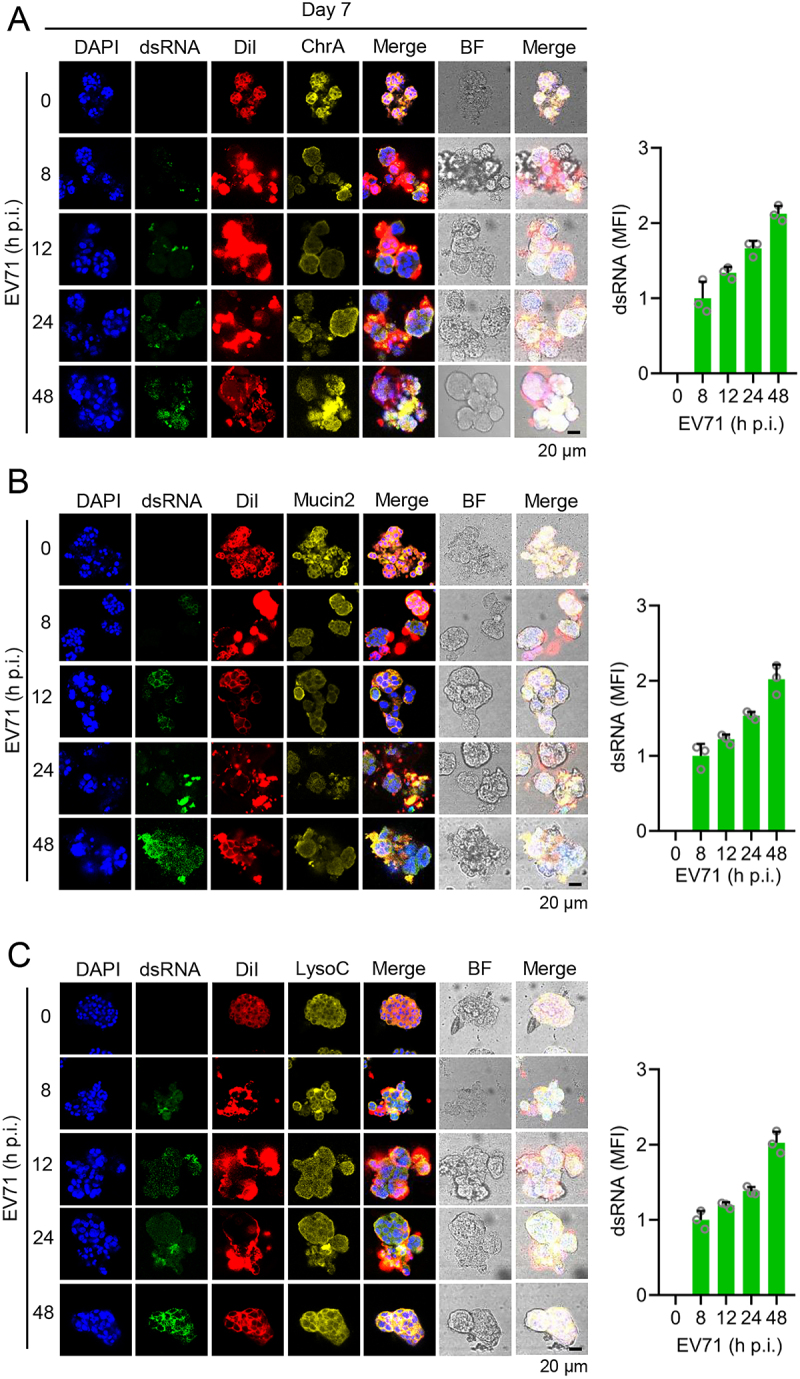
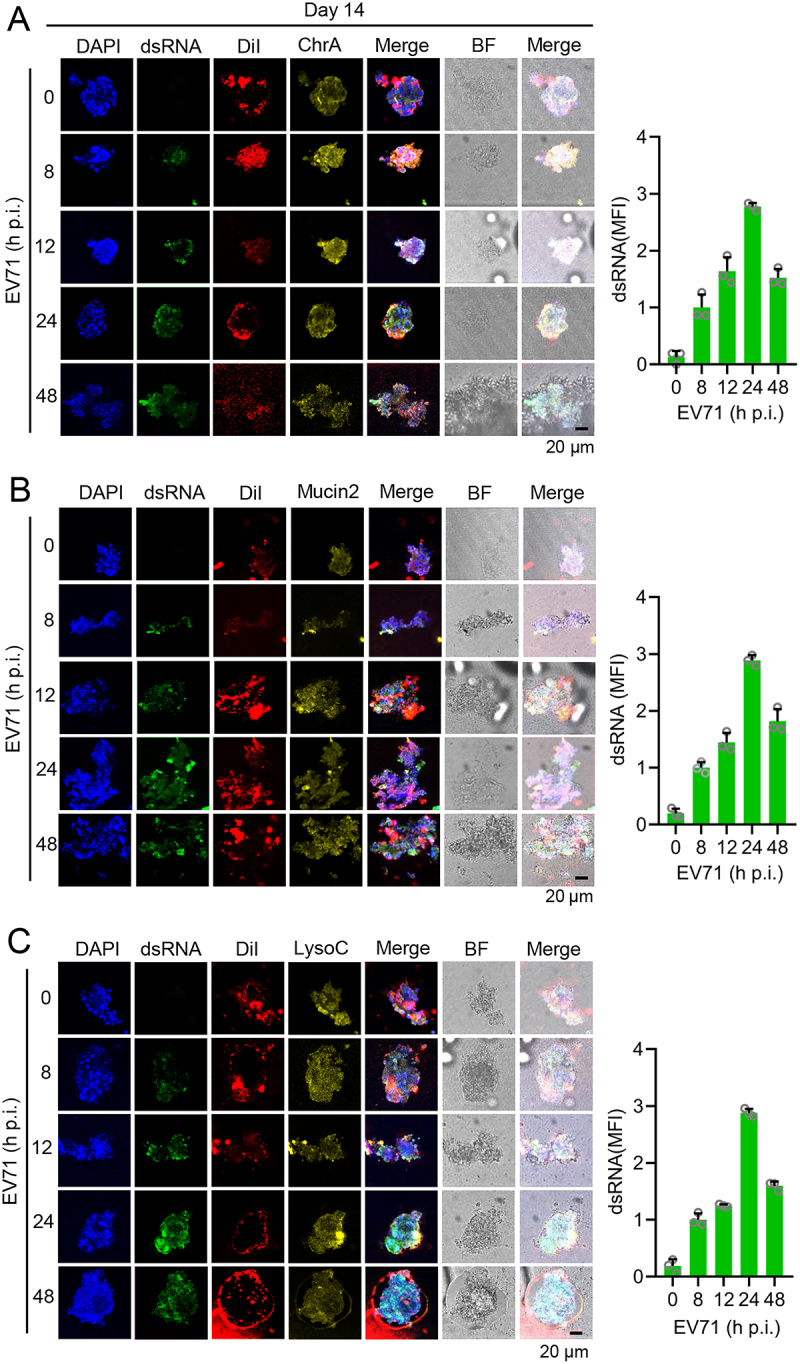
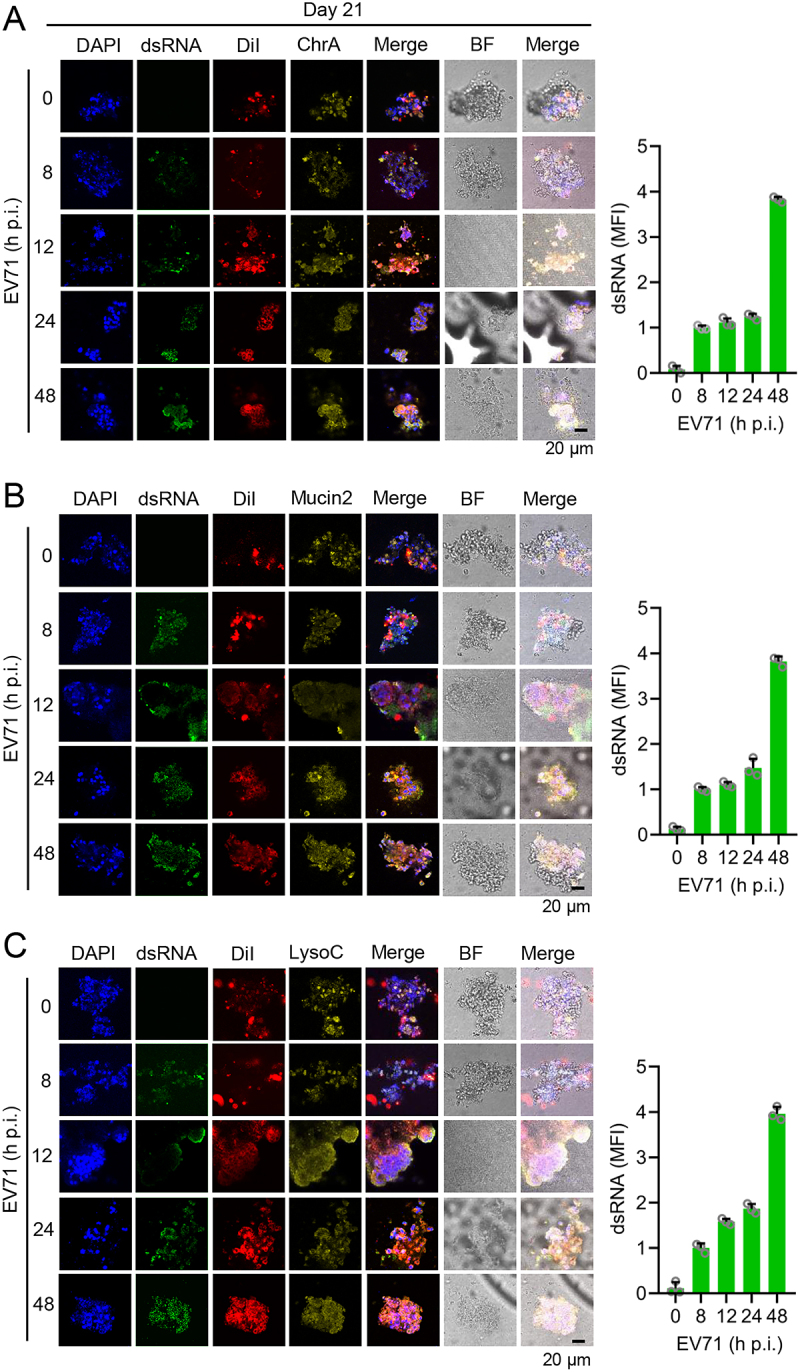
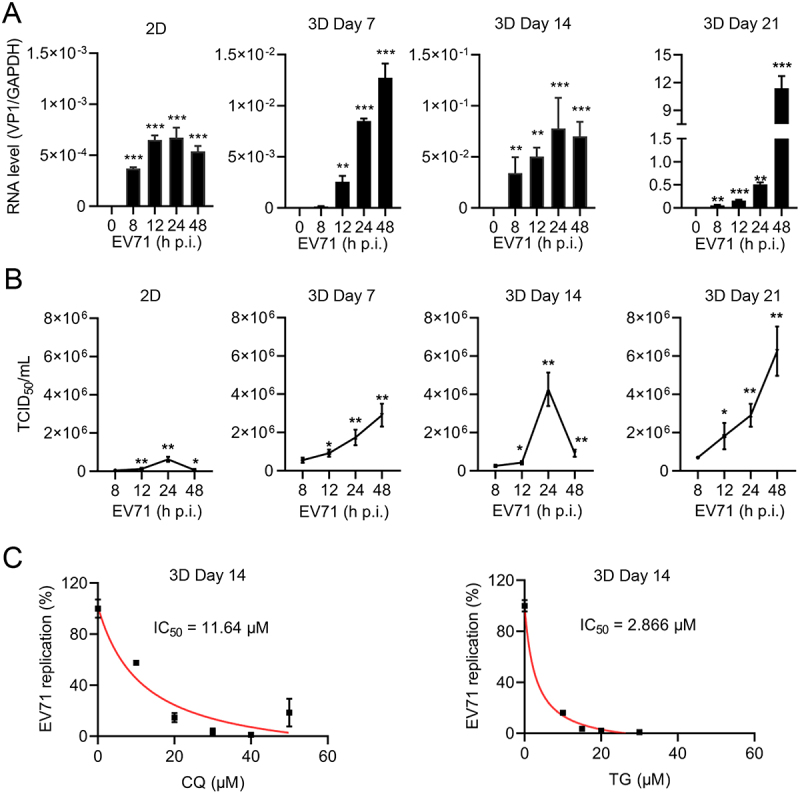
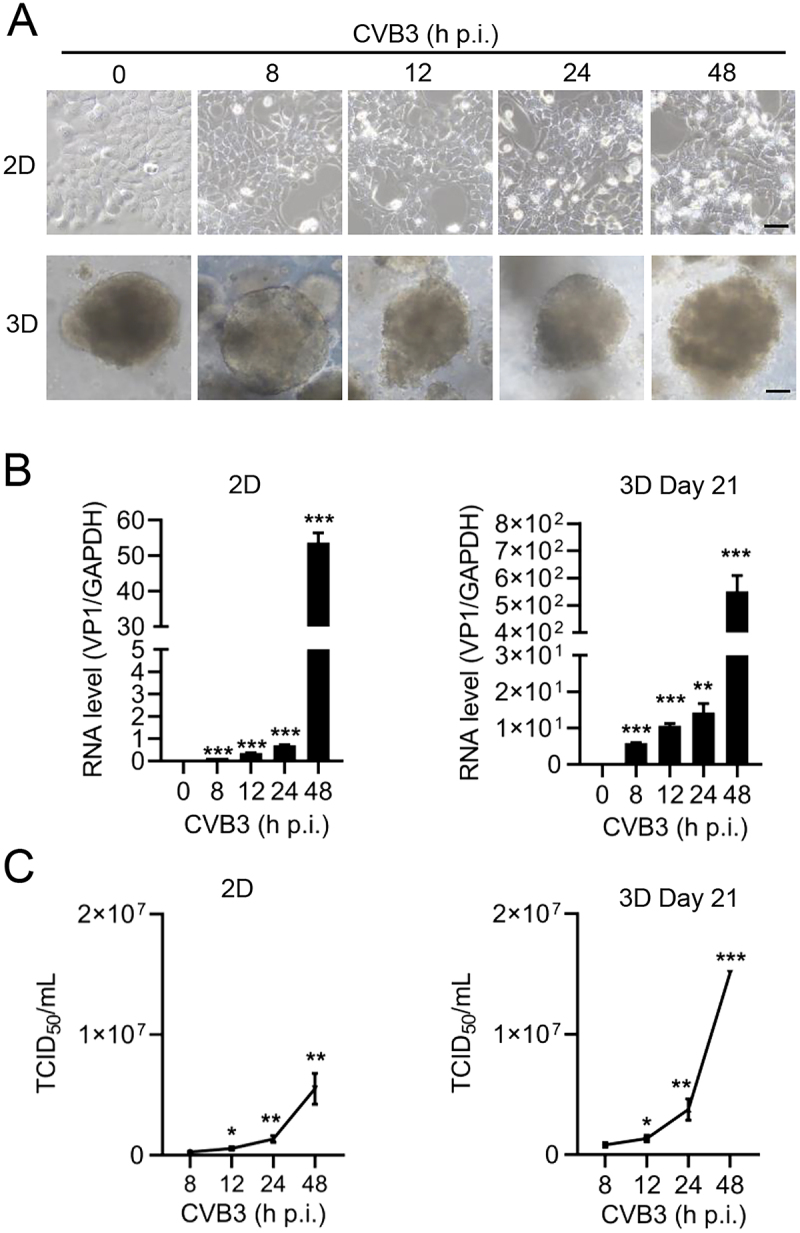
Human enteroviruses, including enterovirus 71 (EV71), cause hand, foot, and mouth disease (HFMD) and may lead to severe neurological diseases in infants. Enteroviruses first infect the gastrointestinal tract and then spread to the main organs, such as the liver, lungs, heart, and brain. Human intestinal organoids (HIOs) provide a physiologically relevant model for studying enterovirus infections. Unlike traditional two-dimensional (2D) monolayer cultures, HIOs maintain complex epithelial cell diversity and three-dimensional (3D) architecture, allowing for a more accurate representation of in vivo viral-host interactions. In this study, we developed efficient and stable HIOs based on fetal human primary colon cells using the 3D culture system. We discriminated cultured HIOs containing goblet, enteroendocrine, and Paneth cells, and examined the replication efficiency of enteroviruses in HIOs compared to 2D monolayer cultures. HIOs were infected with enteroviruses (EV71, coxsackievirus B3, echovirus 6), and viral replication was assessed using molecular and imaging techniques, which exhibit a higher level of dynamic viral replication in HIOs than in 2D culture. The replication level of enteroviruses increased about 10-fold in HIOs with the virus titre in HIOs was 5-10 times higher than that in 2D cell cultures ( < 0.05). Also, our findings demonstrate that goblet cells serve as a primary site of viral replication. This observation highlights the importance of cellular microenvironments in enteroviral infections and provides insights into gut-specific viral tropism. Collectively, we established an infection model with human intestinal organoids for enteroviruses, providing new opportunities into evaluating enterovirus-related antiviral drugs and modelling enterovirus-associated diseases.
人类肠道病毒,包括肠道病毒71型(EV71),可引起手足口病(HFMD),并可能导致婴儿出现严重的神经疾病。肠道病毒首先感染胃肠道,然后扩散到肝脏、肺、心脏和大脑等主要器官。人类肠道类器官(HIOs)为研究肠道病毒感染提供了一个生理相关模型。与传统的二维(2D)单层培养不同,HIOs维持了复杂的上皮细胞多样性和三维(3D)结构,能够更准确地呈现体内病毒与宿主的相互作用。在本研究中,我们使用三维培养系统,基于胎儿人原代结肠细胞开发了高效且稳定的HIOs。我们区分了含有杯状细胞、肠内分泌细胞和潘氏细胞的培养HIOs,并与二维单层培养相比,检测了肠道病毒在HIOs中的复制效率。用肠道病毒(EV71、柯萨奇病毒B3、埃可病毒6)感染HIOs,并使用分子和成像技术评估病毒复制,结果显示HIOs中病毒的动态复制水平高于二维培养。肠道病毒在HIOs中的复制水平提高了约10倍,HIOs中的病毒滴度比二维细胞培养高5 - 10倍(P < 0.05)。此外,我们的研究结果表明杯状细胞是病毒复制的主要部位。这一观察结果突出了细胞微环境在肠道病毒感染中的重要性,并为肠道特异性病毒嗜性提供了见解。总体而言,我们建立了一种用于肠道病毒的人类肠道类器官感染模型,为评估肠道病毒相关抗病毒药物和模拟肠道病毒相关疾病提供了新的机会。