Department of Genetics, University of Pennsylvania, Philadelphia, PA, 19104, USA.
Present Address: State Key Laboratory of Genetic Engineering, Human Phenome Institute, School of Life Sciences, Fudan University, 2005 Songhu Road, Shanghai, China.
Genome Biol. 2019 Apr 26;20(1):82. doi: 10.1186/s13059-019-1679-2.
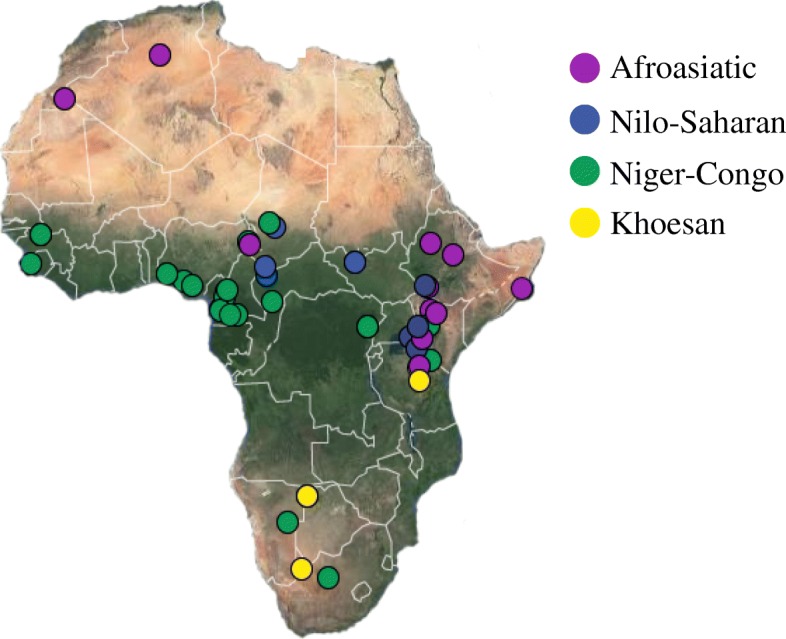
Africa is the origin of modern humans within the past 300 thousand years. To infer the complex demographic history of African populations and adaptation to diverse environments, we sequenced the genomes of 92 individuals from 44 indigenous African populations.
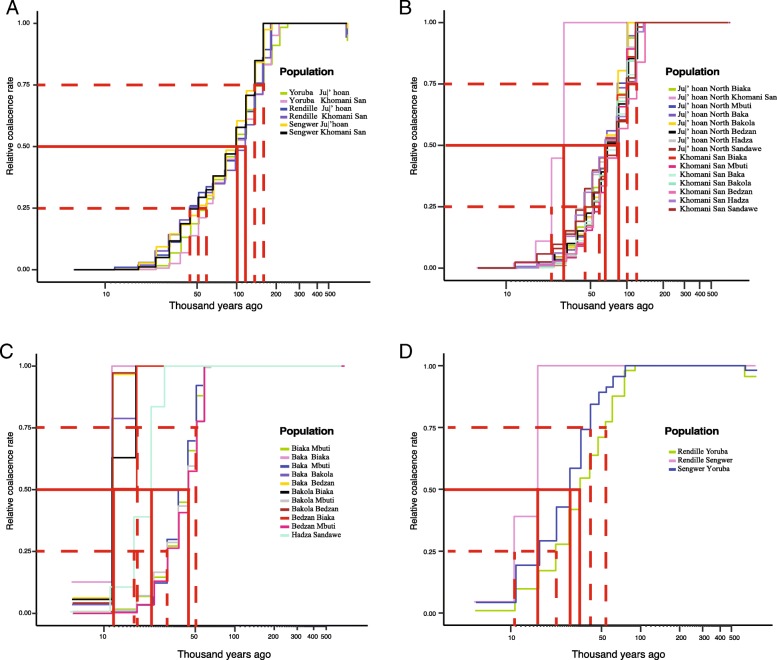
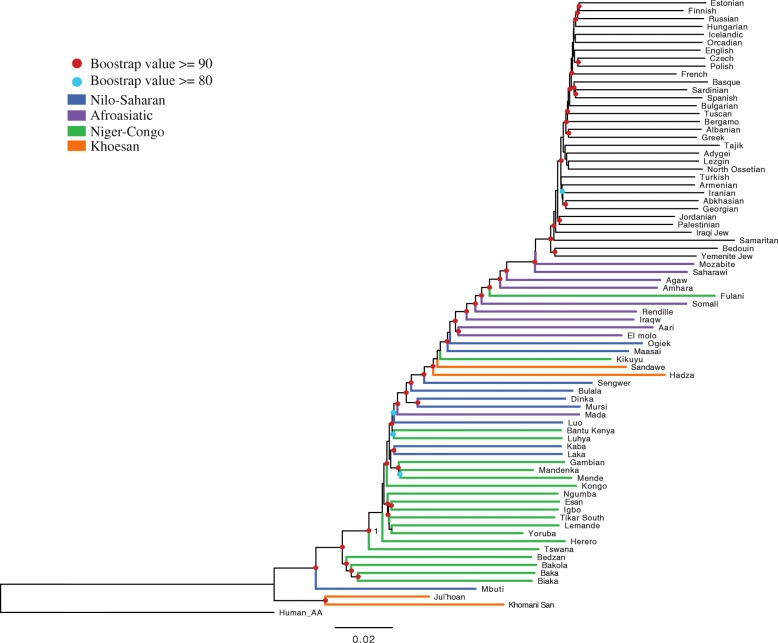
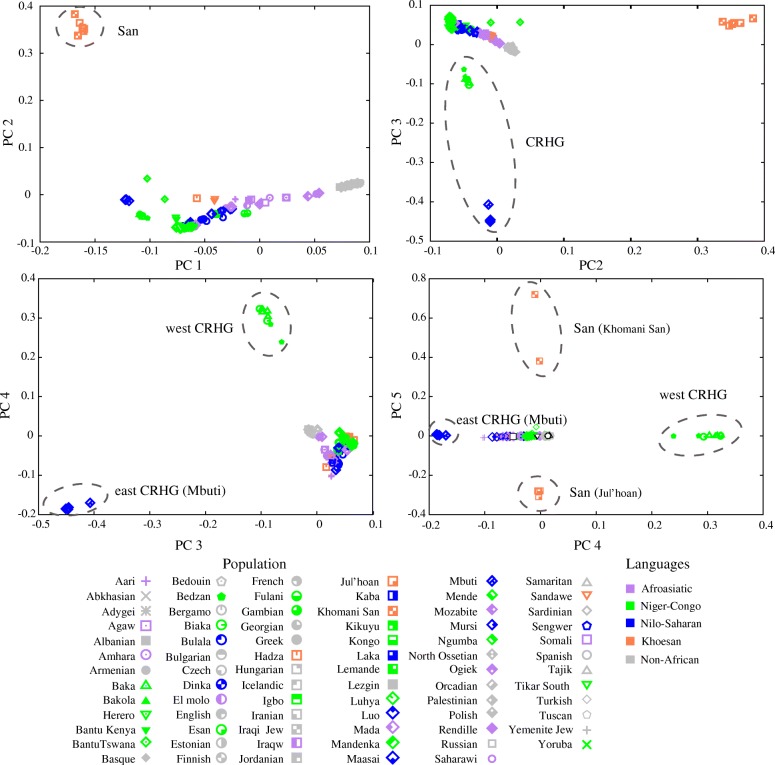
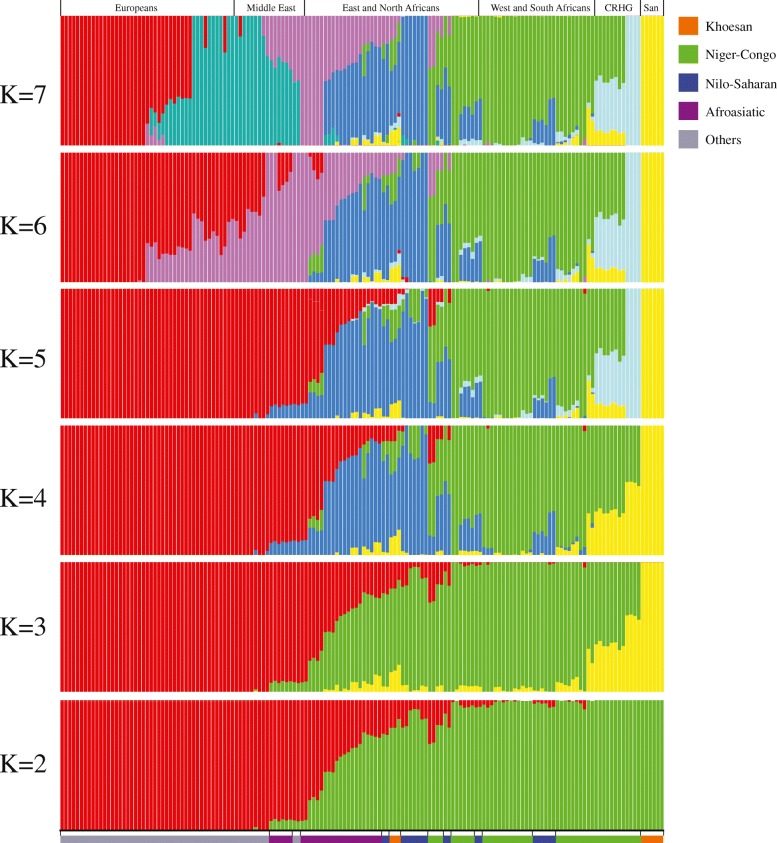
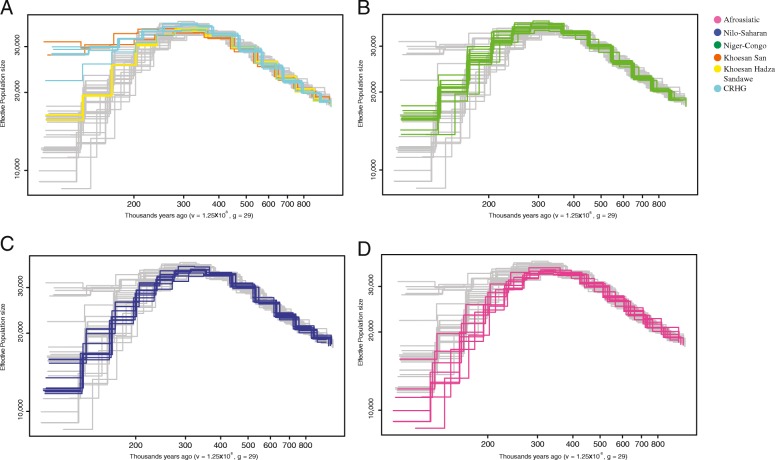
Genetic structure analyses indicate that among Africans, genetic ancestry is largely partitioned by geography and language, though we observe mixed ancestry in many individuals, consistent with both short- and long-range migration events followed by admixture. Phylogenetic analysis indicates that the San genetic lineage is basal to all modern human lineages. The San and Niger-Congo, Afroasiatic, and Nilo-Saharan lineages were substantially diverged by 160 kya (thousand years ago). In contrast, the San and Central African rainforest hunter-gatherer (CRHG), Hadza hunter-gatherer, and Sandawe hunter-gatherer lineages were diverged by ~ 120-100 kya. Niger-Congo, Nilo-Saharan, and Afroasiatic lineages diverged more recently by ~ 54-16 kya. Eastern and western CRHG lineages diverged by ~ 50-31 kya, and the western CRHG lineages diverged by ~ 18-12 kya. The San and CRHG populations maintained the largest effective population size compared to other populations prior to 60 kya. Further, we observed signatures of positive selection at genes involved in muscle development, bone synthesis, reproduction, immune function, energy metabolism, and cell signaling, which may contribute to local adaptation of African populations.
We observe high levels of genomic variation between ethnically diverse Africans which is largely correlated with geography and language. Our study indicates ancient population substructure and local adaptation of Africans.
在过去的 30 万年里,非洲是现代人的起源地。为了推断非洲人群的复杂人口历史和对不同环境的适应,我们对来自 44 个非洲本土人群的 92 个人的基因组进行了测序。
遗传结构分析表明,在非洲人群中,遗传血统主要由地理和语言划分,尽管我们在许多个体中观察到混合血统,这与短距离和长距离迁移事件以及随后的混合相一致。系统发育分析表明,桑人遗传谱系是所有现代人类谱系的基础。桑人和尼日尔-刚果语、 Afroasiatic 和尼罗-撒哈拉语谱系在 160 千年前(千年前)就已经有了很大的分歧。相比之下,桑人和中非雨林狩猎采集者(CRHG)、哈扎狩猎采集者和桑达韦狩猎采集者谱系在120-100 千年前就已经分化了。尼日尔-刚果语、尼罗-撒哈拉语和 Afroasiatic 谱系在最近的54-16 千年前就已经分化了。东部和西部的 CRHG 谱系在50-31 千年前就已经分化,而西部的 CRHG 谱系在18-12 千年前就已经分化。与其他人群相比,桑人和 CRHG 人群在 60 千年前保持了最大的有效种群规模。此外,我们观察到与肌肉发育、骨骼合成、生殖、免疫功能、能量代谢和细胞信号转导相关的基因的正选择信号,这可能有助于非洲人群的局部适应。
我们观察到在种族多样化的非洲人群之间存在高水平的基因组变异,这些变异在很大程度上与地理和语言有关。我们的研究表明,非洲人群存在古老的种群亚结构和局部适应。