Thai Phung N, Seidlmayer Lea K, Miller Charles, Ferrero Maura, Dorn Gerald W, Schaefer Saul, Bers Donald M, Dedkova Elena N
Division of Cardiovascular Medicine, Department of Internal Medicine, University of California, Davis, Davis, CA, United States.
Division of Cardiology, Department of Internal Medicine, University Hospital Würzburg, Würzburg, Germany.
Front Physiol. 2019 Apr 10;10:382. doi: 10.3389/fphys.2019.00382. eCollection 2019.
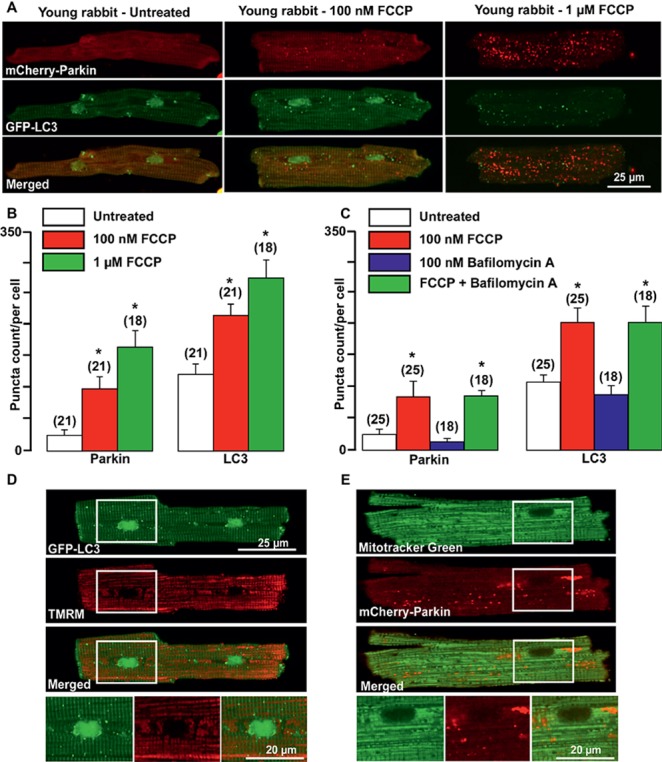
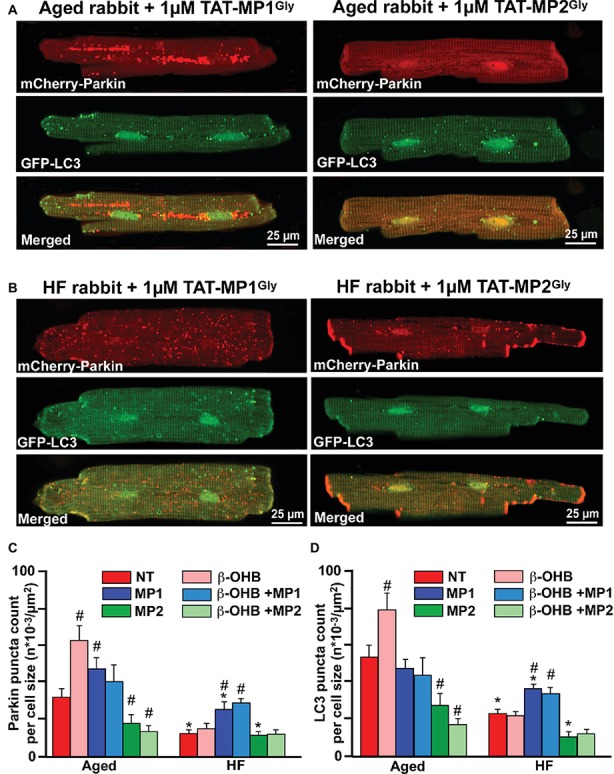
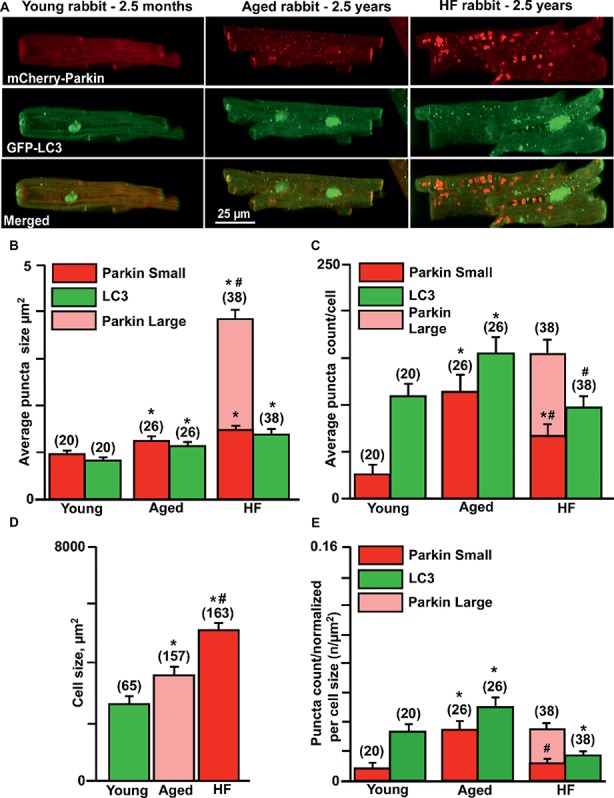
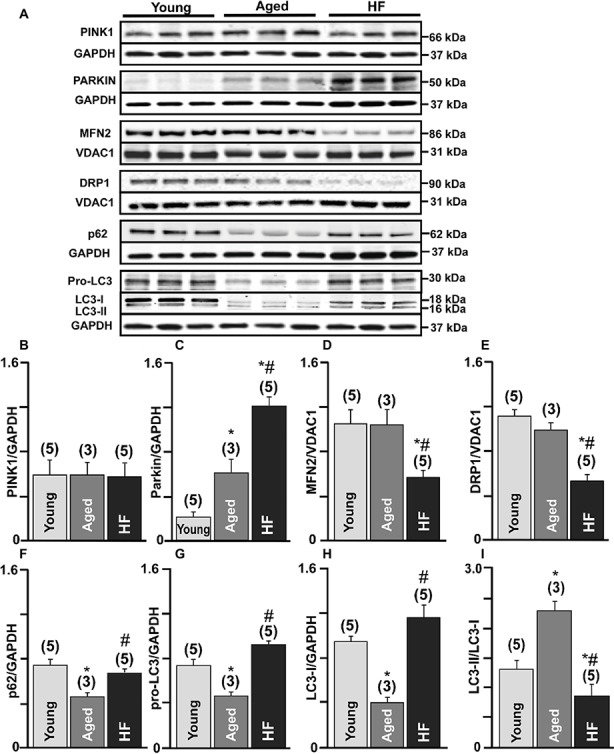
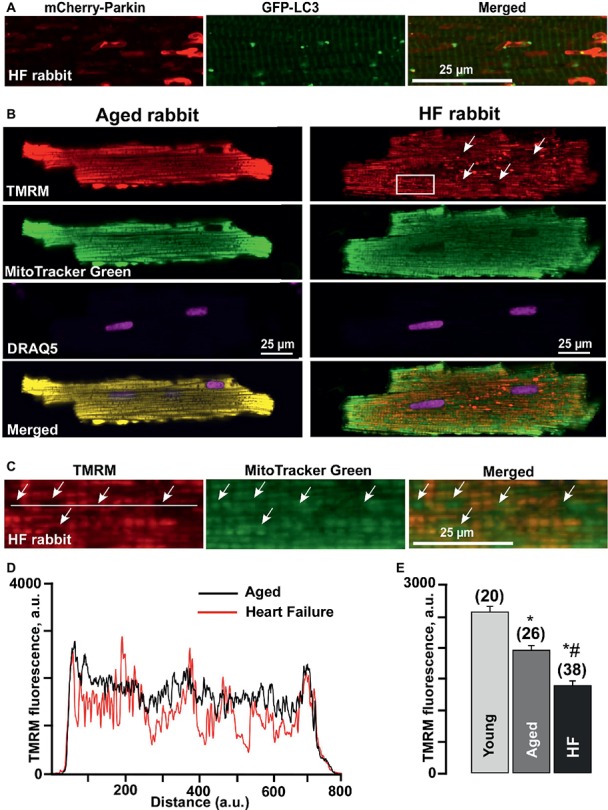
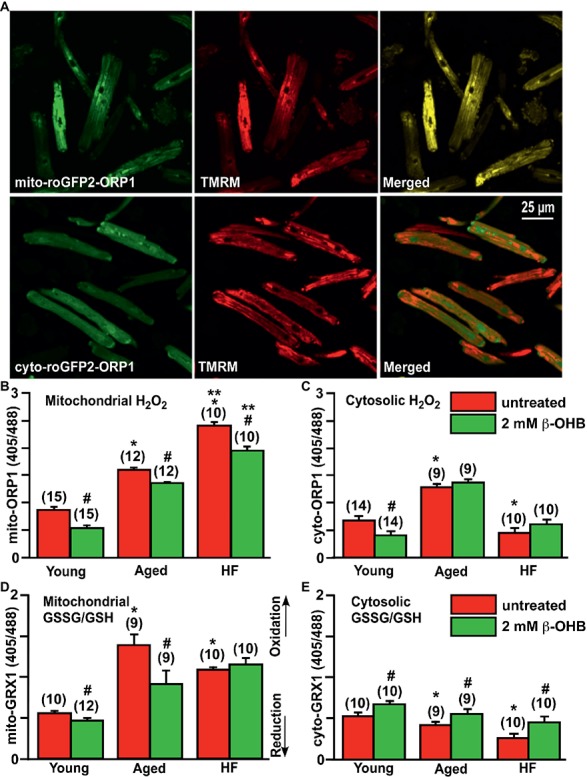
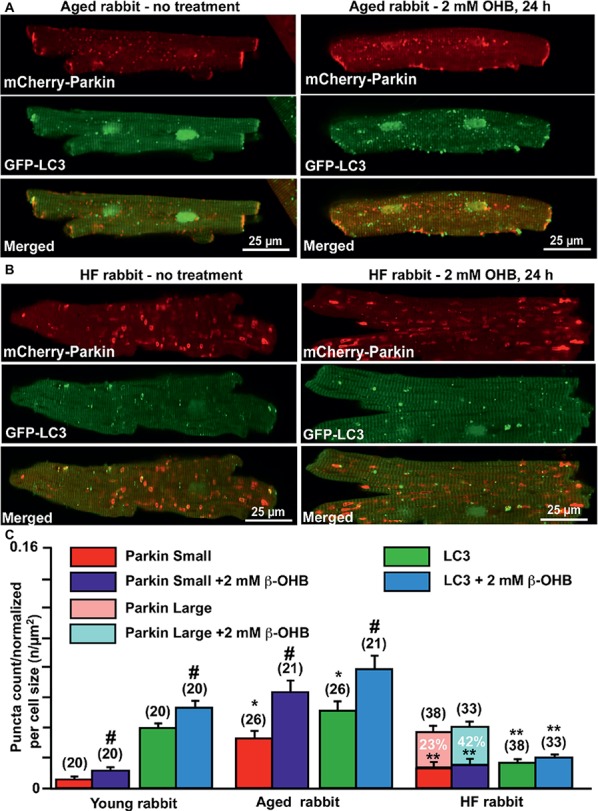
Aging and heart failure (HF) are each characterized by increased mitochondrial damage, which may contribute to further cardiac dysfunction. Mitophagy in response to mitochondrial damage can improve cardiovascular health. HF is also characterized by increased formation and consumption of ketone bodies (KBs), which may activate mitophagy and provide an endogenous mechanism to limit the adverse effects of mitochondrial damage. However, the role of KBs in activation of mitophagy in aging and HF has not been evaluated. We assessed mitophagy by measuring mitochondrial Parkin accumulation and LC3-mediated autophagosome formation in cardiomyocytes from young (2.5 months), aged (2.5 years), and aged rabbits with HF (2.5 years) induced by aortic insufficiency and stenosis. Levels of reactive oxygen species (ROS) generation and redox balance were monitored using genetically encoded sensors ORP1-roGFP2 and GRX1-roGFP2, targeted to mitochondrial or cytosolic compartments, respectively. Young rabbits exhibited limited mitochondrial Parkin accumulation with small (~1 μm) puncta. Those small Parkin puncta increased four-fold in aged rabbit hearts, accompanied by elevated LC3-mediated autophagosome formation. HF hearts exhibited fewer small puncta, but many very large Parkin-rich regions (4-5 μm) with completely depolarized mitochondria. Parkin protein expression was barely detectable in young animals and was much higher in aged and maximal in HF hearts. Expression of mitofusin 2 (MFN2) and dynamin-related protein 1 (DRP1) was reduced by almost 50% in HF, consistent with improper fusion-fission, contributing to mitochondrial Parkin build-up. The KB β-hydroxybutyrate (β-OHB) enhanced mitophagy in young and aging myocytes, but not in HF where β-OHB further increased the number of cells with giant Parkin-rich regions. This β-OHB effect on Parkin-rich areas was prevented by cell-permeable TAT-MP1 peptide (thought to promote MFN2-dependent fusion). Basal levels of mitochondrial ROS were highest in HF, while cytosolic ROS was highest in aged compared to HF myocytes, suggesting that cytosolic ROS promotes Parkin recruitment to the mitochondria. We conclude that elevated KB levels were beneficial for mitochondrial repair in the aging heart. However, an impaired MFN2-DRP1-mediated fusion-fission process in HF reduced this benefit, as well as Parkin degradation and mitophagic signaling cascade.
衰老和心力衰竭(HF)均以线粒体损伤增加为特征,这可能会导致心脏功能进一步失调。针对线粒体损伤的线粒体自噬可改善心血管健康。HF的另一个特征是酮体(KBs)生成和消耗增加,这可能会激活线粒体自噬,并提供一种内源性机制来限制线粒体损伤的不利影响。然而,KBs在衰老和HF过程中线粒体自噬激活中的作用尚未得到评估。我们通过测量来自年轻(2.5个月)、老年(2.5岁)以及因主动脉瓣关闭不全和狭窄诱导的老年HF兔(2.5岁)心肌细胞中的线粒体帕金蛋白积累和LC3介导的自噬体形成来评估线粒体自噬。分别使用靶向线粒体或胞质区室的基因编码传感器ORP1-roGFP2和GRX1-roGFP2监测活性氧(ROS)生成水平和氧化还原平衡。年轻兔心肌细胞中线粒体帕金蛋白积累有限,点状结构较小(约1μm)。在老年兔心脏中,这些小的帕金蛋白点状结构增加了四倍,同时LC3介导的自噬体形成也有所增加。HF心脏中较小的点状结构较少,但有许多非常大的富含帕金蛋白的区域(4 - 5μm),其中线粒体完全去极化。在年轻动物中几乎检测不到帕金蛋白的表达,在老年动物中表达较高,而在HF心脏中表达最高。在HF中,线粒体融合蛋白2(MFN2)和动力相关蛋白1(DRP1)的表达降低了近50%,这与融合 - 分裂异常一致,导致线粒体帕金蛋白积累。KBβ-羟基丁酸(β-OHB)可增强年轻和衰老心肌细胞中的线粒体自噬,但在HF心肌细胞中无效,在HF中β-OHB进一步增加了具有巨大富含帕金蛋白区域的细胞数量。细胞可渗透的TAT-MP1肽(被认为可促进MFN2依赖性融合)可阻止β-OHB对富含帕金蛋白区域的这种作用。与HF心肌细胞相比,HF中线粒体ROS的基础水平最高,而老年心肌细胞中胞质ROS最高,这表明胞质ROS促进帕金蛋白募集到线粒体。我们得出结论,升高的KB水平对衰老心脏中的线粒体修复有益。然而在HF中,受损的MFN2-DRP1介导的融合 - 分裂过程降低了这种益处,以及帕金蛋白降解和线粒体自噬信号级联反应。