Department of Biochemistry, Kangwon National University, Chuncheon, South Korea.
Chuncheon Center, Korean Basic Science Institute, Chuncheon, South Korea.
Front Immunol. 2019 Apr 5;10:738. doi: 10.3389/fimmu.2019.00738. eCollection 2019.
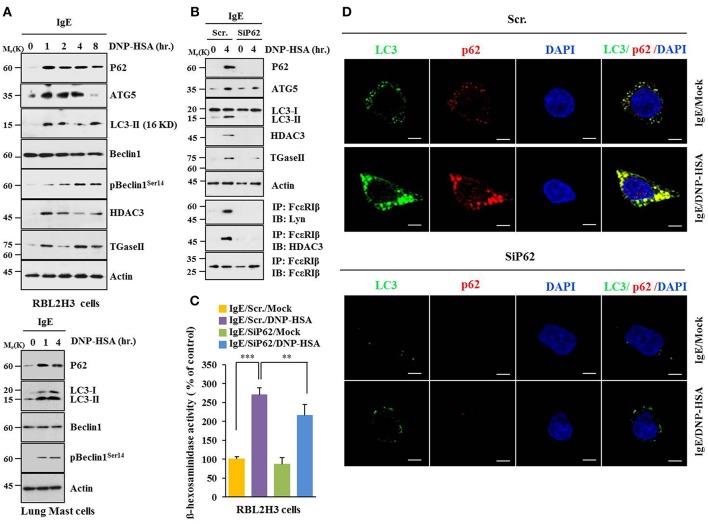
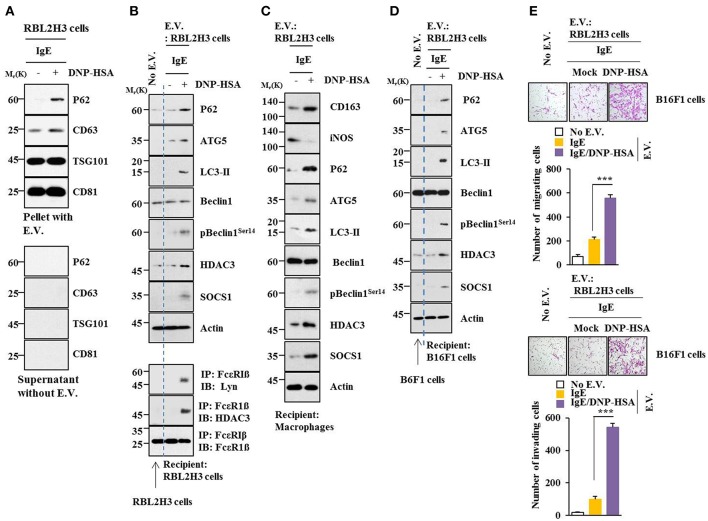
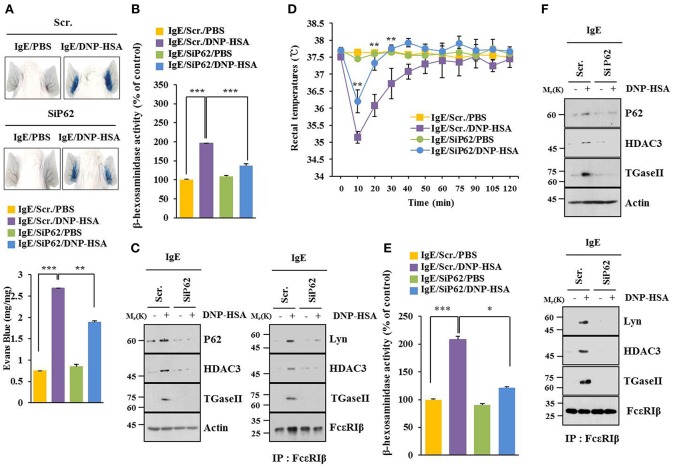
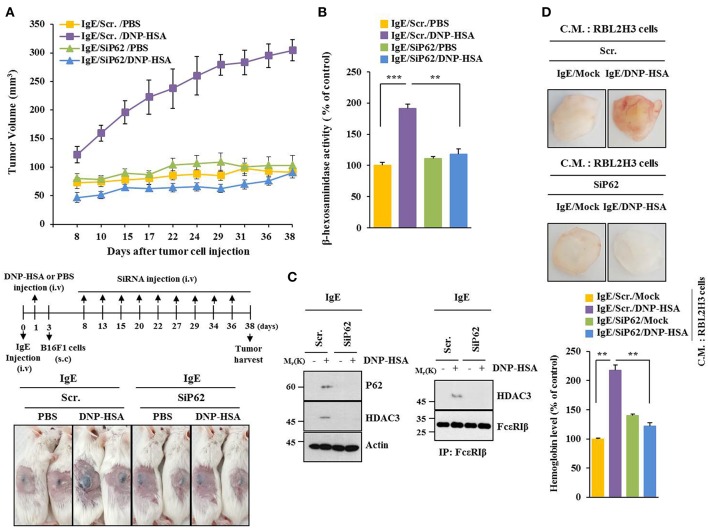
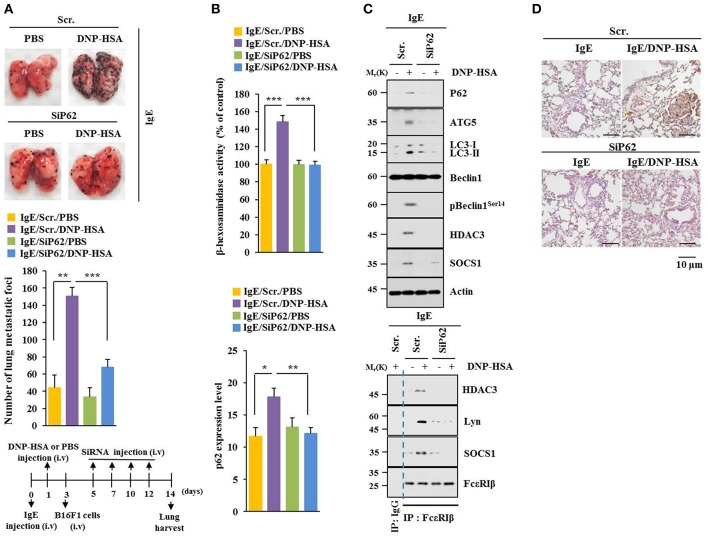
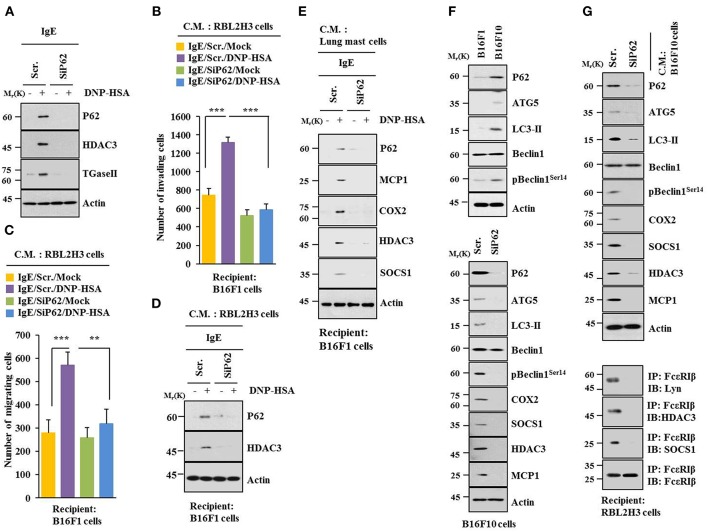
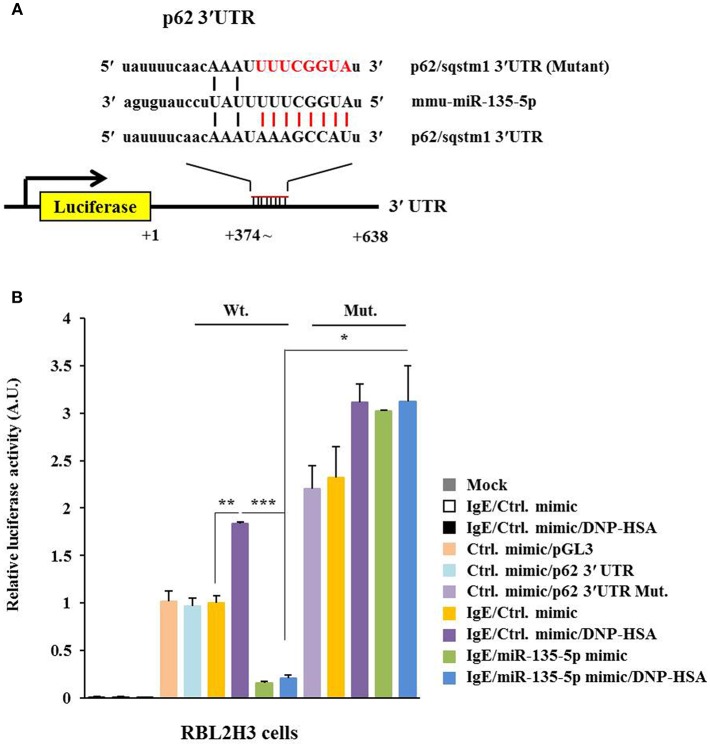
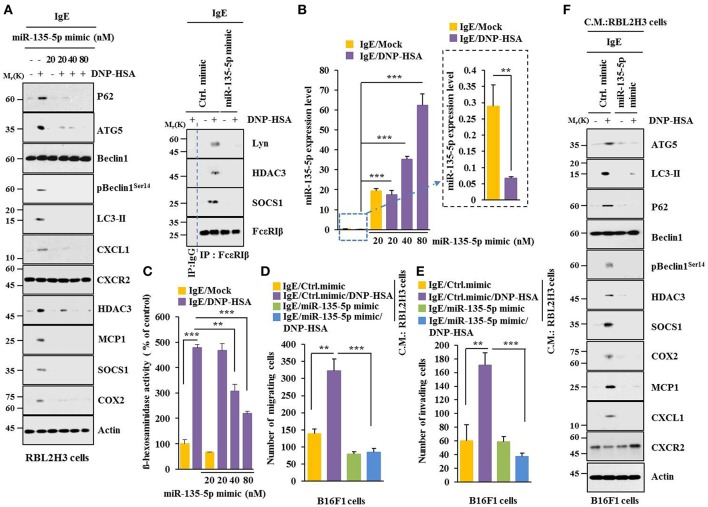
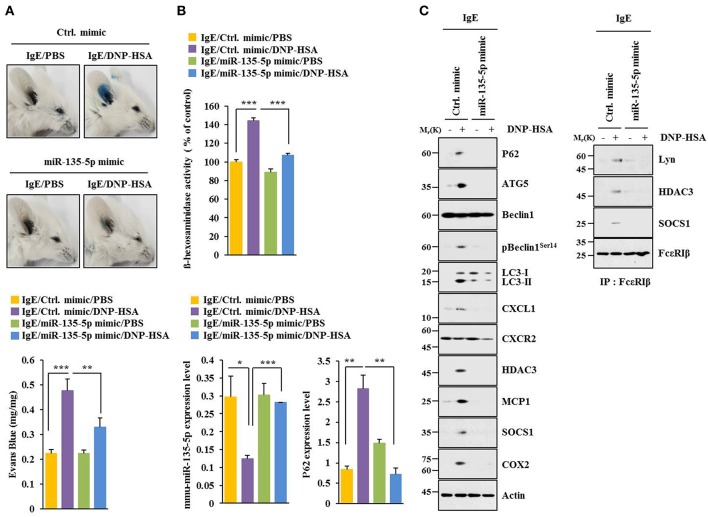
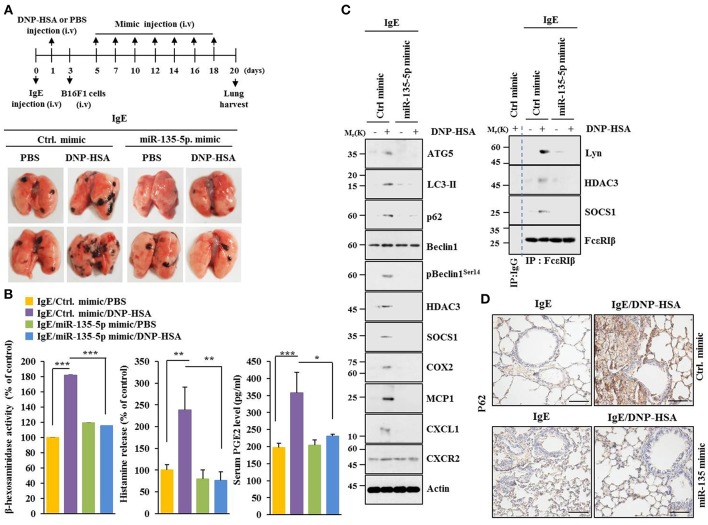
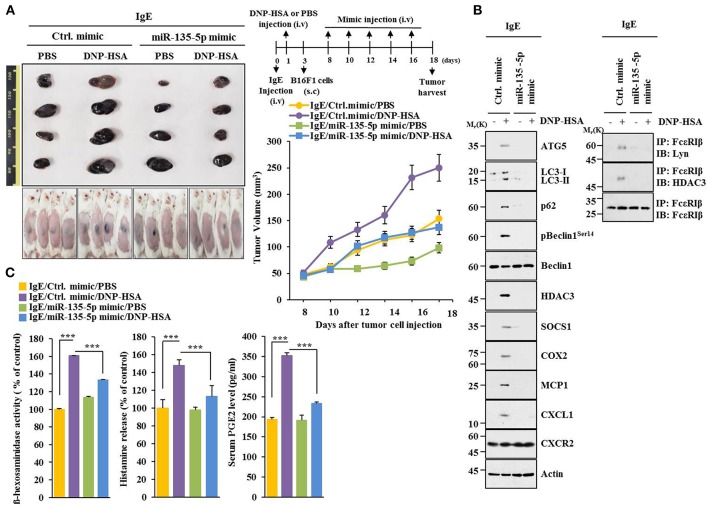
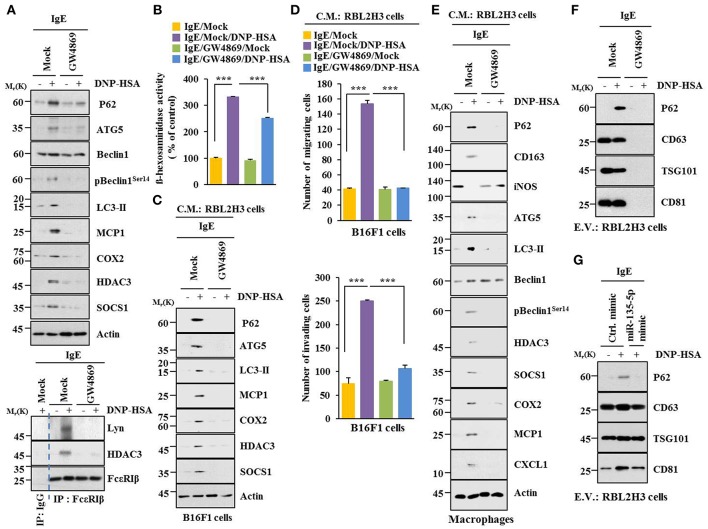
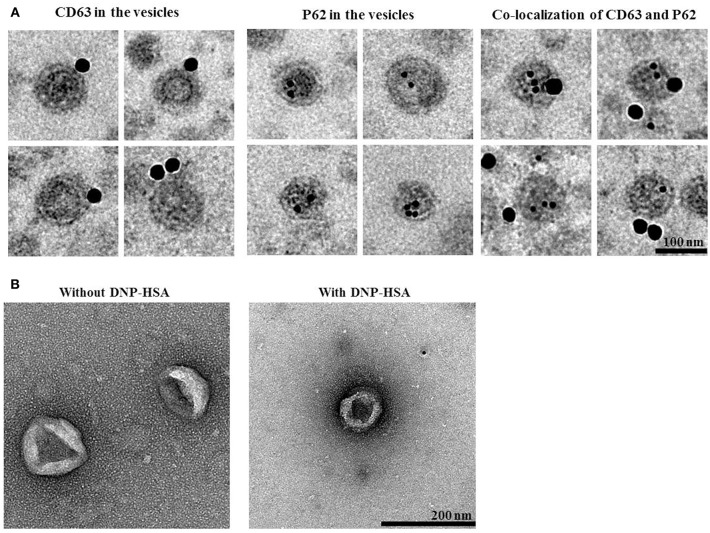
The objective of this study was to investigate the relationship between autophagy and allergic inflammation. allergic inflammation was accompanied by an increased autophagic flux in rat basophilic leukemia (RBL2H3) cells. 3-MA, an inhibitor of autophagic processes, negatively regulated allergic inflammation both and . The role of p62, a selective receptor of autophagy, in allergic inflammation was investigated. P62, increased by antigen stimulation, mediated allergic inflammation, passive cutaneous anaphylaxis (PCA), and passive systemic anaphylaxis (PSA). P62 mediated cellular interactions during allergic inflammation. It also mediated tumorigenic and metastatic potential of cancer cells enhanced by PSA. TargetScan analysis predicted that miR-135-5p was a negative regulator of p62. Luciferase activity assay showed that miR-135-5p directly regulated p62. MiR-135-5p mimic negatively regulated features of allergic inflammation and inhibited tumorigenic and metastatic potential of cancer cells enhanced by PSA. MiR-135-5p mimic also inhibited cellular interactions during allergic inflammation. Extracellular vesicles mediated allergic inflammation both and . Extracellular vesicles were also necessary for cellular interactions during allergic inflammation. Transmission electron microscopy showed p62 within extracellular vesicles of antigen-stimulated rat basophilic leukemia cells (RBL2H3). Extracellular vesicles isolated from antigen-stimulated RBL2H3 cells induced activation of macrophages and enhanced invasion and migration potential of B16F1 mouse melanoma cells in a p62-dependent manner. Extracellular vesicles isolated from PSA-activated BALB/C mouse enhanced invasion and migration potential of B16F1 cells, and induced features of allergic inflammation in RBL2H3 cells. Thus, miR-135-5p-p62 axis might serve as a target for developing anti-allergy drugs.
本研究旨在探讨自噬与过敏炎症的关系。在大鼠嗜碱性白血病(RBL2H3)细胞中,过敏炎症伴随着自噬通量的增加。自噬过程的抑制剂 3-MA 负调控过敏炎症。探讨了自噬的选择性受体 p62 在过敏炎症中的作用。抗原刺激后 p62 增加,介导过敏炎症、被动皮肤过敏反应(PCA)和被动全身过敏反应(PSA)。P62 在过敏炎症期间介导细胞相互作用。它还介导 PSA 增强的癌细胞的致瘤和转移潜力。TargetScan 分析预测 miR-135-5p 是 p62 的负调节剂。荧光素酶活性测定表明 miR-135-5p 直接调节 p62。miR-135-5p 模拟物负调控过敏炎症特征,并抑制 PSA 增强的癌细胞的致瘤和转移潜力。miR-135-5p 模拟物也抑制过敏炎症期间的细胞相互作用。细胞外囊泡(EVs)既介导过敏炎症,也介导过敏炎症。细胞外囊泡也是过敏炎症期间细胞相互作用所必需的。透射电子显微镜显示抗原刺激的大鼠嗜碱性白血病细胞(RBL2H3)中的 p62 存在于细胞外囊泡内。从抗原刺激的 RBL2H3 细胞中分离出的细胞外囊泡诱导巨噬细胞活化,并以 p62 依赖的方式增强 B16F1 小鼠黑色素瘤细胞的侵袭和迁移潜力。从 PSA 激活的 BALB/C 小鼠中分离出的细胞外囊泡增强了 B16F1 细胞的侵袭和迁移潜力,并在 RBL2H3 细胞中诱导过敏炎症特征。因此,miR-135-5p-p62 轴可能成为开发抗过敏药物的靶点。