State Key Laboratory of Crop Stress Biology for Arid Areas; and College of Plant Protection, Northwest A&F University, Yangling, 712100, P. R. China.
The Key Laboratory of Biotechnology for Medicinal Plants of Jiangsu Province, Jiangsu Normal University, No. 101 Shanghai Rd, Tongshan District, Xuzhou, 221116, P. R. China.
Mol Plant Pathol. 2019 Jul;20(7):923-942. doi: 10.1111/mpp.12803. Epub 2019 Apr 26.
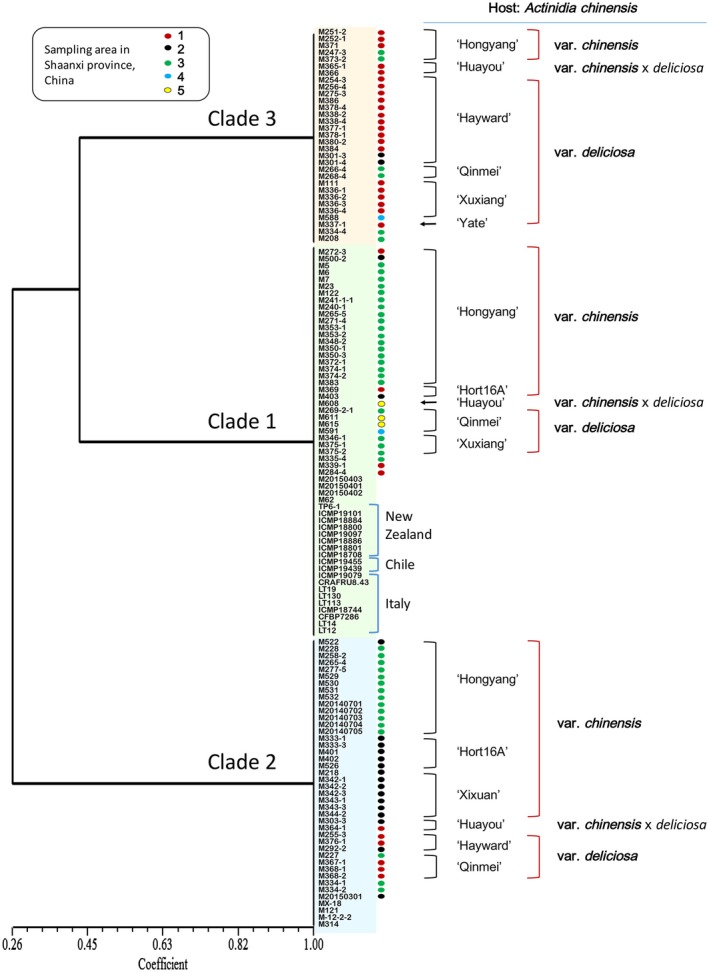
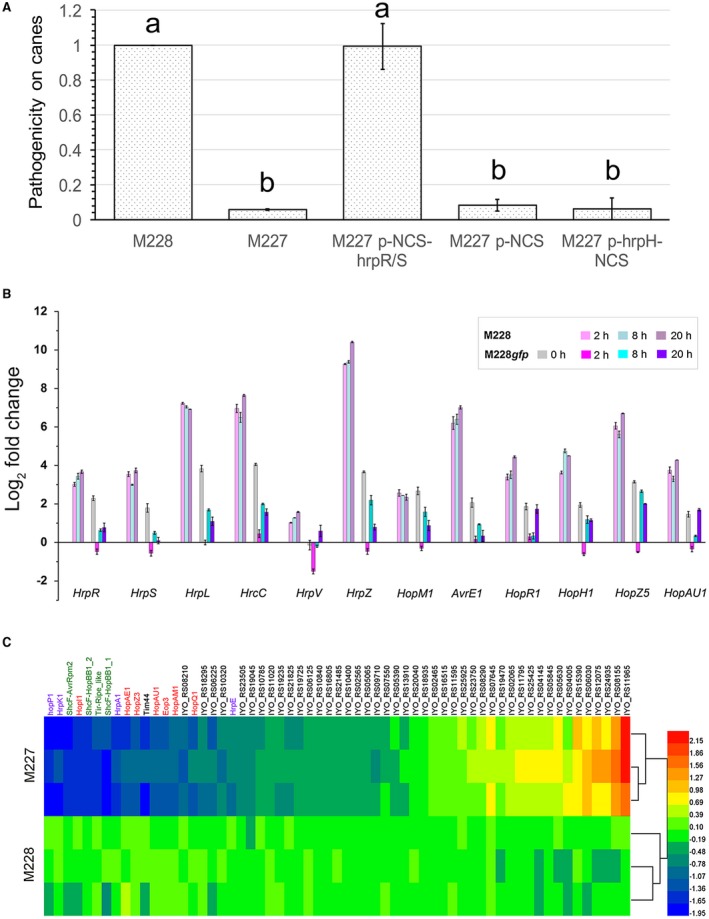
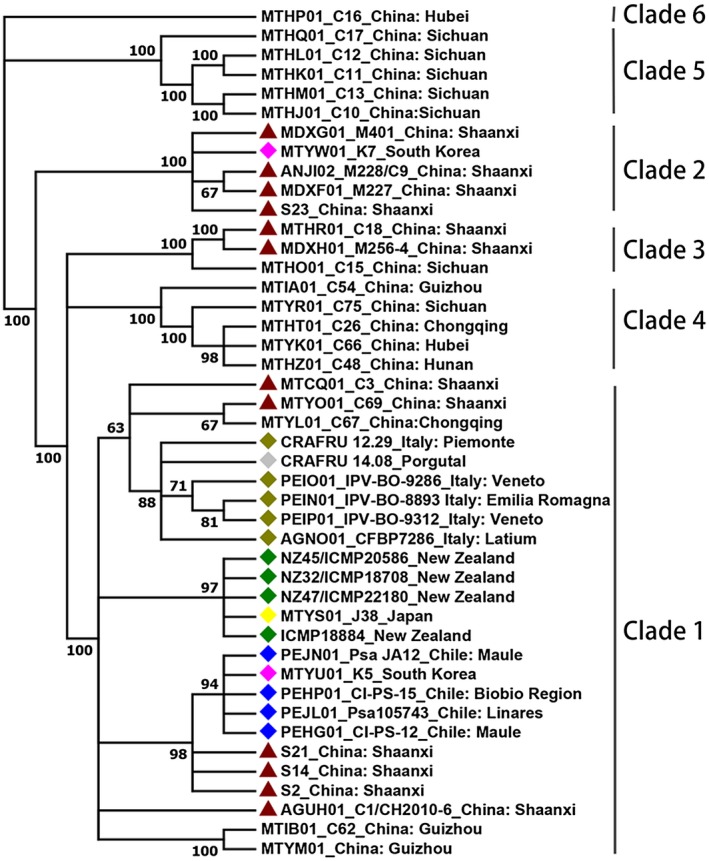
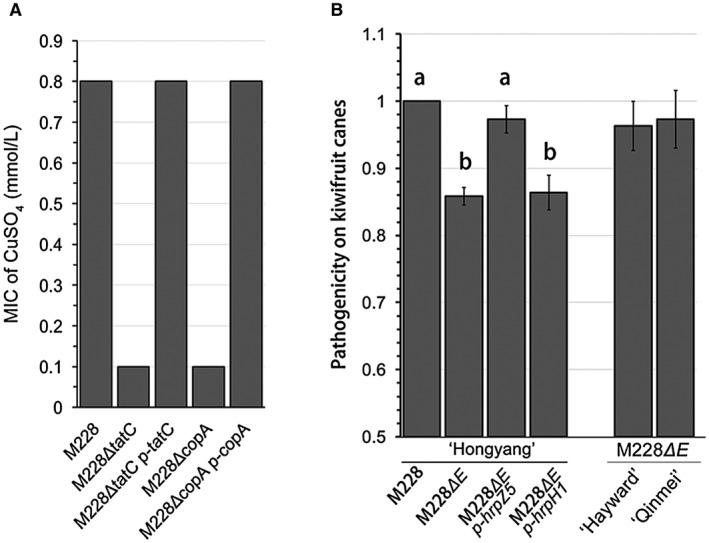
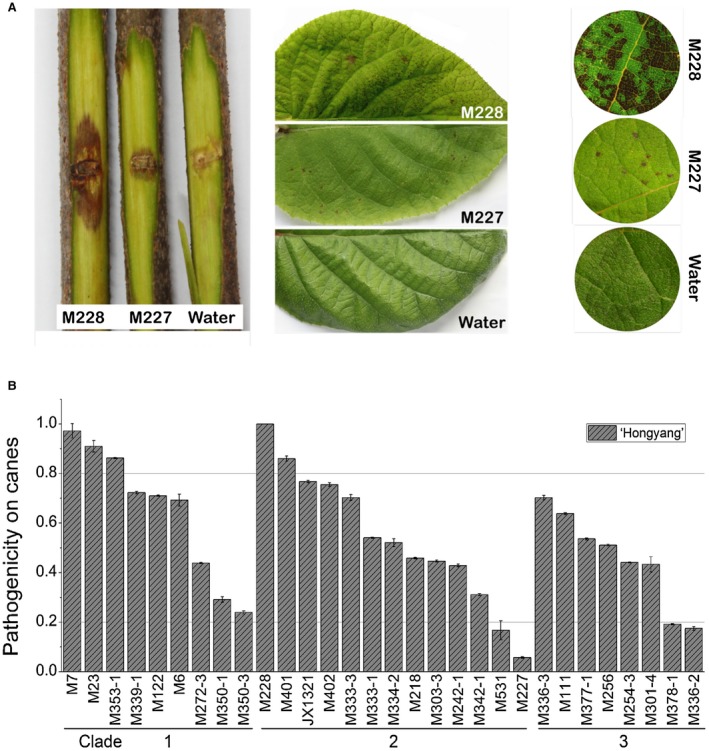
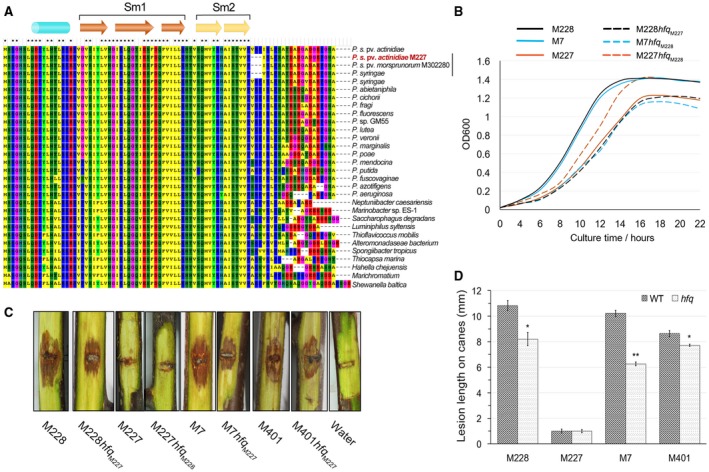
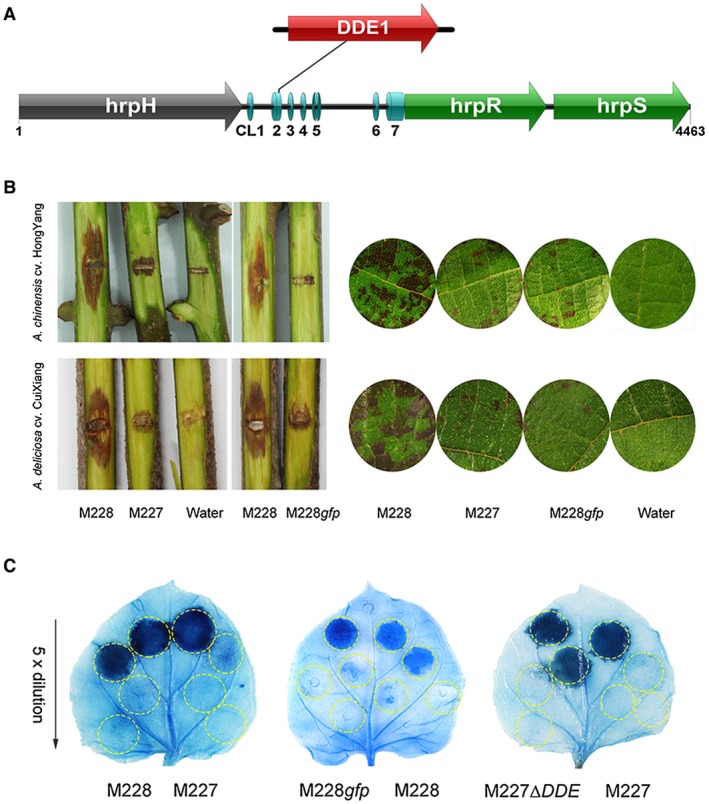
Bacterial canker of kiwifruit, is a severe global disease caused by Pseudomonas syringae pv. actinidiae (Psa). Here, we found that Psa biovar 3 (Psa3) was the only biovar consisting of three widely distributed clades in the largest Chinese kiwifruit cultivated area. Comparative genomics between the three clades revealed 13 polymorphic genes, each of which had multiple intra-clade variations. For instance, we confirmed that the polymorphic copA gene, which encodes a periplasmic protein CopA that is translocated by the Twin-arginine targeting (Tat) system, was involved in copper tolerance. We also found extensive variation in pathogenicity amongst strains within each genetically monomorphic clade. Accordingly, the pathogenic determinants of Psa3 were identified via a genomic comparison of phenotypically different strains within each clade. A case study of the high- and low-virulence strains in the clade 2 of Psa3 revealed that an hfq variant involved in in vitro growth and virulence, while a conserved locus 930 bp upstream of the hrpR gene in the Type III secretion system (T3SS) cluster was required for full pathogenicity on kiwifruit and elicitation of the hypersensitivity response on non-host Nicotiana benthamiana. The '-930' locus is involved in transcriptional regulation of hrpR/S and modulates T3SS function via the hierarchical 'HrpR/S-HrpL-T3SS/effector' regulatory cascade in Psa. Our results provide insights into the molecular basis underlying the genetic diversification and evolution of pathogenicity in Psa3 since kiwifruit canker emerged in China in the 1980s.
猕猴桃溃疡病是一种由丁香假单胞菌猕猴桃致病变种(Pseudomonas syringae pv. actinidiae,Psa)引起的严重全球性病害。本研究发现,Psa 生物型 3(Psa3)是中国最大猕猴桃种植区中唯一由三个广泛分布的进化枝组成的生物型。三个进化枝之间的比较基因组分析揭示了 13 个多态性基因,每个基因都有多个种内变异。例如,我们证实了多态性 copA 基因(编码由 Twin-arginine targeting(Tat)系统转运的周质蛋白 CopA)参与铜耐受性。我们还发现,每个遗传同质进化枝内的菌株在致病性方面存在广泛的差异。因此,通过对每个进化枝内表型不同菌株的基因组比较,确定了 Psa3 的致病决定因子。对 Psa3 进化枝 2 中高毒力和低毒力菌株的案例研究表明,一个参与体外生长和毒力的 hfq 变体,而位于 III 型分泌系统(T3SS)簇中 hrpR 基因上游 930bp 的保守位点是在猕猴桃上完全致病和诱发非宿主 Nicotiana benthamiana 过敏反应所必需的。'-930'位点参与 hrpR/S 的转录调控,并通过 Psa 中的分层'HrpR/S-HrpL-T3SS/效应物'调控级联调节 T3SS 功能。我们的研究结果为猕猴桃溃疡病自 20 世纪 80 年代在中国出现以来,Psa3 遗传多样性和致病性进化的分子基础提供了深入的了解。