a Department of Internal medicine intensive care , the central hospital of Linyi , Yishui , Shandong , China.
b Department of Traditional Chinese medicine , the affiliated hospital of Qingdao University , Shandong , China.
Bioengineered. 2019 Dec;10(1):172-181. doi: 10.1080/21655979.2019.1613103.
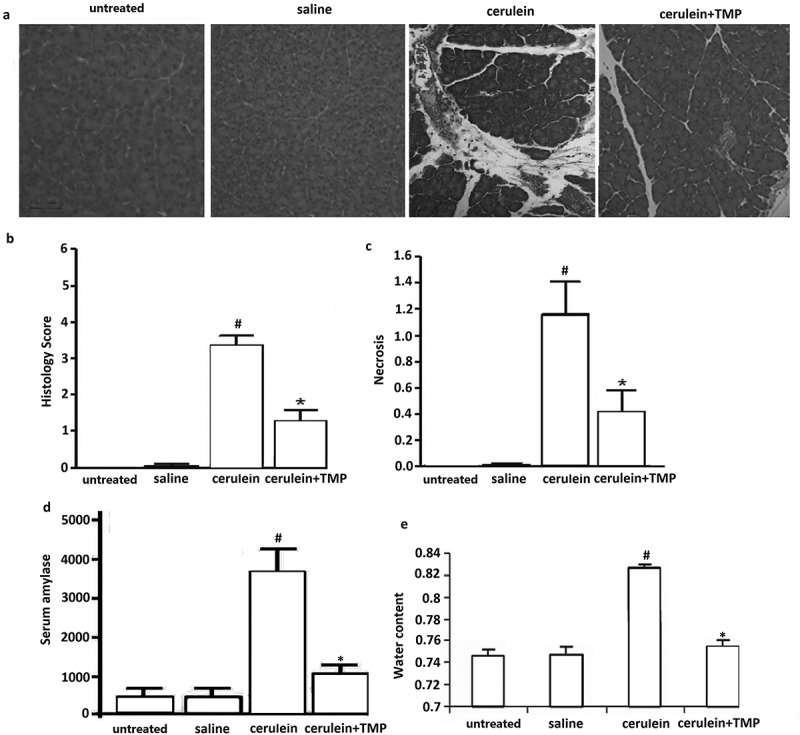
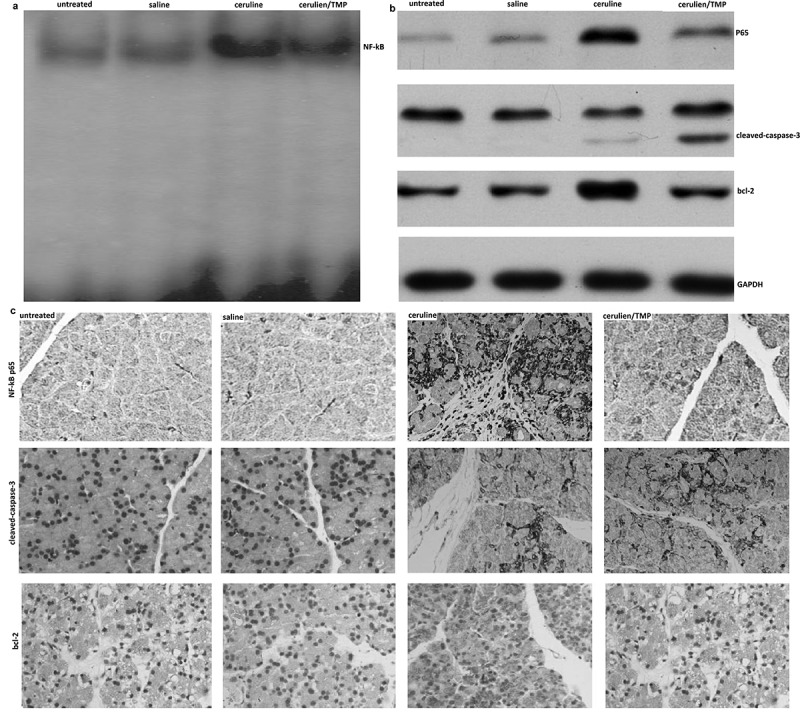
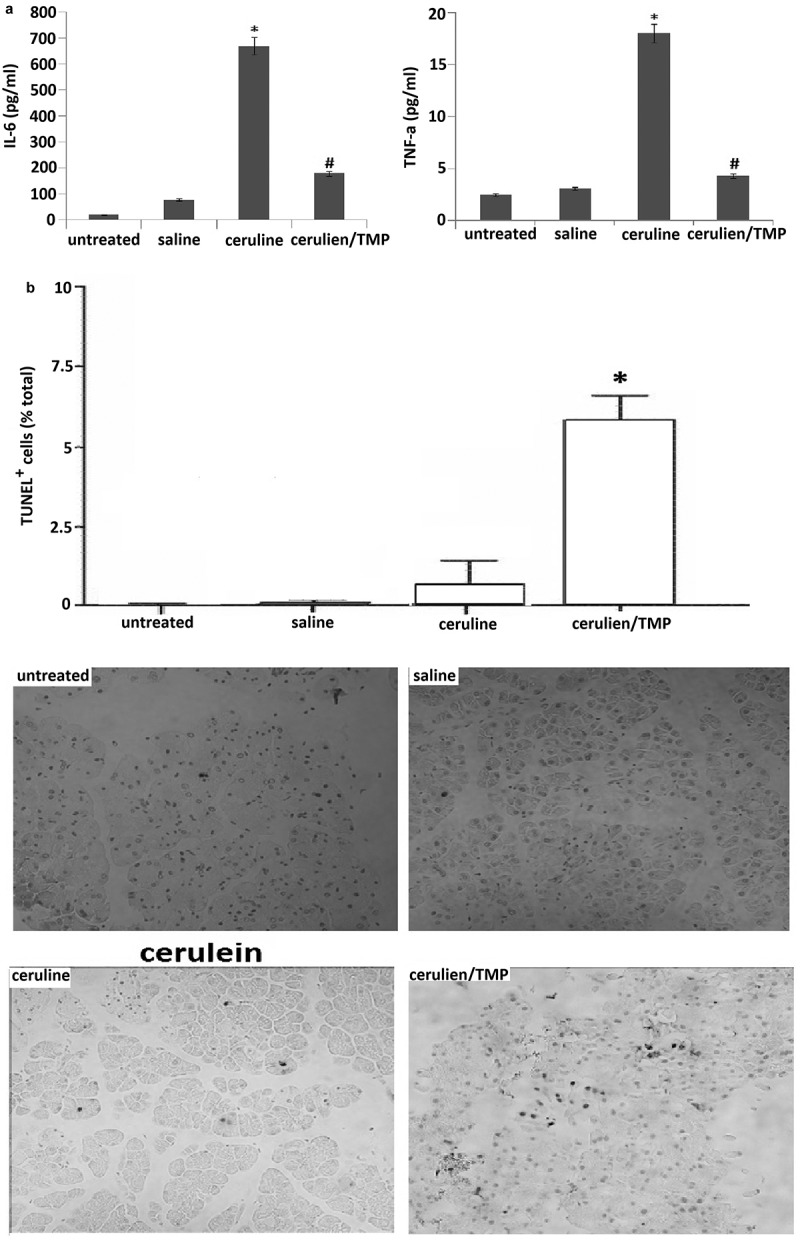
Acute pancreatitis (AP) is a digestive disease characterized by pancreatic inflammation. Tetramethylpyrazine (TMP) has been effectively used to ameliorate the damage on intestinal mucosa injury in rats with acute necrotizing pancreatitis (ANP). We aim to study the protective effect of TMP on caerulein-induced AP and to explore the possible mechanism. The mice randomized into control and different experimental groups. AP was induced in mice by 6-hourly intraperitoneal (i.p) injections of caerulein (50 μg/kg at 1 h interval). TMP (i.p, 10 mg/kg, 1 h interval) was administered 3 h before caerulein injection. Administration of TMP attenuated the severity of AP as shown by the histopathology, reduced serum amylase activity and pro-inflammatory cytokines TNF-α and IL-6. Further, TMP enhances the beneficial effect by reducing caerulein-induced NF-κB activation and inducing cell apoptosis in pancreas. Therefore, inhibition of nuclear factor-kappa B(NF-κB) signals by TMP represents a potential therapeutic strategy for the treatment of acute pancreatitis.
急性胰腺炎(AP)是一种以胰腺炎症为特征的消化系统疾病。川芎嗪(TMP)已被有效地用于改善急性坏死性胰腺炎(ANP)大鼠的肠黏膜损伤。我们旨在研究 TMP 对胆酸钠诱导的 AP 的保护作用,并探讨其可能的机制。将小鼠随机分为对照组和不同实验组。通过 6 小时腹腔内(i.p)注射胆酸钠(间隔 1 小时 50μg/kg)诱导小鼠 AP。TMP(i.p,10mg/kg,1 小时间隔)在胆酸钠注射前 3 小时给药。TMP 的给药减轻了 AP 的严重程度,表现为组织病理学变化,降低了血清淀粉酶活性和促炎细胞因子 TNF-α和 IL-6。此外,TMP 通过减少胆酸钠诱导的 NF-κB 激活和诱导胰腺细胞凋亡来增强有益作用。因此,TMP 抑制核因子-kappa B(NF-κB)信号代表了治疗急性胰腺炎的一种潜在治疗策略。