Vogel Christoph F A, Ishihara Yasuhiro, Campbell Claire E, Kado Sarah Y, Nguyen-Chi Aimy, Sweeney Colleen, Pollet Marius, Haarmann-Stemmann Thomas, Tuscano Joseph M
Department of Environmental Toxicology, University of California, One Shields Avenue, Davis, CA 95616, USA.
Center for Health and the Environment, University of California, One Shields Avenue, Davis, CA 95616, USA.
Cancers (Basel). 2019 Apr 27;11(5):589. doi: 10.3390/cancers11050589.
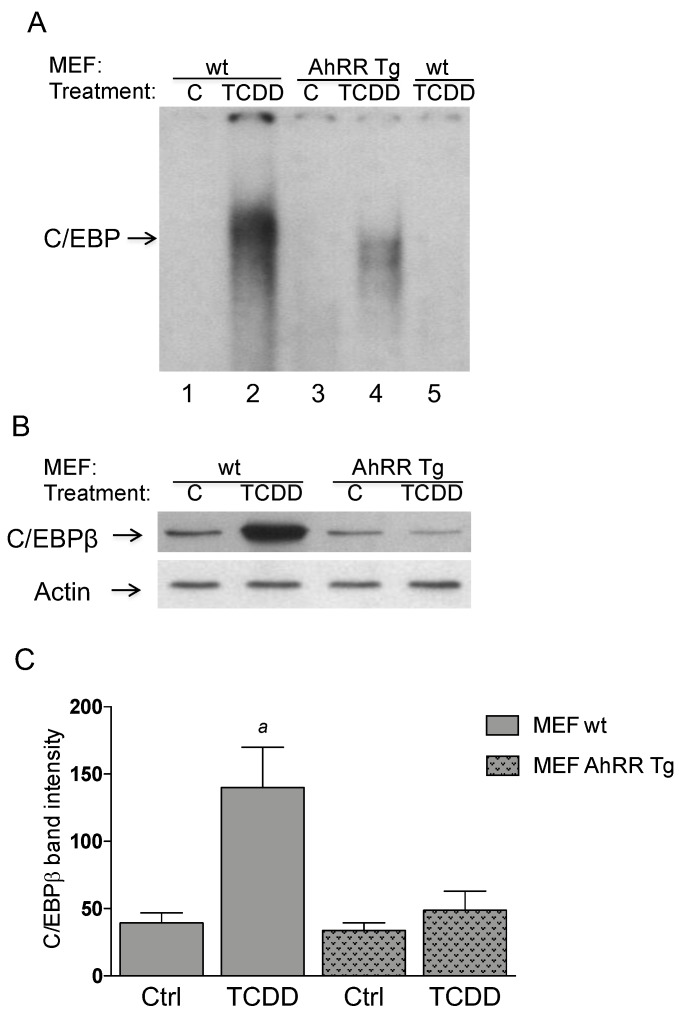
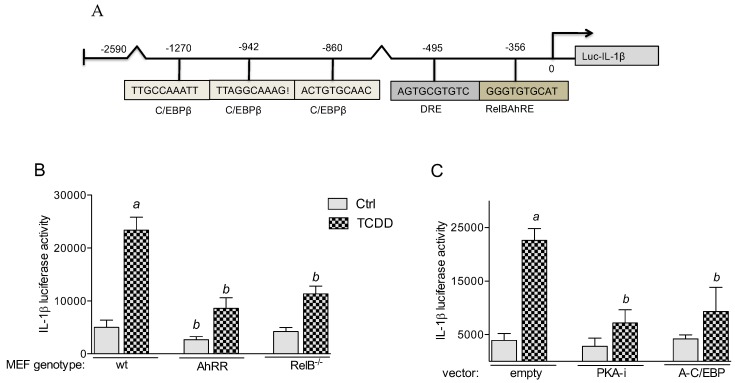
The aryl hydrocarbon receptor (AhR) is known for mediating the toxicity of environmental pollutants such as dioxins and numerous dioxin-like compounds, and is associated with the promotion of various malignancies, including lymphoma. The aryl hydrocarbon receptor repressor (AhRR), a ligand-independent, transcriptionally inactive AhR-like protein is known to repress AhR signaling through its ability to compete with the AhR for dimerization with the AhR nuclear translocator (ARNT). While AhRR effectively blocks AhR signaling, several aspects of the mechanism of AhRR's functions are poorly understood, including suppression of inflammatory responses and its putative role as a tumor suppressor. In a transgenic mouse that overexpresses AhRR (AhRR Tg) we discovered that these mice suppress 2,3,7,8-tetrachlorodibenzo-p-dioxin (TCDD)- and inflammation-induced tumor growth after subcutaneous challenge of EL4 lymphoma cells. Using mouse embryonic fibroblasts (MEF) we found that AhRR overexpression suppresses the AhR-mediated anti-apoptotic response. The AhRR-mediated inhibition of apoptotic resistance was associated with a suppressed expression of interleukin (IL)-1β and cyclooxygenase (COX)-2, which was dependent on activation of protein kinase A (PKA) and the CAAT-enhancer-binding protein beta (C/EBPβ). These results provide mechanistic insights into the role of the AhRR to suppress inflammation and highlight the AhRR as a potential therapeutic target to suppress tumor growth.
芳烃受体(AhR)因介导二恶英及众多类二恶英化合物等环境污染物的毒性而闻名,且与包括淋巴瘤在内的多种恶性肿瘤的发生发展相关。芳烃受体阻遏蛋白(AhRR)是一种不依赖配体、转录无活性的AhR样蛋白,已知其通过与AhR竞争与AhR核转运蛋白(ARNT)二聚化的能力来抑制AhR信号传导。虽然AhRR能有效阻断AhR信号传导,但其功能机制的几个方面仍知之甚少,包括对炎症反应的抑制及其作为肿瘤抑制因子的假定作用。在一只过表达AhRR的转基因小鼠(AhRR Tg)中,我们发现这些小鼠在皮下接种EL4淋巴瘤细胞后,能抑制2,3,7,8-四氯二苯并对二恶英(TCDD)和炎症诱导的肿瘤生长。利用小鼠胚胎成纤维细胞(MEF),我们发现AhRR的过表达抑制了AhR介导的抗凋亡反应。AhRR介导的对凋亡抗性的抑制与白细胞介素(IL)-1β和环氧化酶(COX)-2的表达受抑制有关,这依赖于蛋白激酶A(PKA)和CCAAT增强子结合蛋白β(C/EBPβ)的激活。这些结果为AhRR在抑制炎症中的作用提供了机制上的见解,并突出了AhRR作为抑制肿瘤生长的潜在治疗靶点。