Department of Air Quality and Noise, Division of Climate and Environmental Health, Norwegian Institute of Public Health, PO Box PO Box 222 Skøyen, 0213 Oslo, Norway.
Department of Cytokinetics, Institute of Biophysics of the Czech Academy of Sciences, 61265 Brno, Czech Republic.
Biochem Pharmacol. 2023 Oct;216:115801. doi: 10.1016/j.bcp.2023.115801. Epub 2023 Sep 9.
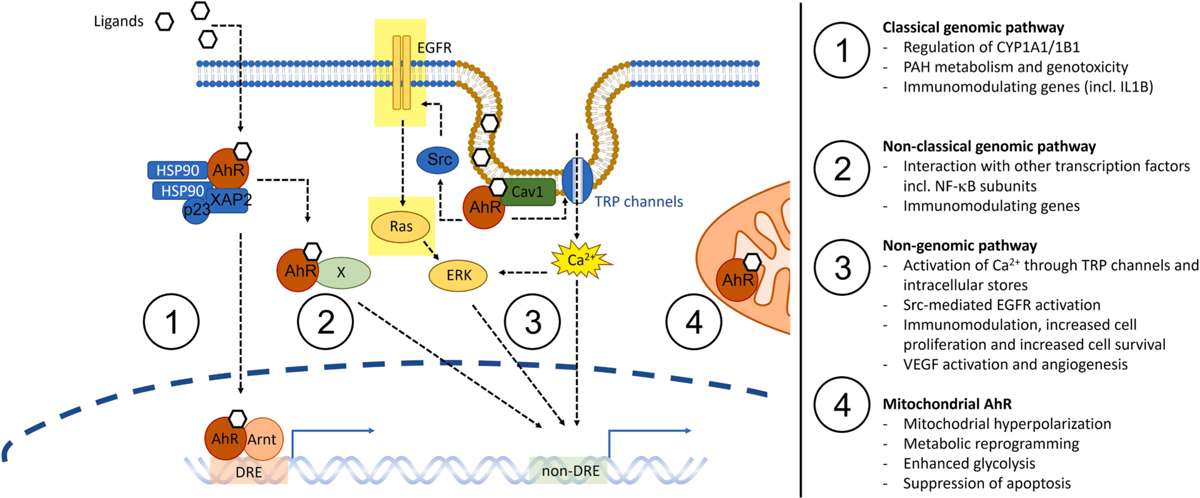
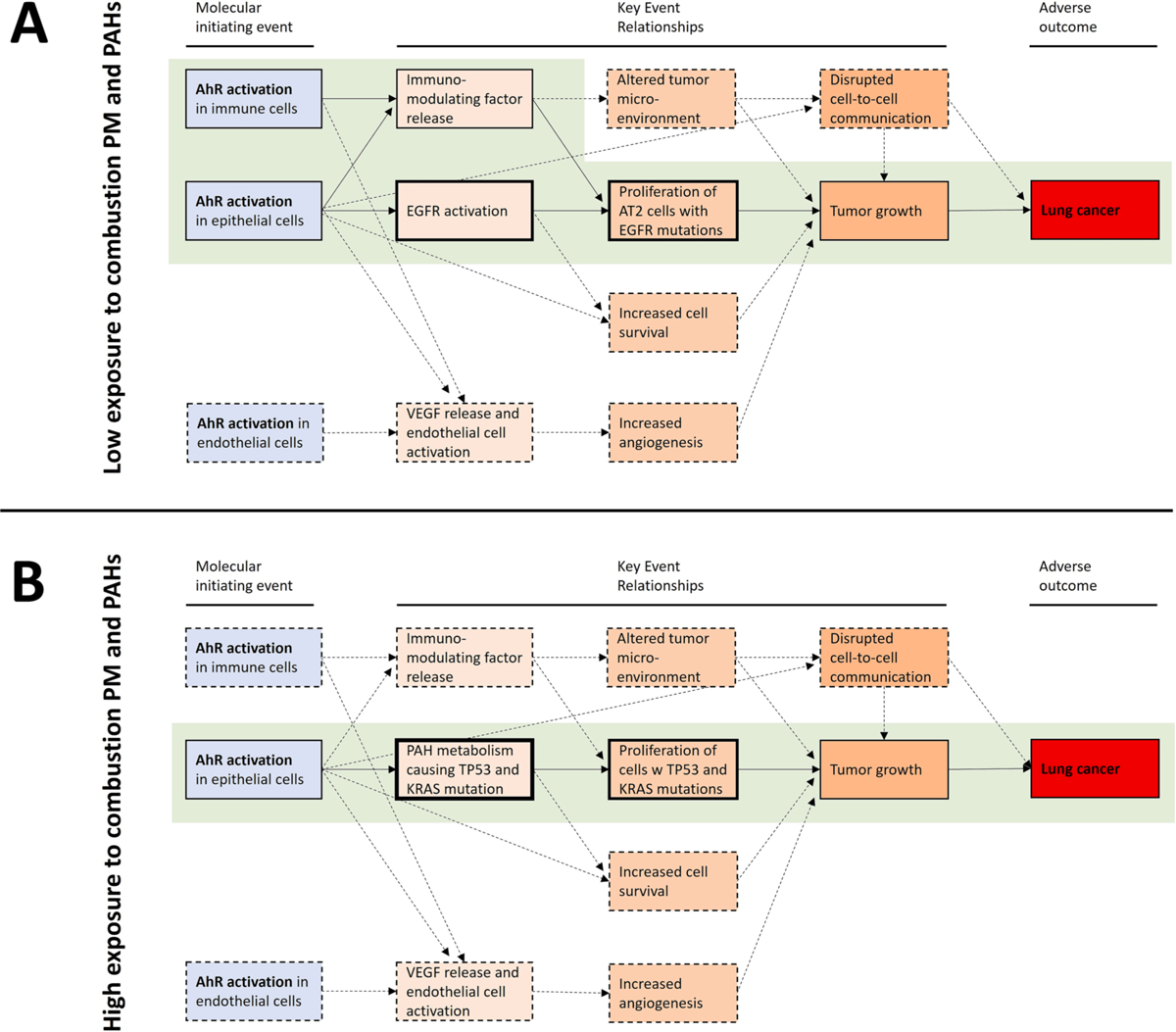
Air pollution is the leading cause of lung cancer after tobacco smoking, contributing to 20% of all lung cancer deaths. Increased risk associated with living near trafficked roads, occupational exposure to diesel exhaust, indoor coal combustion and cigarette smoking, suggest that combustion components in ambient fine particulate matter (PM), such as polycyclic aromatic hydrocarbons (PAHs), may be central drivers of lung cancer. Activation of the aryl hydrocarbon receptor (AhR) induces expression of xenobiotic-metabolizing enzymes (XMEs) and increase PAH metabolism, formation of reactive metabolites, oxidative stress, DNA damage and mutagenesis. Lung cancer tissues from smokers and workers exposed to high combustion PM levels contain mutagenic signatures derived from PAHs. However, recent findings suggest that ambient air PM exposure primarily induces lung cancer development through tumor promotion of cells harboring naturally acquired oncogenic mutations, thus lacking typical PAH-induced mutations. On this background, we discuss the role of AhR and PAHs in lung cancer development caused by air pollution focusing on the tumor promoting properties including metabolism, immune system, cell proliferation and survival, tumor microenvironment, cell-to-cell communication, tumor growth and metastasis. We suggest that the dichotomy in lung cancer patterns observed between smoking and outdoor air PM represent the two ends of a dose-response continuum of combustion PM exposure, where tumor promotion in the peripheral lung appears to be the driving factor at the relatively low-dose exposures from ambient air PM, whereas genotoxicity in the central airways becomes increasingly more important at the higher combustion PM levels encountered through smoking and occupational exposure.
空气污染是仅次于吸烟的肺癌主要致病因素,导致 20%的肺癌死亡。与居住在交通繁忙道路附近、职业性接触柴油废气、室内燃煤和吸烟有关的风险增加表明,环境细颗粒物(PM)中的燃烧成分,如多环芳烃(PAHs),可能是肺癌的主要驱动因素。芳基烃受体(AhR)的激活诱导外源物质代谢酶(XMEs)的表达和增加 PAH 代谢、活性代谢物的形成、氧化应激、DNA 损伤和突变。吸烟者和接触高燃烧 PM 水平的工人的肺癌组织含有源自 PAHs 的诱变特征。然而,最近的研究结果表明,环境空气 PM 暴露主要通过促进携带自然获得性致癌突变的细胞的肿瘤发生来诱导肺癌的发展,因此缺乏典型的 PAH 诱导的突变。在此背景下,我们讨论了 AhR 和 PAHs 在空气污染引起的肺癌发展中的作用,重点讨论了代谢、免疫系统、细胞增殖和存活、肿瘤微环境、细胞间通讯、肿瘤生长和转移等肿瘤促进特性。我们认为,吸烟和户外空气 PM 之间观察到的肺癌模式的二分法代表了燃烧 PM 暴露剂量反应连续体的两个极端,其中外周肺的肿瘤促进似乎是环境空气 PM 相对低剂量暴露的驱动因素,而在更高的燃烧 PM 水平下,气道中部的遗传毒性变得越来越重要。