D'Orlando Angélina, Bayle Maxime, Louarn Guy, Humbert Bernard
INRA BIA UR 1268, 44300 Nantes, France.
IMN J. Rouxel, UMR 6502 CNRS-Univ Nantes, BP 32229 44322 Nantes, France.
Materials (Basel). 2019 Apr 27;12(9):1372. doi: 10.3390/ma12091372.
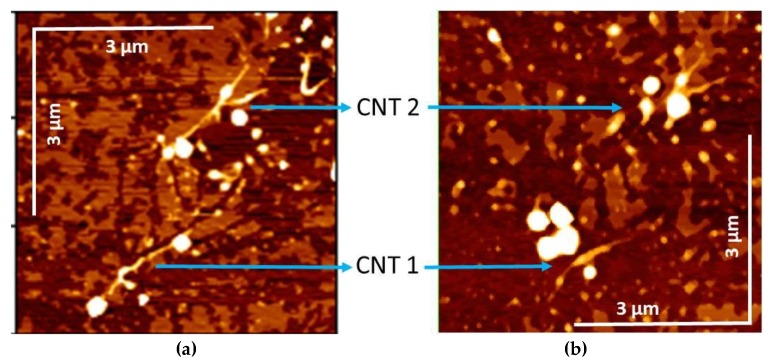
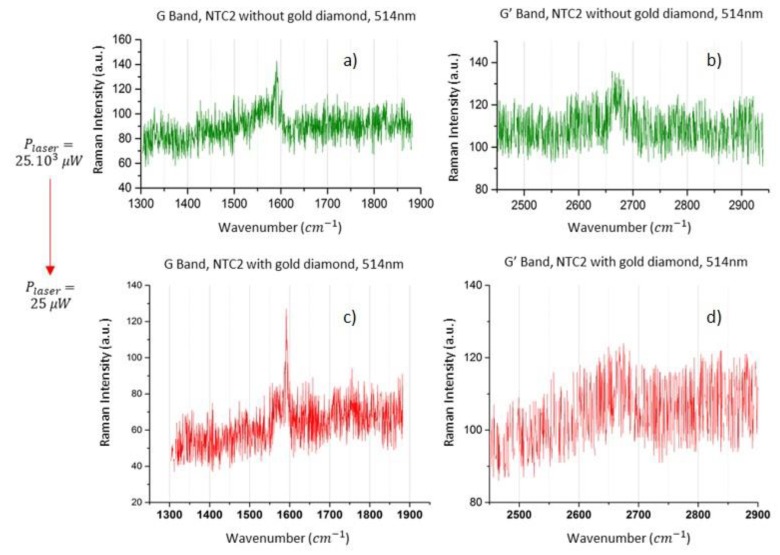
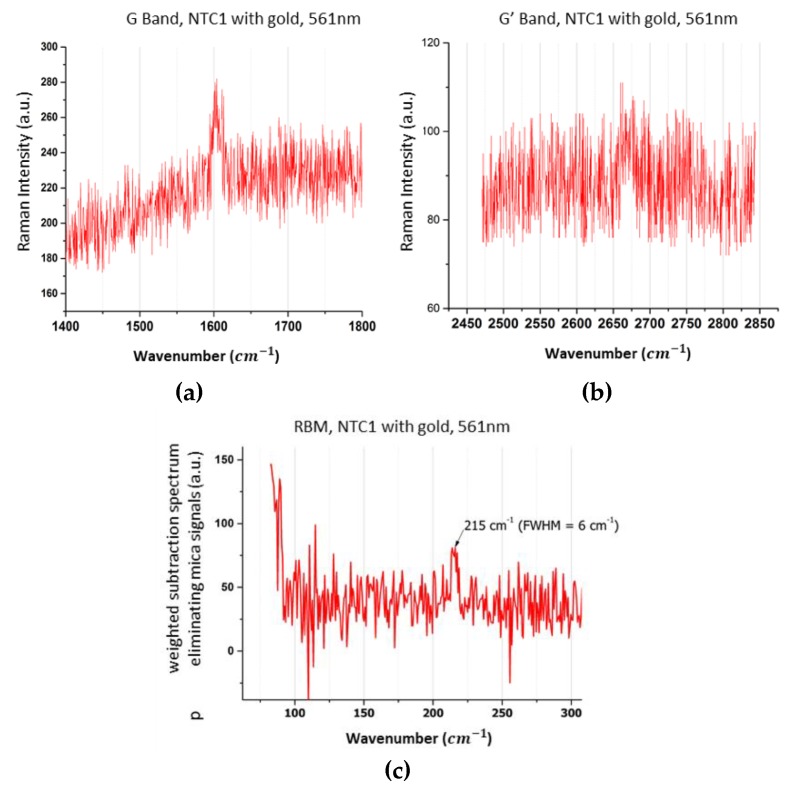
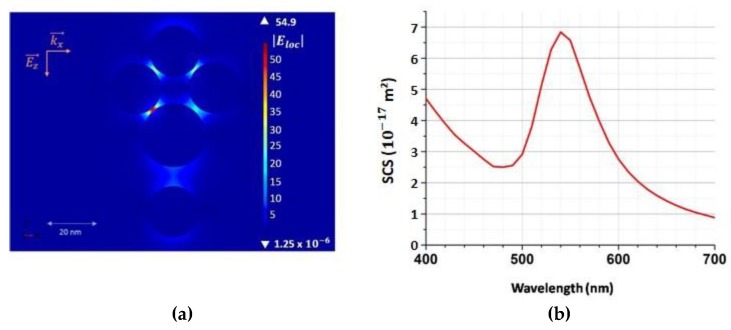
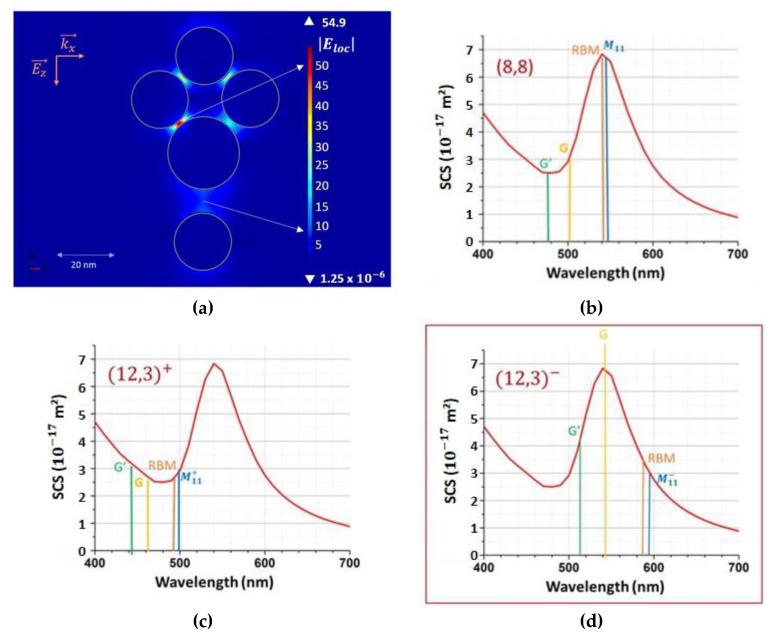
This paper explores the enhancement of Raman signals using individual nano-plasmonic structures and demonstrates the possibility to obtain controlled gold plasmonic nanostructures by atomic force microscopy (AFM) manipulation under a confocal Raman device. By manipulating the gold nanoparticles (Nps) while monitoring them using a confocal microscope, it is possible to generate individual nano- structures, plasmonic molecules not accessible currently by lithography at these nanometer scales. This flexible approach allows us to tune plasmonic resonance of the nanostructures, to generate localized hot spots and to circumvent the effects of strong electric near field gradients intrinsic to Tip Enhanced Raman Spectroscopy (TERS) or Surface Enhanced Raman Spectroscopy (SERS) experiments. The inter Np distances and symmetry of the plasmonic molecules in interaction with other individual nano-objects control the resonance conditions of the assemblies and the enhancement of their Raman responses. This paper shows also how some plasmonic structures generate localized nanometric areas with high electric field magnitude without strong gradient. These last plasmonic molecules may be used as "nano-lenses" tunable in wavelength and able to enhance Raman signals of neighbored nano-object. The positioning of one individual probed nano-object in the spatial area defined by the nano-lens becomes then very non-restrictive, contrary to TERS experiments where the spacing distance between tip and sample is crucial. The experimental flexibility obtained in these approaches is illustrated here by the enhanced Raman scatterings of carbon nanotube.
本文探讨了利用单个纳米等离子体结构增强拉曼信号,并展示了在共聚焦拉曼装置下通过原子力显微镜(AFM)操作获得可控金等离子体纳米结构的可能性。通过在使用共聚焦显微镜监测金纳米颗粒(Nps)的同时对其进行操作,可以生成目前在这些纳米尺度下光刻无法获得的单个纳米结构、等离子体分子。这种灵活的方法使我们能够调整纳米结构的等离子体共振,产生局部热点,并规避尖端增强拉曼光谱(TERS)或表面增强拉曼光谱(SERS)实验中固有的强电场近场梯度的影响。相互作用的等离子体分子中纳米颗粒间的距离和对称性控制着组件的共振条件及其拉曼响应的增强。本文还展示了一些等离子体结构如何在没有强梯度的情况下产生具有高电场强度的局部纳米区域。这些最后的等离子体分子可以用作波长可调的“纳米透镜”,能够增强相邻纳米物体的拉曼信号。与TERS实验中尖端与样品之间的间距距离至关重要相反,在由纳米透镜定义的空间区域中定位一个被探测的单个纳米物体变得非常不受限制。本文通过碳纳米管增强的拉曼散射说明了这些方法中获得的实验灵活性。