Smith Raven A, Walker Rebecca C, Levit Shani L, Tang Christina
Chemical and Life Science Engineering Department, Virginia Commonwealth University, Richmond, VA 23284-3028, USA.
Polymers (Basel). 2019 Apr 27;11(5):749. doi: 10.3390/polym11050749.
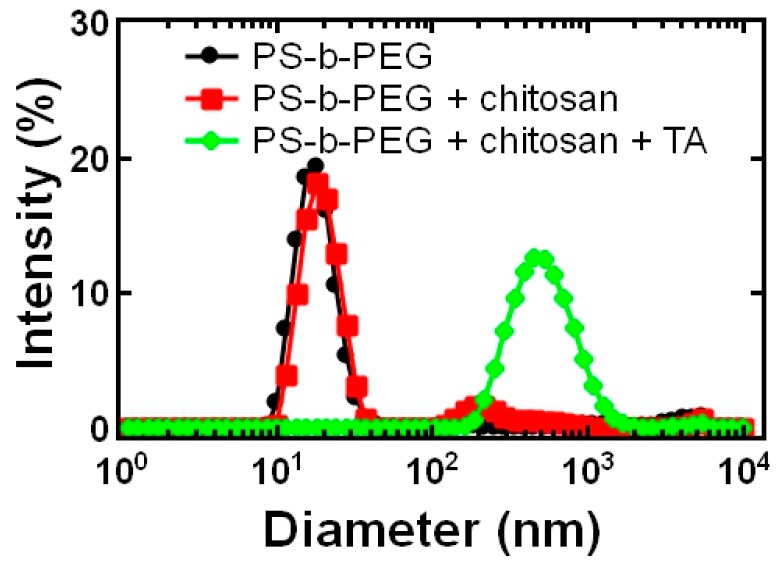
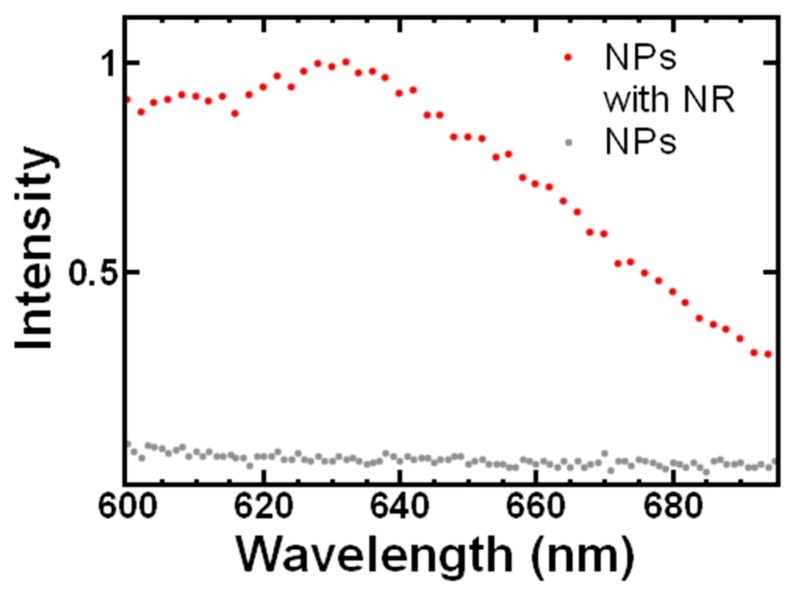
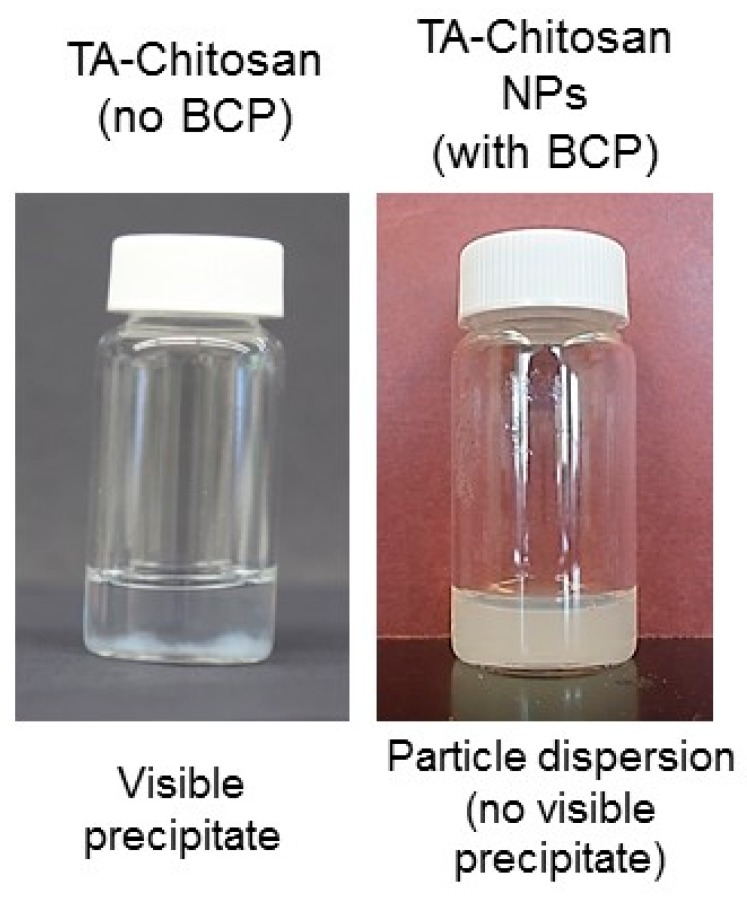
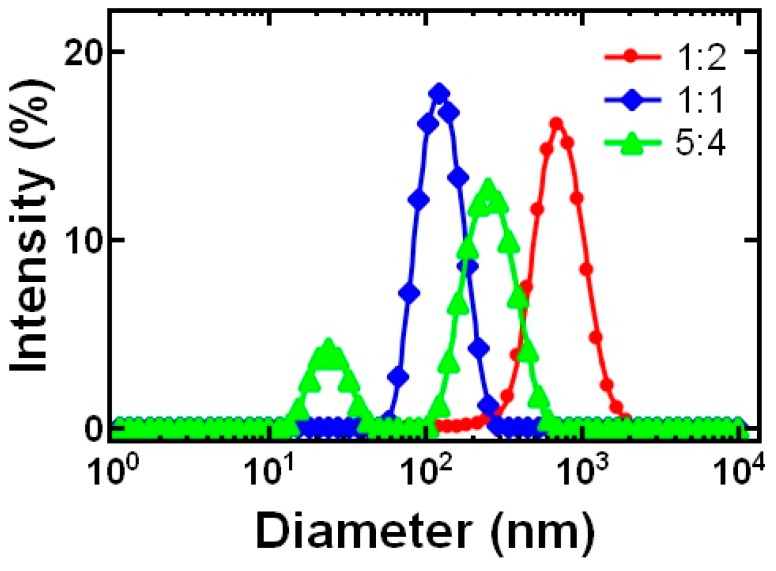
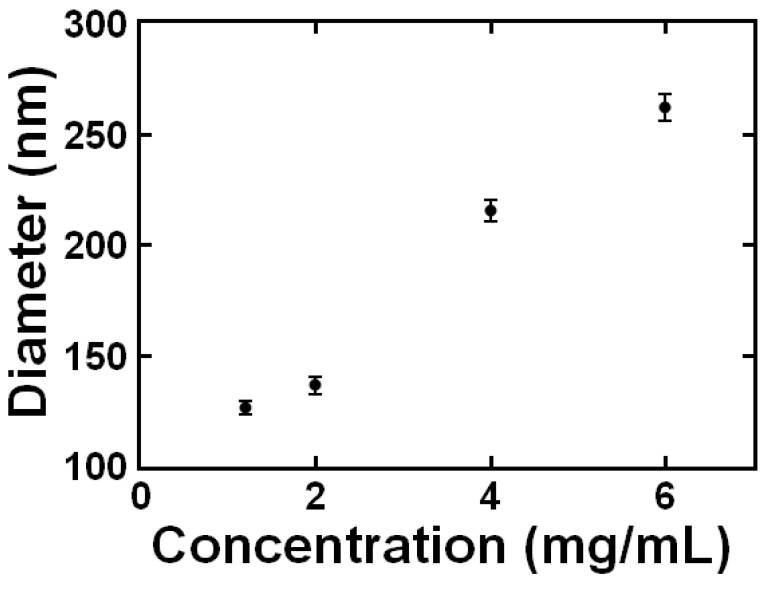
Chitosan-based nanoparticles are promising materials for potential biomedical applications. We used Flash NanoPrecipitation as a rapid, scalable, single-step method to achieve self-assembly of crosslinked chitosan nanoparticles. Self-assembly was driven by electrostatic interactions, hydrogen bonding, and hydrophobic interactions; tannic acid served to precipitate chitosan to seed nanoparticle formation and crosslink the chitosan to stabilize the resulting particles. The size of the nanoparticles can be tuned by varying formulation parameters including the total solids concentration and block copolymer to core mass ratio. We demonstrated that hydrophobic moieties can be incorporated into the nanoparticle using a lipophilic fluorescent dye as a model system.
基于壳聚糖的纳米颗粒是具有潜在生物医学应用前景的材料。我们使用快速纳米沉淀法作为一种快速、可扩展的单步方法来实现交联壳聚糖纳米颗粒的自组装。自组装由静电相互作用、氢键和疏水相互作用驱动;单宁酸用于沉淀壳聚糖以引发纳米颗粒形成,并交联壳聚糖以稳定所得颗粒。纳米颗粒的尺寸可以通过改变配方参数来调整,包括总固体浓度和嵌段共聚物与核质量比。我们证明了可以使用亲脂性荧光染料作为模型系统将疏水部分掺入纳米颗粒中。