Pereira Inês M, Marote Ana, Salgado António J, Silva Nuno A
Life and Health Sciences Research Institute (ICVS), School of Medicine, University of Minho, Campus de Gualtar, 4710-057 Braga, Portugal.
ICVS/3B's-PT Government Associate Laboratory, Braga/Guimarães, Portugal.
Pharmaceuticals (Basel). 2019 Apr 29;12(2):65. doi: 10.3390/ph12020065.
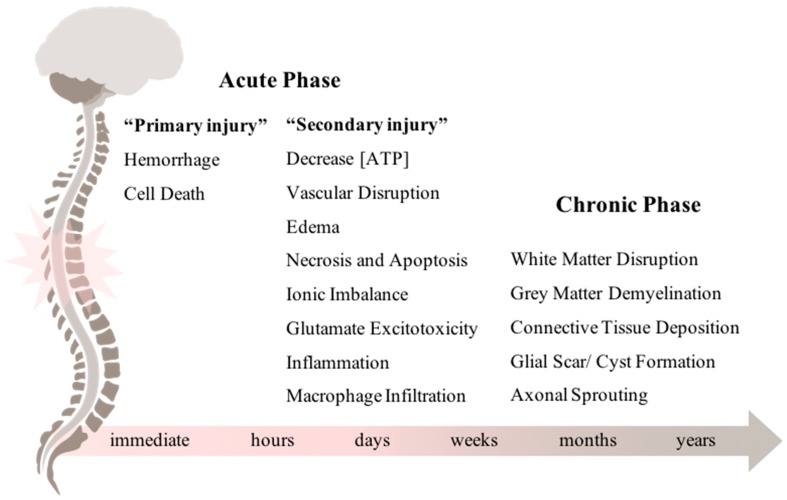
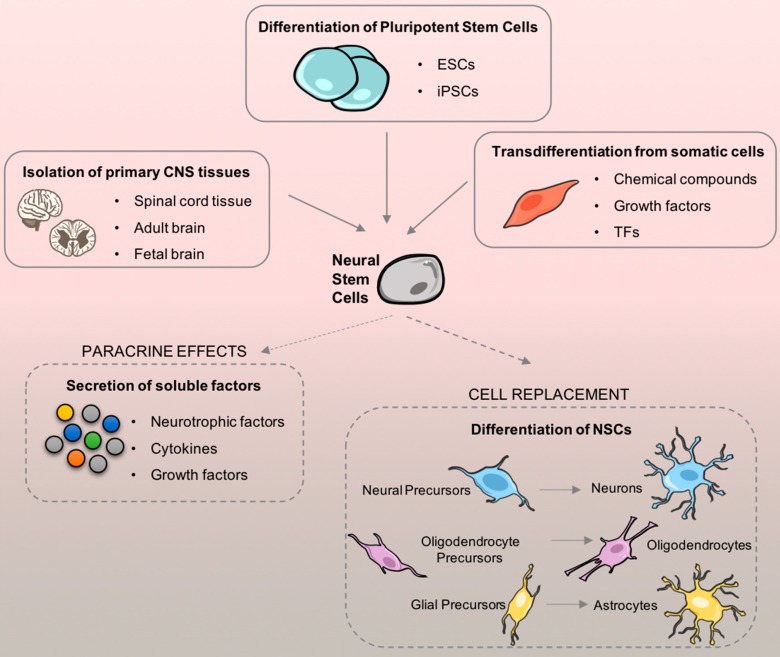
Spinal cord injury (SCI) can lead to severe motor, sensory and social impairments having a huge impact on patients' lives. The complex and time-dependent SCI pathophysiology has been hampering the development of novel and effective therapies. Current treatment options include surgical interventions, to stabilize and decompress the spinal cord, and rehabilitative care, without providing a cure for these patients. Novel therapies have been developed targeting different stages during trauma. Among them, cell-based therapies hold great potential for tissue regeneration after injury. Neural stem cells (NSCs), which are multipotent cells with inherent differentiation capabilities committed to the neuronal lineage, are especially relevant to promote and reestablish the damaged neuronal spinal tracts. Several studies demonstrate the regenerative effects of NSCs in SCI after transplantation by providing neurotrophic support and restoring synaptic connectivity. Therefore, human clinical trials have already been launched to assess safety in SCI patients. Here, we review NSC-based experimental studies in a SCI context and how are they currently being translated into human clinical trials.
脊髓损伤(SCI)可导致严重的运动、感觉和社交障碍,对患者的生活产生巨大影响。复杂且具有时间依赖性的SCI病理生理学一直阻碍着新型有效疗法的发展。目前的治疗选择包括手术干预,以稳定脊髓并解除压迫,以及康复护理,但无法治愈这些患者。针对创伤不同阶段已开发出新型疗法。其中,基于细胞的疗法在损伤后组织再生方面具有巨大潜力。神经干细胞(NSCs)是具有内在分化能力的多能细胞,致力于神经元谱系,对于促进和重建受损的脊髓神经束尤为重要。多项研究表明,移植后神经干细胞在SCI中具有再生作用,可提供神经营养支持并恢复突触连接。因此,已经开展了人体临床试验以评估对SCI患者的安全性。在此,我们综述在SCI背景下基于神经干细胞的实验研究,以及它们目前如何转化为人体临床试验。