Department of General Practice, School of Primary Health Care, Monash University, Melbourne, Australia.
Southern Synergy, School of Clinical Sciences at Monash Health, Monash University, Melbourne, Australia.
BMC Int Health Hum Rights. 2019 Apr 30;19(1):15. doi: 10.1186/s12914-019-0198-2.
Refugees are one of the most vulnerable groups in our society. They are at risk of poor physical and mental health outcomes, much of this attributed to traumatic events prior to migration and the additional risk factors refugees face in the host nations. However, how migration factors shape the health of resettling refugees is not well understood. This study uses a mixed methods approach to examine how pre- and post-migration factors shape the self-rated health of resettling adult refugees in an effort to address the current knowledge gap.
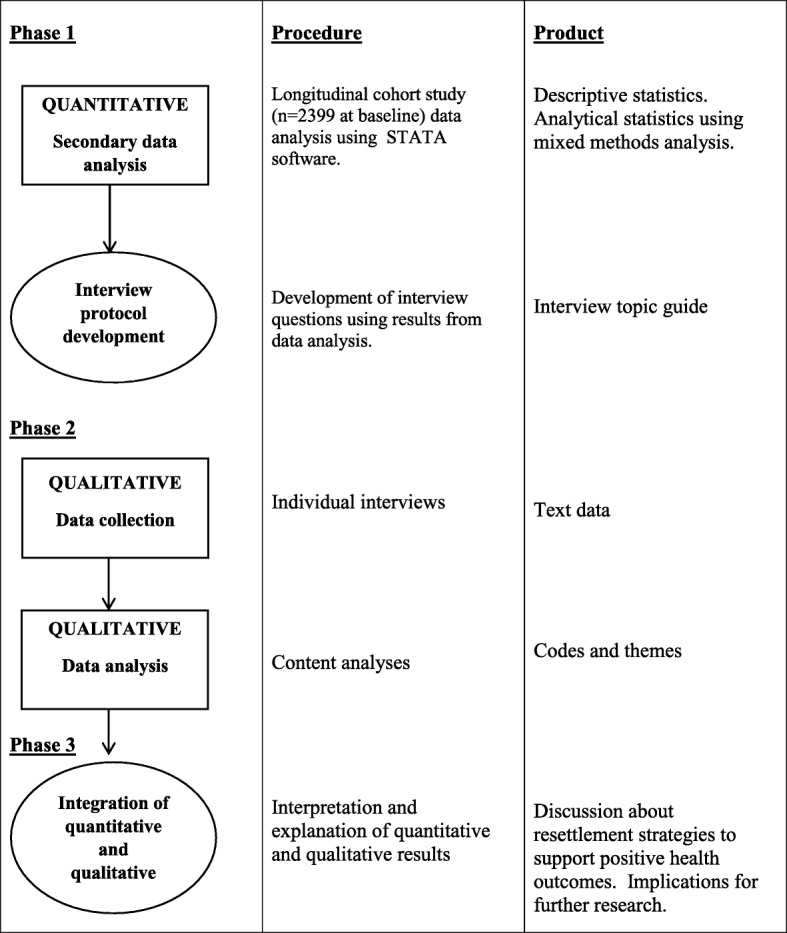
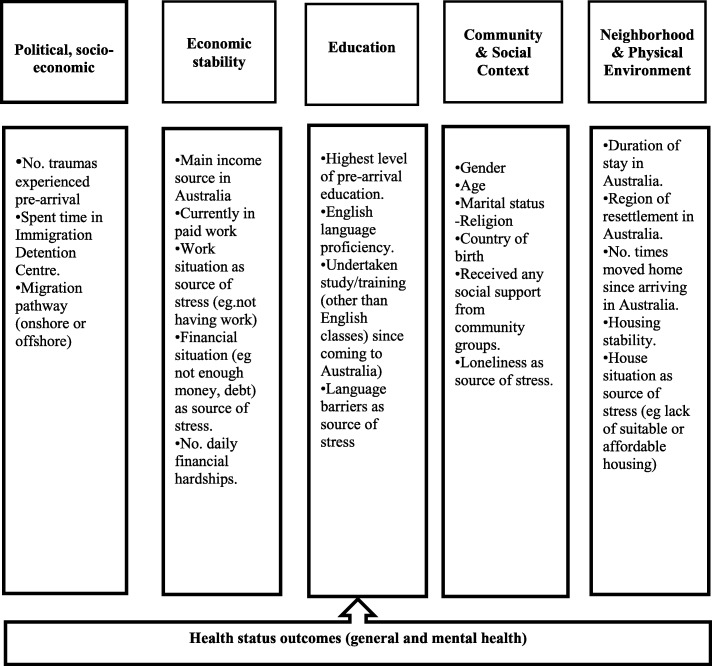
This study will use a sequential explanatory mixed method study design. We begin by analyzing resettlement and health data from the 'Building a New Life In Australia' longitudinal study of humanitarian refugees resettled in Australia to identify significant associations between migration factors and refugee health. Then, a series of semi-structured interviews with resettled refugees will further explore the lived experiences of refugees with respect to the relationship between migration and refugee health. Finally, we will integrate both sets of findings to develop a detailed understanding of how and why migratory factors contribute to refugee health during resettlement.
There is a paucity of studies that examine the multidimensional nature of refugee health during resettlement and as a result, little is understood about their resettlement health needs. This information is required to inform existing or new resettlement interventions to help promote or improve refugee health. To overcome these limitations in the research knowledge, this study will use a mixture of study methods to illustrate the complex and multifaceted determinants of refugee health during resettlement in Australia.
难民是我们社会中最脆弱的群体之一。他们面临着身心健康不良的风险,其中很大一部分归因于迁移前的创伤事件以及难民在收容国面临的额外风险因素。然而,迁移因素如何影响重新安置难民的健康状况还不是很清楚。本研究采用混合方法来研究重新安置前和重新安置后的因素如何影响重新安置成年难民的自我评估健康状况,以努力解决当前的知识空白。
本研究将采用顺序解释性混合方法研究设计。我们首先分析来自“在澳大利亚建立新生活”的人道主义难民重新安置的纵向研究的重新安置和健康数据,以确定迁移因素与难民健康之间的显著关联。然后,对重新安置的难民进行一系列半结构化访谈,进一步探讨难民在迁移与难民健康之间关系方面的生活经历。最后,我们将整合这两组发现,以详细了解移民因素如何以及为何在重新安置期间对难民健康产生影响。
很少有研究探讨重新安置期间难民健康的多维性质,因此,对他们的重新安置健康需求知之甚少。这些信息是为了告知现有的或新的重新安置干预措施,以帮助促进或改善难民健康。为了克服研究知识中的这些局限性,本研究将采用混合研究方法来阐明澳大利亚重新安置期间难民健康的复杂和多方面决定因素。