Department of Oncology, Xiangya Hospital, Central South University, Changsha, Hunan Province 410008, China.
Department of Outpatient, Xiangya Hospital, Central South University, Changsha, Hunan Province 410008, China.
Biosci Rep. 2019 May 14;39(5). doi: 10.1042/BSR20190027. Print 2019 May 31.
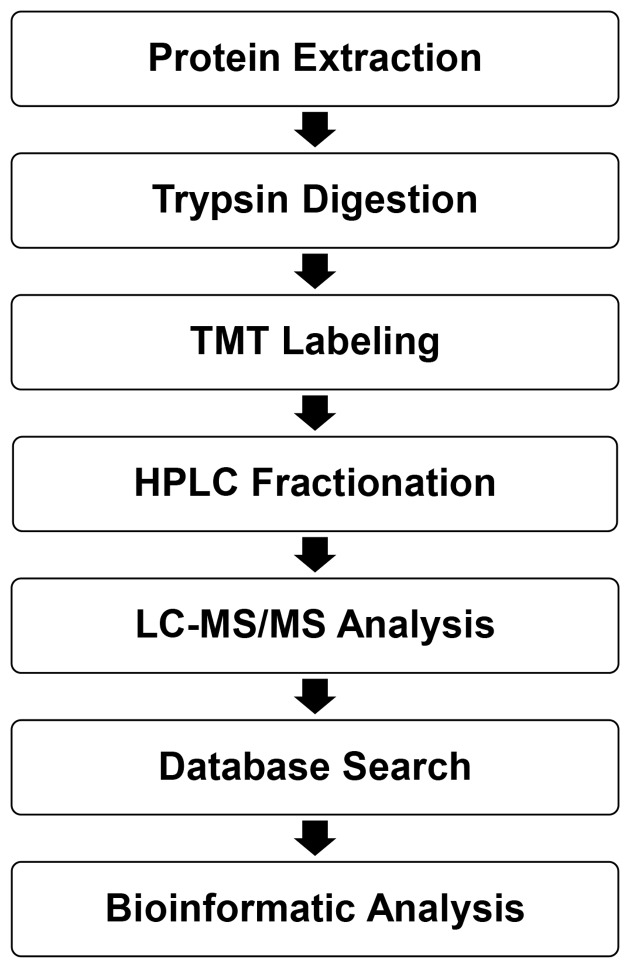
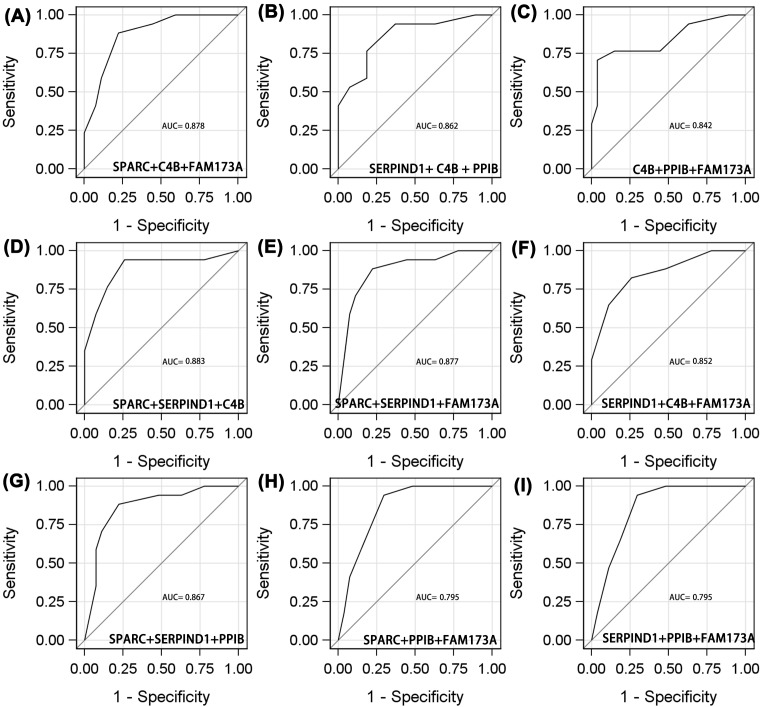
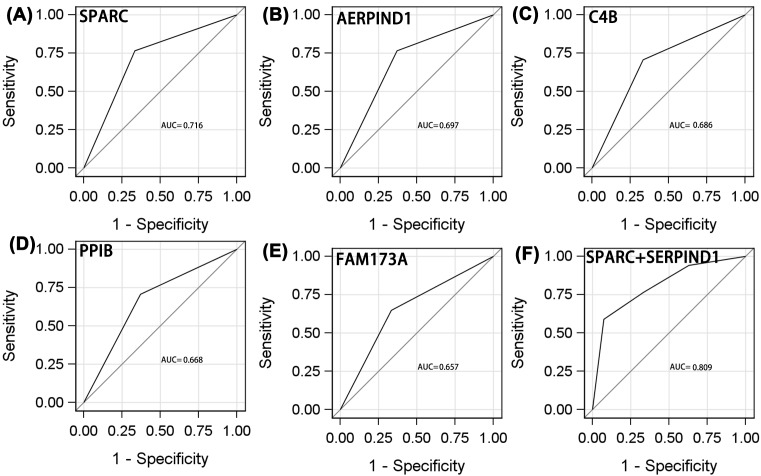
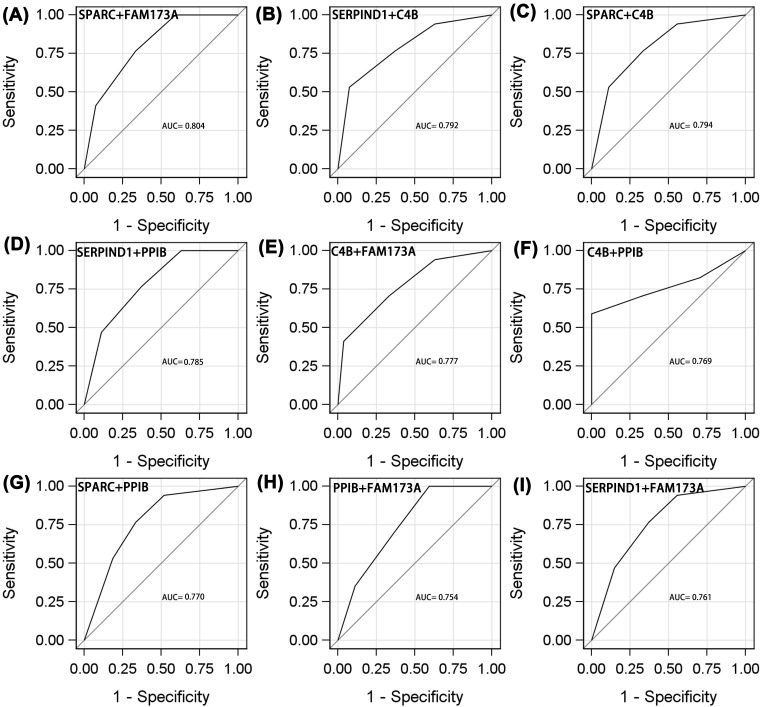
Radiotherapy is the primary treatment option for nasopharyngeal carcinoma (NPC). Local recurrence and metastasis caused by radioresistance become a bottleneck of curative effect for patients with NPC. Currently, serum predictive biomarkers of radioresistance are scare. We enrolled NPC patients, who underwent radiotherapy in the Department of Oncology, Xiangya Hospital, Central Southern University, and analyzed the serum proteins profiles in NPC patients using with quantitative label-free proteomics using ultra-definition MS. Patients were divided into those who were radioresistant and radiosensitive by the overall reduction (≤50% or >50%, respectively) in tumor extent. The MS/MS spectrum database search identified 911 proteins and 809 proteins are quantitatable. Eight proteins significantly up-regulated and 12 serum proteins were significantly down-regulated in the radioresistance group compared with radiosensitivity group (<0.05). Finally, five proteins entered the optimal models, including secreted protein acidic and cysteine rich (SPARC) (0.032), serpin family D member 1S (ERPIND1) (0.040), complement C4B (C4B) (0.017), peptidylprolyl Isomerase B (PPIB) (0.042), and family with sequence similarity 173 member A (FAM173A) (0.017). In all patient, the area under the curves (AUC) for SPARC, SERPIND, C4B, PPIB, and FAM173A were 0.716 (95% CI: 0.574-0.881), 0.697 (95% CI: 0.837-0.858), 0.686 (95% CI: 0.522-0.850), 0.668 (95% CI: 0.502-0.834) and 0.657 (95% CI: 0.512-0.825), respectively. The AUC of five selected proteins was 0.968 (95% CI: 0.918-1.000) with the sensitivity of 0.941 and the specificity of 0.926. Our result indicated that a panel including five serum protein (SPARC SERPIND1 C4B PPIB FAM173A) based on serum proteomics provided a high discrimination ability for radiotherapy effects in NPC patients. Studies with larger sample size and longer follow-up outcome are required.
放射治疗是鼻咽癌(NPC)的主要治疗选择。由于放射抗性导致的局部复发和转移成为 NPC 患者治疗效果的瓶颈。目前,血清预测放射抗性的生物标志物很少。我们招募了在中南大学湘雅医院肿瘤科接受放射治疗的 NPC 患者,并使用超高清 MS 进行定量无标记蛋白质组学分析,以分析 NPC 患者的血清蛋白质图谱。通过肿瘤程度的总体减少(分别为≤50%或>50%),将患者分为放射抵抗组和放射敏感组。MS/MS 谱数据库搜索鉴定出 911 种蛋白质和 809 种可定量的蛋白质。与放射敏感组相比,放射抵抗组中 8 种蛋白显著上调,12 种血清蛋白显著下调(<0.05)。最后,五个蛋白进入最佳模型,包括富含酸性和半胱氨酸的分泌蛋白(SPARC)(0.032)、丝氨酸蛋白酶家族 D 成员 1S(ERPIND1)(0.040)、补体 C4B(C4B)(0.017)、肽基脯氨酰异构酶 B(PPIB)(0.042)和家族与序列相似性 173 成员 A(FAM173A)(0.017)。在所有患者中,SPARC、SERPIND、C4B、PPIB 和 FAM173A 的曲线下面积(AUC)分别为 0.716(95%CI:0.574-0.881)、0.697(95%CI:0.837-0.858)、0.686(95%CI:0.522-0.850)、0.668(95%CI:0.502-0.834)和 0.657(95%CI:0.512-0.825)。五个选定蛋白的 AUC 为 0.968(95%CI:0.918-1.000),灵敏度为 0.941,特异性为 0.926。我们的结果表明,基于血清蛋白质组学的包括五种血清蛋白(SPARC、SERPIND1、C4B、PPIB、FAM173A)的面板为 NPC 患者的放射治疗效果提供了较高的区分能力。需要更大样本量和更长随访结果的研究。