Wang Jing, Pang Yu, Jing Wei, Chen Wei, Guo Ru, Han Xiqin, Wu Limin, Yang Guangxu, Yang Kunyun, Chen Cong, Jiang Lin, Cai Chunkui, Dou Zhi, Diao Lijuan, Pan Hongqiu, Wang Jianyun, Du Feifei, Xu Tao, Wang Lixia, Li Renzhong, Chu Naihui
Department of Tuberculosis, Beijing Chest Hospital, Capital Medical University Beijing Tuberculosis & Thoracic Tumor Research Institute, Beijing 101149, P.R. China,
National Clinical Laboratory on Tuberculosis, Beijing Chest Hospital affiliated to Capital Medical University, Beijing Tuberculosis & Thoracic Tumor Research Institute, Beijing 101149, P.R. China.
Infect Drug Resist. 2019 Apr 3;12:763-770. doi: 10.2147/IDR.S194484. eCollection 2019.
Our aim was to assess whether the use of cycloserine (CS) would bring additional benefit for multidrug-resistant tuberculosis (MDR-TB) patients, and to estimate the incidence and associated risk factors of adverse drug reactions (ADRs) from CS.
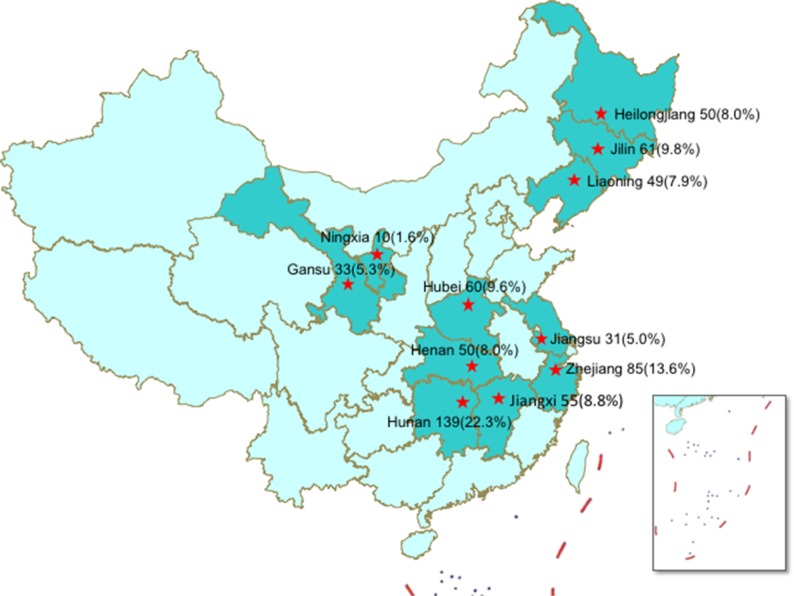
In this study, we retrospectively reviewed the clinical outcomes and ADRs of MDR-TB patients treated with CS containing regimens between January 2012 and June 2015 in China.
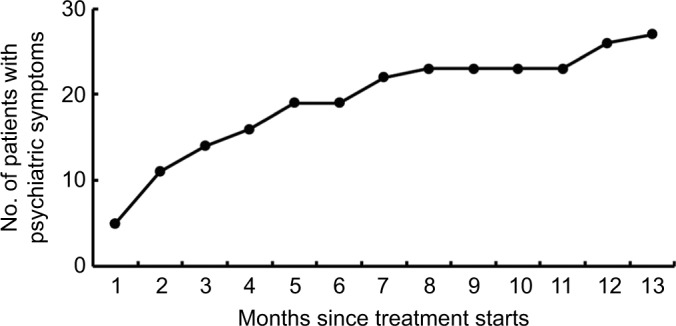
A total of 623 MDR-TB cases enrolled in this study received regimens containing CS. Of these cases, in 411 of the patients 374 (66.0%) were "cured" and 37 (5.9%) "complete treatment" by the end of the study. The elderly, patients with prolonged previous exposure to and history of anti-TB drugs, and pre-existing co-morbidity were more likely to be associated with adverse outcomes of MDR-TB patients (<0.05). Hyperuricemia (22.8%, 142/623) was the most frequently observed ADR among these cases, while the most noted ADRs associated with the administration of CS was psychiatric symptoms, accounting for 4.3% (27/623) of study population. Nineteen (70.4%) out of 27 cases with psychiatric symptoms occurred before the 6-month timepoint, and were notably, the highest proportion of serious adverse, 29.6% (8/27) of which were noted after discontinuation of CS.
Our study demonstrates that a CS-containing regimen achieved a highly successful outcome in the treatment of MDR-TB and promising tolerance in Chinese population. The potential emergence of serious psychiatric symptoms highlights that patients need to be closely monitored for these conditions during treatment that includes CS.
我们的目的是评估使用环丝氨酸(CS)是否会给耐多药结核病(MDR-TB)患者带来额外益处,并估计CS所致药物不良反应(ADR)的发生率及相关危险因素。
在本研究中,我们回顾性分析了2012年1月至2015年6月在中国接受含CS方案治疗的MDR-TB患者的临床结局和ADR情况。
本研究共纳入623例接受含CS方案治疗的MDR-TB病例。在这些病例中,到研究结束时,411例患者中有374例(66.0%)“治愈”,37例(5.9%)“完成治疗”。年龄较大、既往抗结核药物暴露时间延长且有抗结核药物治疗史以及存在合并症的患者更有可能与MDR-TB患者的不良结局相关(<0.05)。高尿酸血症(22.8%,142/623)是这些病例中最常观察到的ADR,而与CS给药相关的最显著ADR是精神症状,占研究人群的4.3%(27/623)。27例有精神症状的病例中有19例(70.4%)在6个月时间点之前出现,值得注意的是,严重不良反应的比例最高,其中29.6%(8/27)在停用CS后出现。
我们的研究表明,含CS方案在治疗MDR-TB方面取得了非常成功的结果,并且在中国人群中耐受性良好。严重精神症状的潜在出现凸显了在包括CS的治疗过程中需要密切监测患者的这些情况。