Masaki So, Ikeda Shun, Hata Asuka, Shiozawa Yusuke, Kon Ayana, Ogawa Seishi, Suzuki Kenji, Hakuno Fumihiko, Takahashi Shin-Ichiro, Kataoka Naoyuki
Laboratory for Malignancy Control Research, Medical Innovation Center, Kyoto University Graduate School of Medicine, Kyoto, Japan.
Laboratory of Molecular Medicinal Science, Department of Pharmaceutical Sciences, Ritsumeikan University, Shiga, Japan.
Front Genet. 2019 Apr 16;10:338. doi: 10.3389/fgene.2019.00338. eCollection 2019.
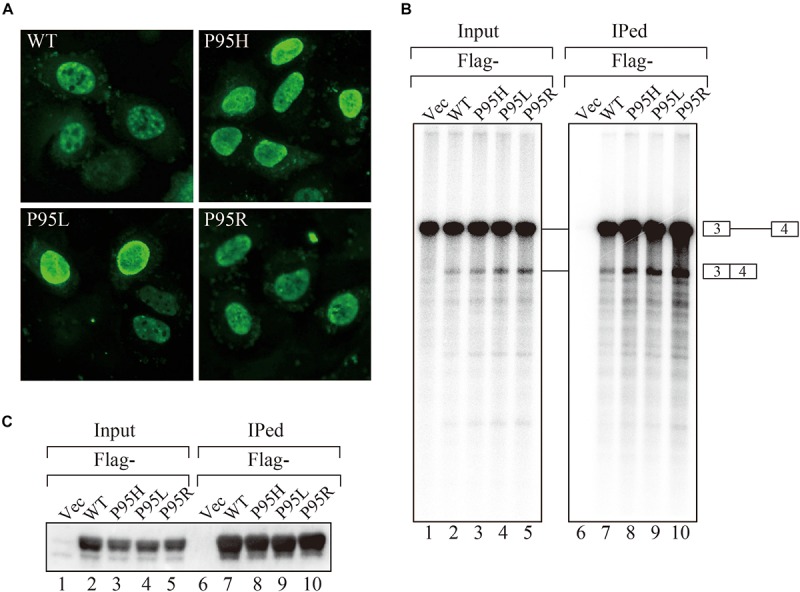
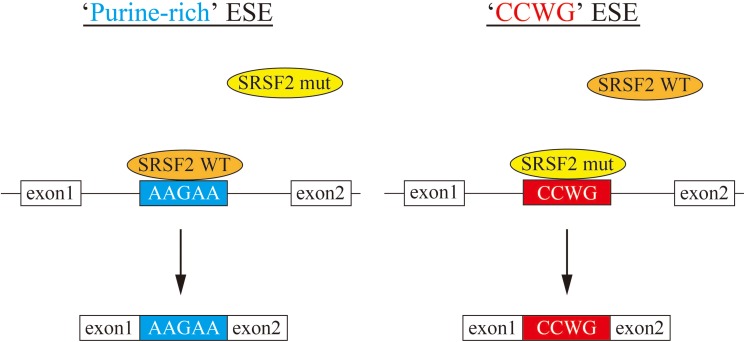
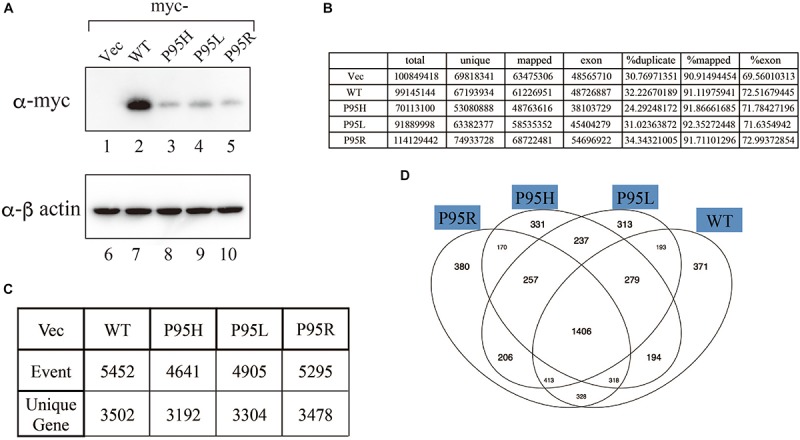
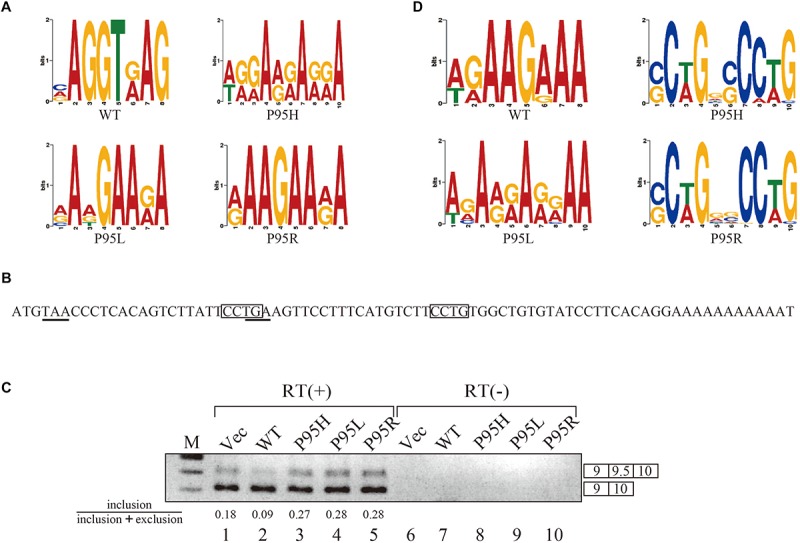
Serine/arginine-rich splicing factor 2 (SRSF2) is a member of the SR protein family that is involved in both constitutive and alternative mRNA splicing. Mutations in SRSF2 gene are frequently reported in myelodysplastic syndromes (MDS) and acute myeloid leukemia (AML). It is imperative to understand how these mutations affect SRSF2-mediated splicing and cause MDS. In this study, we characterized MDS-associated SRSF2 mutants (P95H, P95L, and P95R). We found that those mutants and wild-type SRSF2 proteins showed nuclear localization in HeLa cells. splicing reaction also revealed that mutant proteins associated with both precursor and spliced mRNAs, suggesting that the mutants directly participate in splicing. We established the human myeloid leukemia K562 cell lines that stably expressed myc-tagged wild-type or mutant SRSF2 proteins, and then performed RNA-sequence to analyze the splicing pattern of each cell line. The results revealed that both wild-type and mutants affected splicing of approximately 3,000 genes. Although splice site sequences adjacent to the affected exons showed no significant difference compared to the total exons, exonic motif analyses with both inclusion- and exclusion-enhanced exons demonstrated that wild-type and mutants have different binding sequences in exons. These results indicate that mutations of SRSF2 in MDS change binding properties of SRSF2 to exonic motifs and this causes aberrant splicing.
富含丝氨酸/精氨酸的剪接因子2(SRSF2)是SR蛋白家族的成员,参与组成型和可变mRNA剪接。SRSF2基因的突变在骨髓增生异常综合征(MDS)和急性髓系白血病(AML)中经常被报道。了解这些突变如何影响SRSF2介导的剪接并导致MDS至关重要。在本研究中,我们对与MDS相关的SRSF2突变体(P95H、P95L和P95R)进行了表征。我们发现这些突变体和野生型SRSF2蛋白在HeLa细胞中表现出核定位。剪接反应还表明,突变蛋白与前体mRNA和剪接后的mRNA都相关,这表明突变体直接参与剪接。我们建立了稳定表达myc标签的野生型或突变型SRSF2蛋白的人髓系白血病K562细胞系,然后进行RNA测序以分析每个细胞系的剪接模式。结果显示,野生型和突变体均影响约3000个基因的剪接。尽管与总外显子相比,受影响外显子相邻的剪接位点序列没有显著差异,但对包含增强和排除增强的外显子进行外显子基序分析表明,野生型和突变体在外显子中有不同的结合序列。这些结果表明,MDS中SRSF2的突变改变了SRSF2与外显子基序的结合特性,从而导致异常剪接。