Garcia Cyril, Buffet Camille, El Khattabi Laila, Rizk-Rabin Marthe, Perlemoine Karine, Ragazzon Bruno, Bertherat Jérôme, Cormier Françoise, Groussin Lionel
INSERM Unité 1016, Institut Cochin, Paris, France.
Centre National de la Recherche Scientifique, Unité Mixte de Recherche 8104, Institut Cochin, Paris, France.
Oncotarget. 2019 Mar 19;10(23):2320-2334. doi: 10.18632/oncotarget.26798.
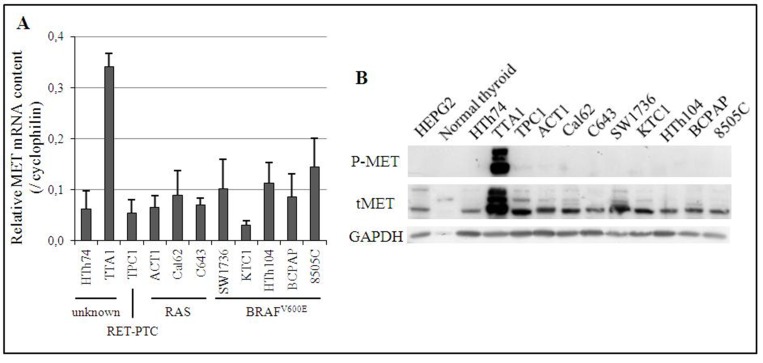
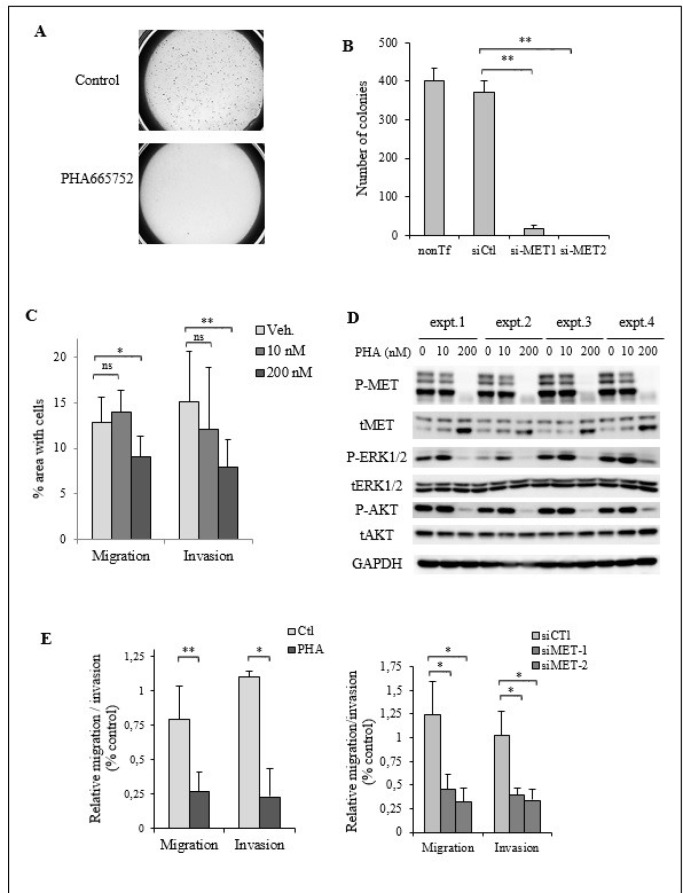
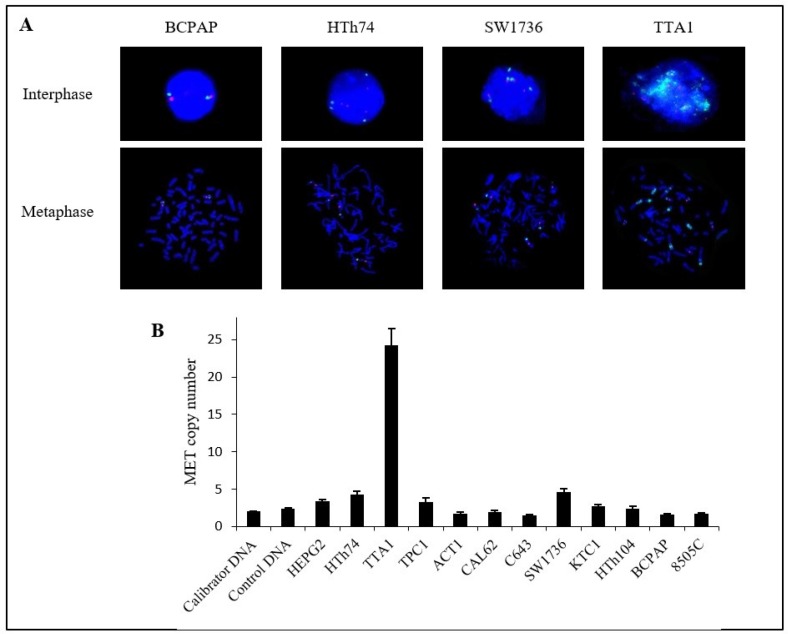
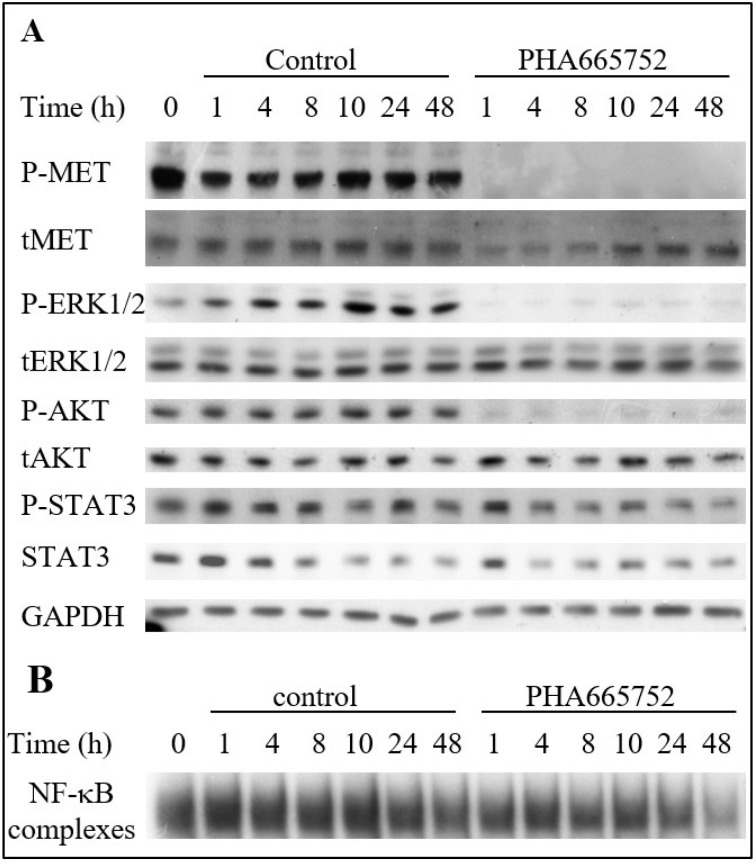
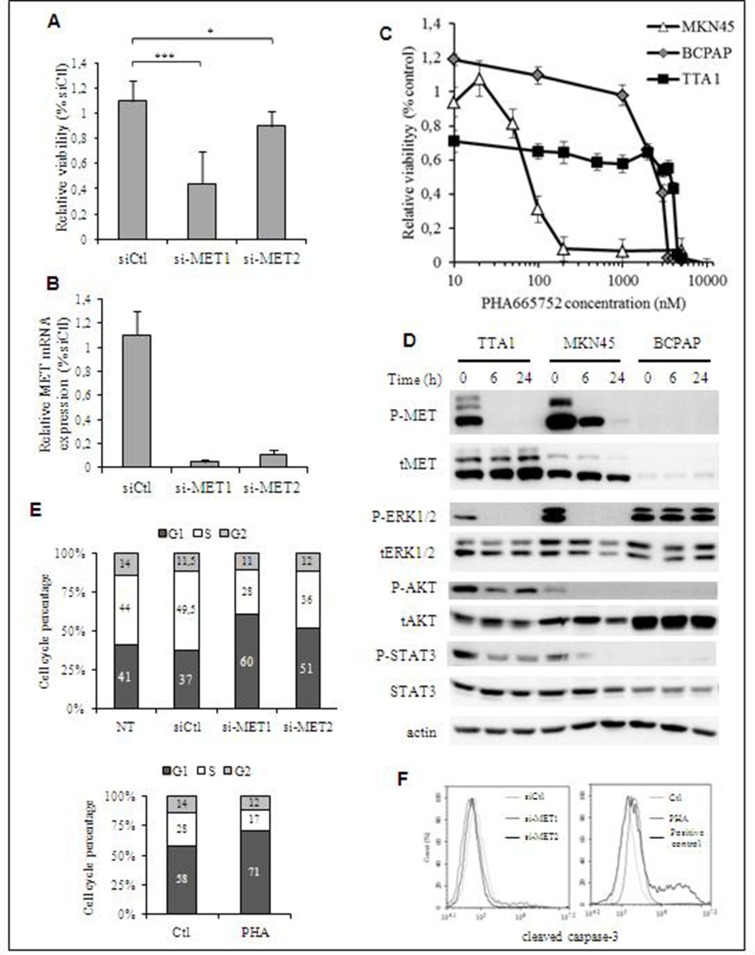
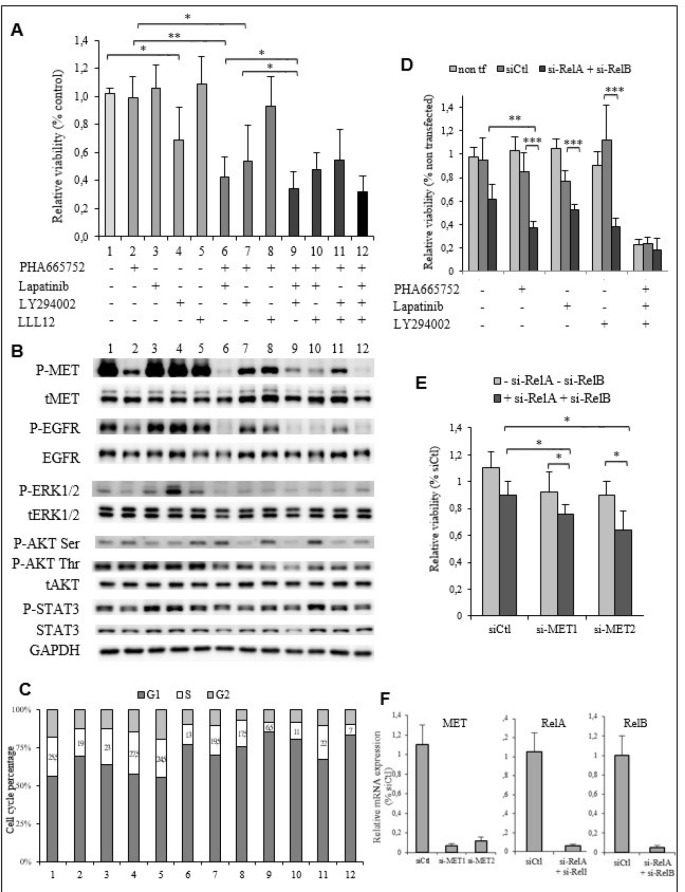
In thyroid cancers, MET receptor overexpression has been associated with higher risk of metastatic progression. In this study, it was shown that the anaplastic thyroid cancer (ATC)-derived TTA1 cell line overexpressed MET. By using FISH and relative quantification by qPCR, it was demonstrated that this overexpression resulted from a amplification with more than 20 copies. As expected, MET overexpression led to its constitutive activation and upregulated signaling towards the MAPK, PI3K/AKT, STAT3 and NF-κB pathways. Since the usual feature of -amplified cell lines is the "MET addiction" for their cell proliferation, the effect of the highly selective ATP competitive MET inhibitor PHA665752 was analyzed. While PHA665752 strongly inhibited the MAPK pathway, it did not reduce cell proliferation in TTA1 cells (IC = 4100 nM). This resistance to PHA665752 of the TTA1 cell line was demonstrated to be related to EGFR-MET functional cross-talk and PI3K/AKT and NF-κB signaling. Nevertheless, PHA665752 suppressed the anchorage-independent growth capacity of the TTA1 cell line and reduced cell migration and invasion in a transwell assay. The role of activated MET in these neoplastic properties of the TTA1 cells was also proved with si-MET-RNA targeting. Thus, this work highlights the TTA1 cell line as the first model of amplification in an ATC cell line, which leads to MET constitutive activation and underlies its neoplastic properties. Besides being a useful model for MET inhibitors screening, the TTA1 cell line also supports the argument for searching for amplification in ATC, as it could have therapeutic implications.
在甲状腺癌中,MET受体过表达与转移进展的高风险相关。在本研究中,结果表明,源自间变性甲状腺癌(ATC)的TTA1细胞系过表达MET。通过荧光原位杂交(FISH)和定量PCR进行相对定量分析,结果表明这种过表达是由超过20个拷贝的扩增所致。正如预期的那样,MET过表达导致其组成性激活,并上调了向MAPK、PI3K/AKT、STAT3和NF-κB信号通路的信号传导。由于扩增细胞系的常见特征是其细胞增殖对“MET成瘾”,因此分析了高选择性ATP竞争性MET抑制剂PHA665752的作用。虽然PHA665752强烈抑制MAPK信号通路,但它并未降低TTA1细胞的增殖(IC = 4100 nM)。TTA1细胞系对PHA665752的这种抗性被证明与EGFR-MET功能串扰以及PI3K/AKT和NF-κB信号传导有关。然而,PHA665752抑制了TTA1细胞系的非锚定依赖性生长能力,并在Transwell实验中降低了细胞迁移和侵袭能力。通过靶向si-MET-RNA也证明了激活的MET在TTA1细胞的这些肿瘤特性中的作用。因此,这项工作突出了TTA1细胞系作为ATC细胞系中第一个扩增模型,它导致MET组成性激活并构成其肿瘤特性的基础。除了是MET抑制剂筛选的有用模型外,TTA1细胞系还支持在ATC中寻找扩增的观点,因为这可能具有治疗意义。