Shen Yu-Ping, Fong Lai San, Yan Zhi-Bo, Liu Jian-Zhong
Institute of Synthetic Biology, Biomedical Center, Guangdong Province Key Laboratory of Improved Variety Reproduction in Aquatic Economic Animals, School of Life Sciences, Sun Yat-sen University, Guangzhou, 510275 China.
Biotechnol Biofuels. 2019 Apr 23;12:94. doi: 10.1186/s13068-019-1438-3. eCollection 2019.
4-Hydroxyphenylacetic acid (4HPAA) is an important building block for synthesizing drugs, agrochemicals, biochemicals, etc. 4HPAA is currently produced exclusively via petrochemical processes and the process is environmentally unfriendly and unsustainable. Microbial cell factory would be an attractive approach for 4HPAA production.
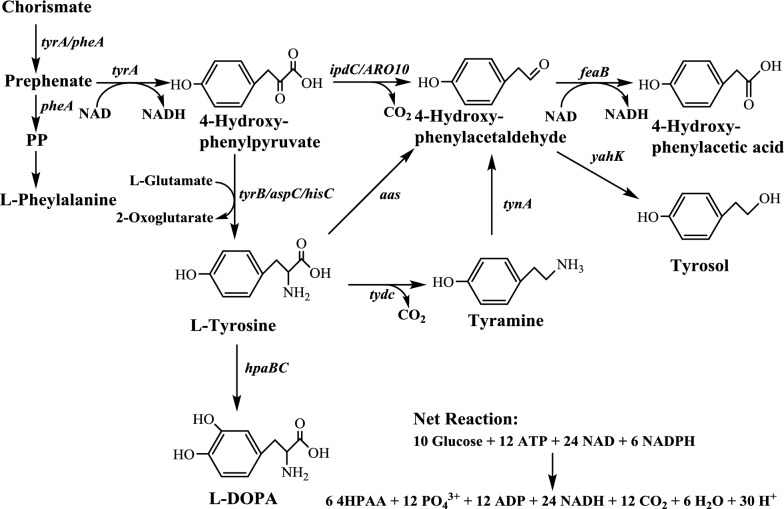
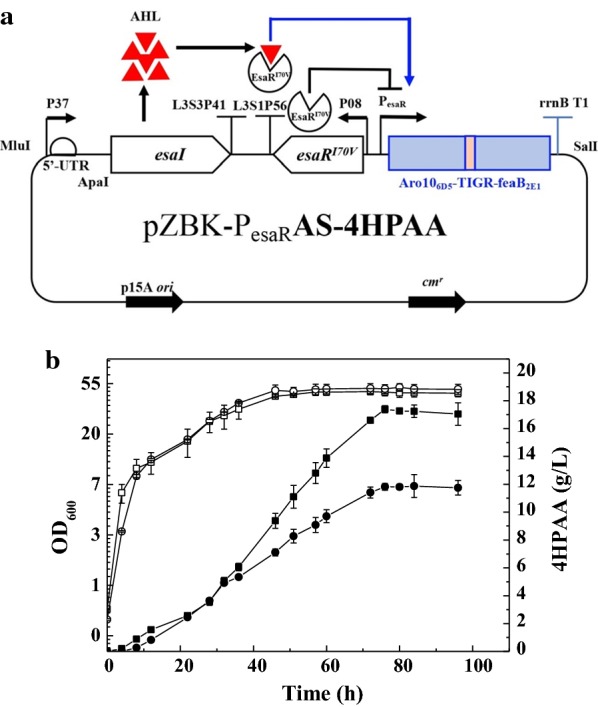
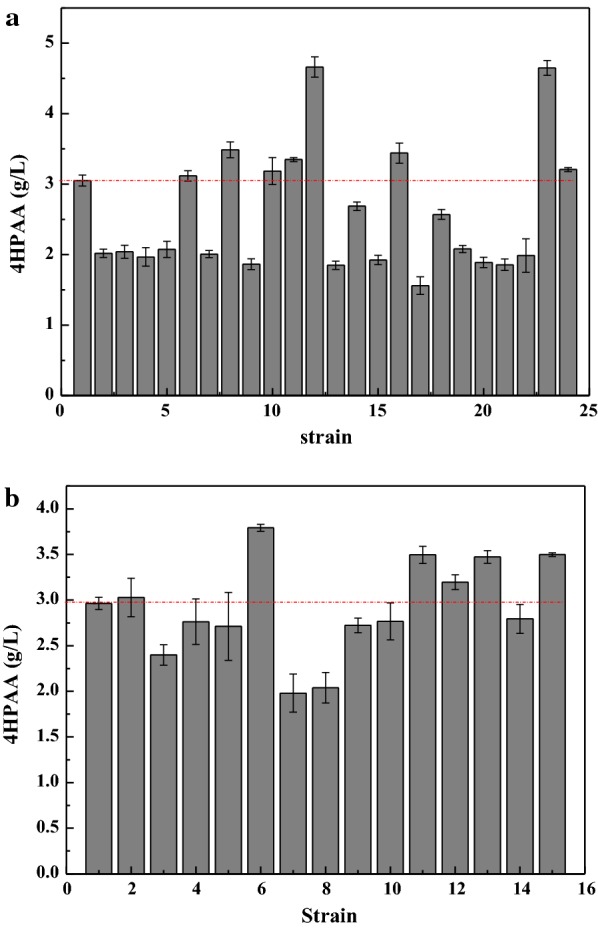
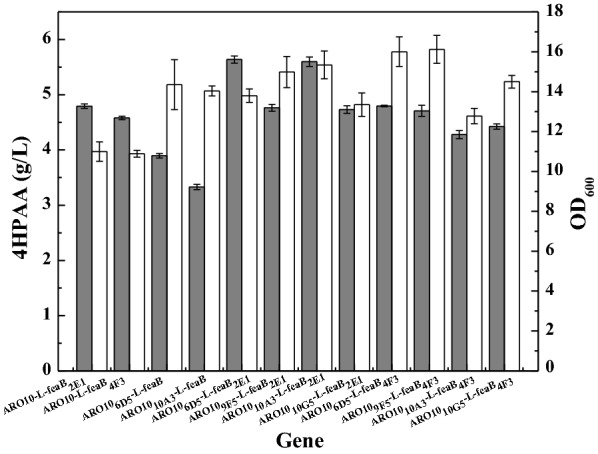
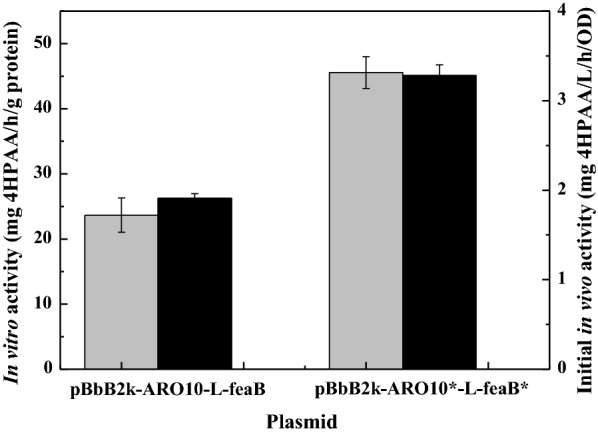
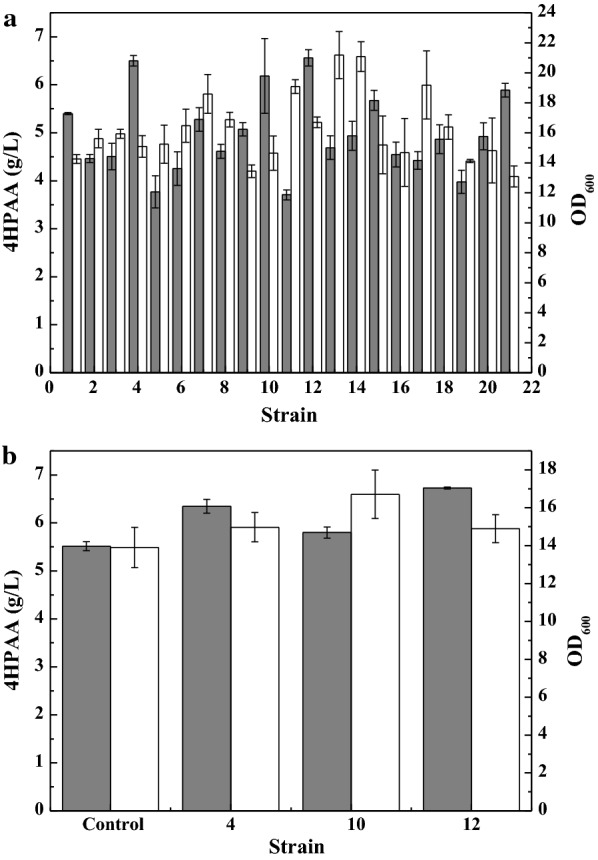
In the present study, we established a microbial biosynthetic system for the de novo production of 4HPAA from glucose in . First, we compared different biosynthetic pathways for the production of 4HPAA. The yeast Ehrlich pathway produced the highest level of 4HPAA among these pathways that were evaluated. To increase the pathway efficiency, the yeast Ehrlich pathway enzymes were directedly evolved via error-prone PCR. Two phenylpyruvate decarboxylase ARO10 and phenylacetaldehyde dehydrogenase FeaB variants that outperformed the wild-type enzymes were obtained. These mutations increased the in vitro and in vivo catalytic efficiency for converting 4-hydroxyphenylpyruvate to 4HPAA. A tunable intergenic region (TIGR) sequence was inserted into the two evolved genes to balance their expression. Regulation of TIGR for the evolved pathway enzymes further improved the production of 4HPAA, resulting in a 1.13-fold increase in titer compared with the fusion wild-type pathway. To prevent the toxicity of a heterologous pathway to the cell, an Esa quorum-sensing (QS) circuit with both activating and repressing functions was developed for inducer-free productions of metabolites. The Esa-P activation QS system was used to dynamically control the biosynthetic pathway of 4HPAA in , which achieved 17.39 ± 0.26 g/L with a molar yield of 23.2% without addition of external inducers, resulting in a 46.4% improvement of the titer compared to the statically controlled pathway.
We have constructed an for 4HPAA production with the highest titer to date. This study also demonstrates that the combination of directed evolution of pathway enzymes and dynamic pathway regulation using a QS circuit is a powerful strategy of metabolic engineering for the productions of metabolites.
4-羟基苯乙酸(4HPAA)是合成药物、农用化学品、生物化学品等的重要组成部分。目前4HPAA完全通过石化工艺生产,该工艺对环境不友好且不可持续。微生物细胞工厂将是生产4HPAA的一种有吸引力的方法。
在本研究中,我们建立了一个从葡萄糖从头生产4HPAA的微生物生物合成系统。首先,我们比较了生产4HPAA的不同生物合成途径。在这些被评估的途径中,酵母埃利希途径产生的4HPAA水平最高。为了提高途径效率,通过易错PCR对酵母埃利希途径的酶进行定向进化。获得了两个比野生型酶表现更优的苯丙酮酸脱羧酶ARO10和苯乙醛脱氢酶FeaB变体。这些突变提高了将4-羟基苯丙酮酸转化为4HPAA的体外和体内催化效率。将一个可调节基因间区域(TIGR)序列插入到这两个进化基因中以平衡它们的表达。TIGR对进化途径酶的调控进一步提高了4HPAA的产量,与融合野生型途径相比,滴度提高了1.13倍。为了防止异源途径对细胞的毒性,开发了一种具有激活和抑制功能的Esa群体感应(QS)电路用于无诱导剂的代谢物生产。Esa-P激活QS系统用于动态控制4HPAA在 中的生物合成途径,在不添加外部诱导剂的情况下实现了17.39±0.26 g/L的产量,摩尔产率为23.2%,与静态控制途径相比,滴度提高了46.4%。
我们构建了一个迄今为止4HPAA产量最高的 。本研究还表明,途径酶的定向进化与使用QS电路的动态途径调控相结合是代谢工程用于生产代谢物的一种强大策略。