Department of Urology, Shanghai Institute of Andrology, Renji Hospital, Shanghai Jiao Tong University School of Medicine, Shanghai 200001, China.
Asian J Androl. 2019 Nov-Dec;21(6):605-611. doi: 10.4103/aja.aja_21_19.
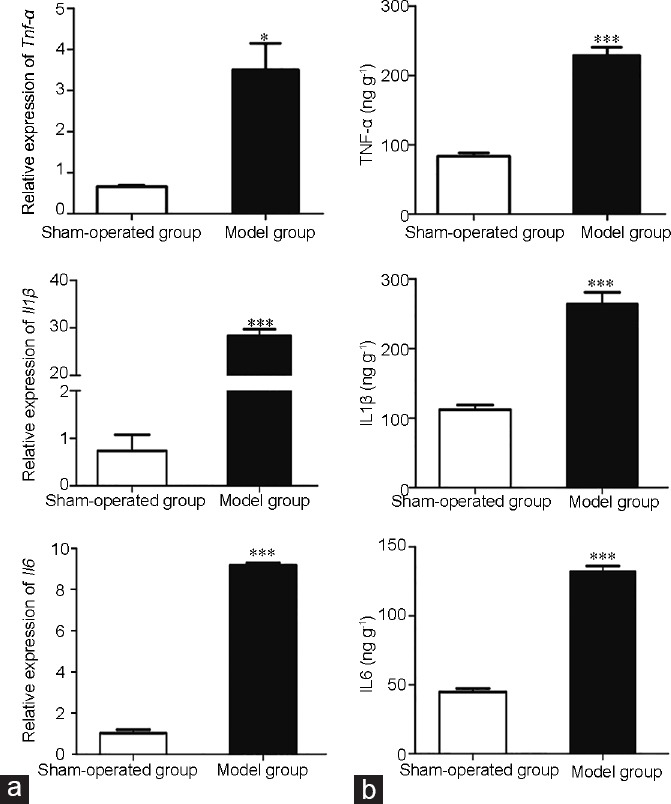
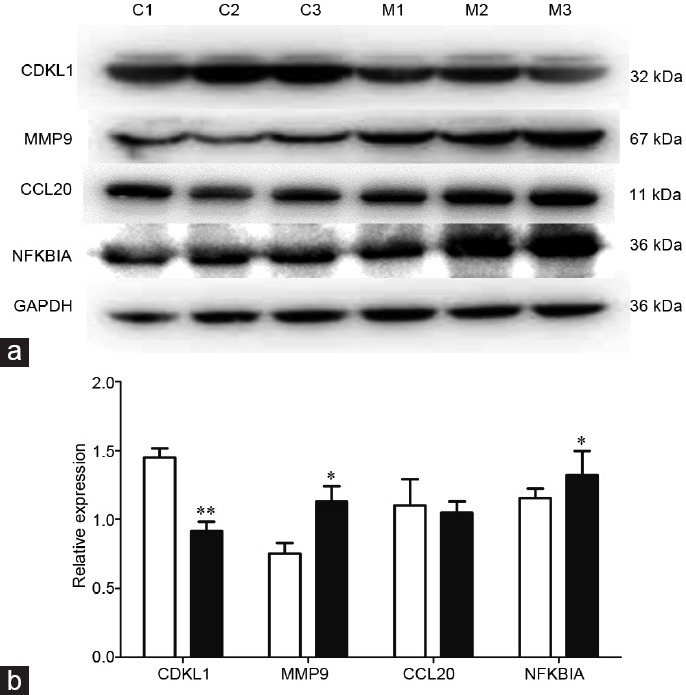
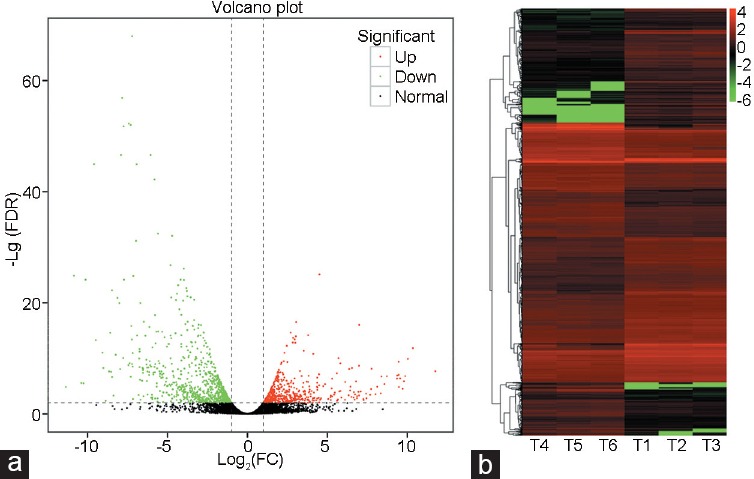
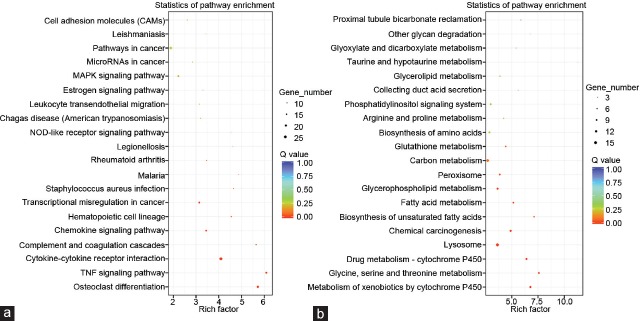
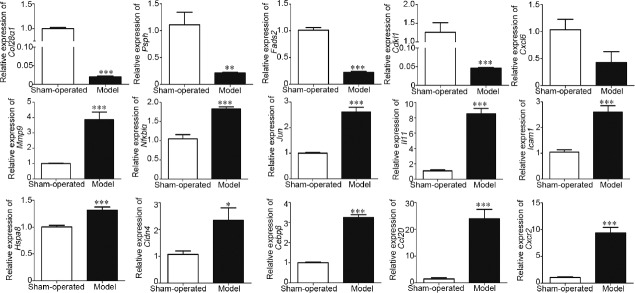
Epididymitis is a commonly diagnosed disease associated with male infertility. However, little is known about the molecules that are involved in its development. This study was to identify critical genes associated with lipopolysaccharide-induced epididymitis and analyze the molecular mechanism of epididymitis through RNA sequencing. Experimental epididymitis models were generated by administering male Sprague-Dawley rats' lipopolysaccharide. A total of 1378 differentially expressed genes, including 531 upregulated and 847 downregulated genes, were identified in the epididymitis model rats compared with those in sham-operated rats by RNA sequencing. Functional enrichment analyses suggested that the upregulated genes were markedly enriched in inflammation-related biological processes, as well as in the tumor necrosis factor (TNF) signaling pathway, cytokine-cytokine receptor interactions, complement and coagulation cascades, and in the chemokine signaling pathway. Four downregulated genes (collagen type XXVIII alpha 1 chain [Col28α1], cyclin-dependent kinase-like 1 [Cdkl1], phosphoserine phosphatase [Psph], and fatty acid desaturase 2 [Fads2]) and ten upregulated genes (CCAAT/enhancer-binding protein beta [Cebpβ], C-X-C motif chemokine receptor 2 [Cxcr2], interleukin 11 [Il11], C-C motif chemokine ligand 20 [Ccl20], nuclear factor-kappa-B inhibitor alpha [Nfkbiα], claudin 4 [Cldn4], matrix metallopeptidase 9 [Mmp9], heat shock 70 kDa protein 8 [Hspa8], intercellular cell adhesion molecule-1 [Icam1], and Jun) were successfully confirmed by real-time polymerase chain reaction. Western blot demonstrated that CDKL1 was decreased, while MMP9 and NFKBIA were increased in the experimental model group compared with those in the sham-operated group. Our study sheds new light on the understanding of the early response of the epididymis during bacterial epididymitis.
附睾炎是一种常见的与男性不育相关的疾病。然而,目前对于参与其发生发展的分子知之甚少。本研究旨在通过 RNA 测序鉴定与脂多糖诱导的附睾炎相关的关键基因,并分析附睾炎的分子机制。通过给予雄性 Sprague-Dawley 大鼠脂多糖建立实验性附睾炎模型。与假手术组大鼠相比,RNA 测序鉴定出模型组大鼠附睾中有 1378 个差异表达基因,包括 531 个上调基因和 847 个下调基因。功能富集分析表明,上调基因显著富集于炎症相关的生物学过程,以及肿瘤坏死因子 (TNF) 信号通路、细胞因子-细胞因子受体相互作用、补体和凝血级联、趋化因子信号通路。下调基因(XXVIII 型胶原α 1 链 [Col28α1]、细胞周期蛋白依赖性激酶样 1 [Cdkl1]、磷酸丝氨酸磷酸酶 [Psph] 和脂肪酸去饱和酶 2 [Fads2])有 4 个,上调基因(CCAAT/增强子结合蛋白β [Cebpβ]、C-X-C 基序趋化因子受体 2 [Cxcr2]、白细胞介素 11 [Il11]、C-C 基序趋化因子配体 20 [Ccl20]、核因子-κB 抑制因子α [Nfkbiα]、闭合蛋白 4 [Cldn4]、基质金属蛋白酶 9 [Mmp9]、热休克蛋白 70kDa 蛋白 8 [Hspa8]、细胞间黏附分子 1 [Icam1]和 Jun)有 10 个,通过实时聚合酶链反应得到了成功验证。Western blot 结果显示,与假手术组相比,实验组 CDKL1 减少,MMP9 和 NFKBIA 增加。本研究为理解细菌性附睾炎时附睾的早期反应提供了新的视角。