Section of Experimental Endocrinology, Department of Pharmacology, Universidade Federal de São Paulo-Escola Paulista de Medicina, São Paulo, SP, 04044-020, Brazil.
Department of Pharmacology, Institute of Biosciences of Botucatu, Universidade Estadual Paulista "Júlio de Mesquita Filho", Botucatu, SP, 18618-869, Brazil.
Sci Rep. 2018 Jan 8;8(1):103. doi: 10.1038/s41598-017-17944-4.
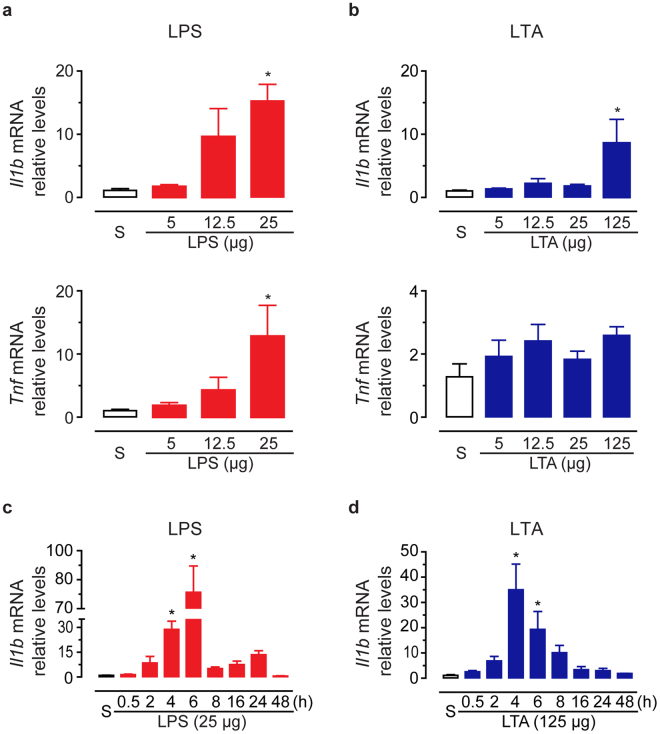
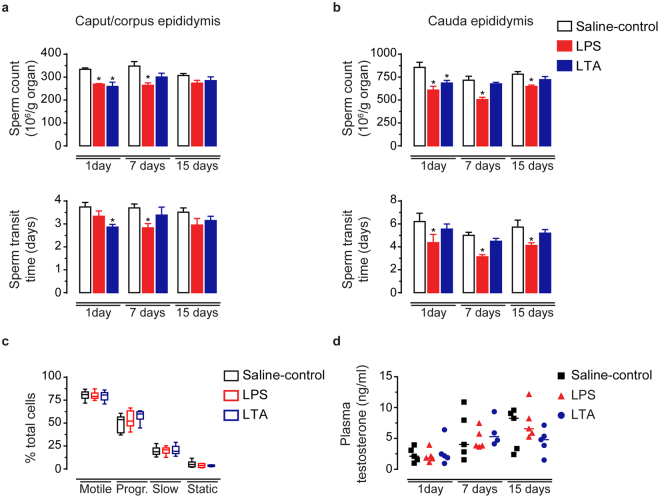
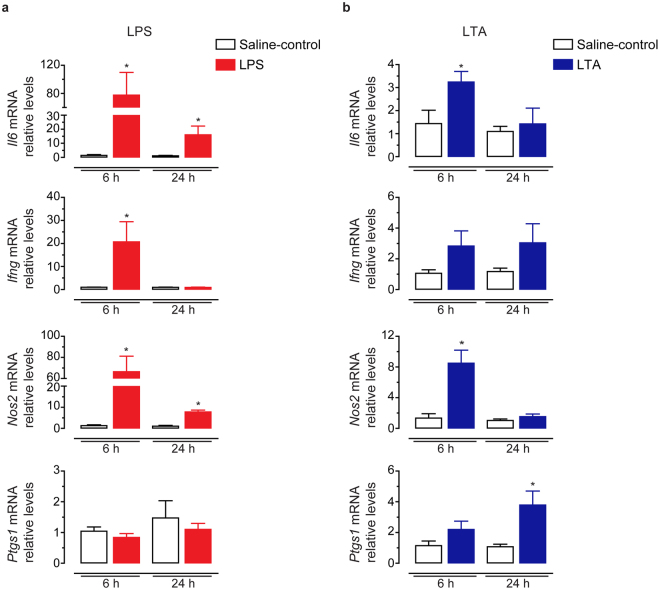
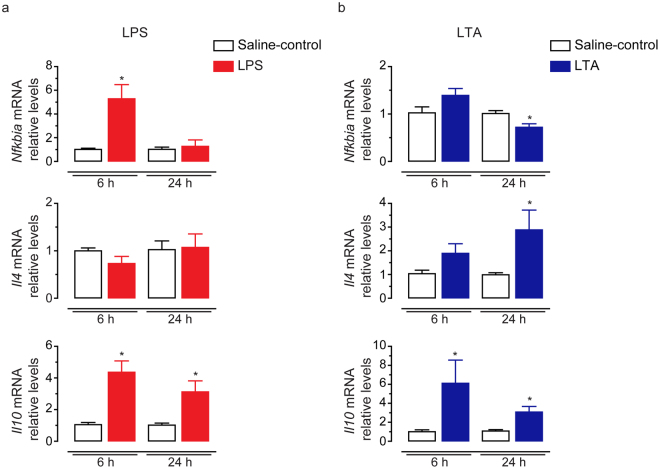
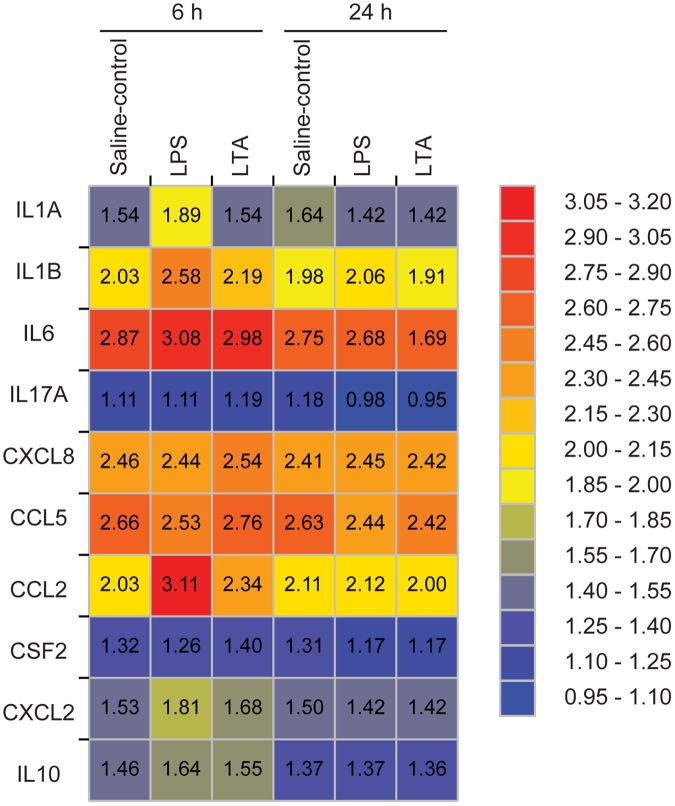
Bacterial infections are the most prevalent etiological factors of epididymitis, a commonly diagnosed inflammatory disease in the investigation of male infertility factors. The influence of early pathogenic mechanisms at play during bacterial epididymitis on reproductive outcomes is little understood. We report here that experimental epididymitis induced in rats by Gram-negative (LPS) and Gram-positive (LTA) bacterial products resulted in differential patterns of acute inflammation in the cauda epididymis. LPS elicited a strong inflammatory reaction, as reflected by upregulation of levels of mRNA for seven inflammatory mediators (Il1b, Tnf, Il6, Ifng, Il10, Nos2 and Nfkbia), and tissue concentration of six cytokines/chemokines (IL1A, IL1B, IL6, IL10, CXCL2 and CCL2) within the first 24 h post-treatment. Conversely, LTA induced downregulation of one (Nfkbia) and upregulation of six (Il1b, Il6, Nos2, Il4 Il10 and Ptgs1) inflammatory gene transcripts, whereas increased the tissue concentration of three cytokines/chemokines (IL10, CXCL2 and CCL2). The stronger acute inflammatory response induced by LPS correlated with a reduction of epididymal sperm count and transit time that occurred at 1, 7, and 15 days post-treatment. Our study provides evidence that early epididymal inflammatory signaling events to bacterial activators of innate immunity may contribute to the detrimental effects of epididymitis upon male fertility.
细菌感染是附睾炎最常见的病因,附睾炎是男性不育因素调查中常见的炎症性疾病。对于在细菌性附睾炎中起作用的早期发病机制对生殖结局的影响,人们知之甚少。我们在这里报告,革兰氏阴性(LPS)和革兰氏阳性(LTA)细菌产物在大鼠中诱导的实验性附睾炎导致尾部附睾中急性炎症的模式存在差异。LPS 引起强烈的炎症反应,反映在七种炎症介质(Il1b、Tnf、Il6、Ifng、Il10、Nos2 和 Nfkbia)的 mRNA 水平上调,以及六种细胞因子/趋化因子(IL1A、IL1B、IL6、IL10、CXCL2 和 CCL2)的组织浓度在治疗后 24 小时内升高。相反,LTA 诱导一种(Nfkbia)下调和六种(Il1b、Il6、Nos2、Il4、Il10 和 Ptgs1)炎症基因转录物上调,同时增加三种细胞因子/趋化因子(IL10、CXCL2 和 CCL2)的组织浓度。LPS 引起的更强急性炎症反应与附睾精子计数和转运时间减少相关,这些变化发生在治疗后 1、7 和 15 天。我们的研究提供了证据,表明早期附睾炎症信号事件对先天免疫的细菌激活物可能导致附睾炎对男性生育能力的有害影响。