Azienda Ospedaliero-Universitaria Meyer, Pediatric University Hospital, Viale Pieraccini 24, 50139, Florence, Italy.
Fondazione IRCCS Ca' Granda Ospedale Maggiore Policlinico, Cystic Fibrosis Centre, Milan, Italy.
Ital J Pediatr. 2019 May 2;45(1):56. doi: 10.1186/s13052-019-0647-5.
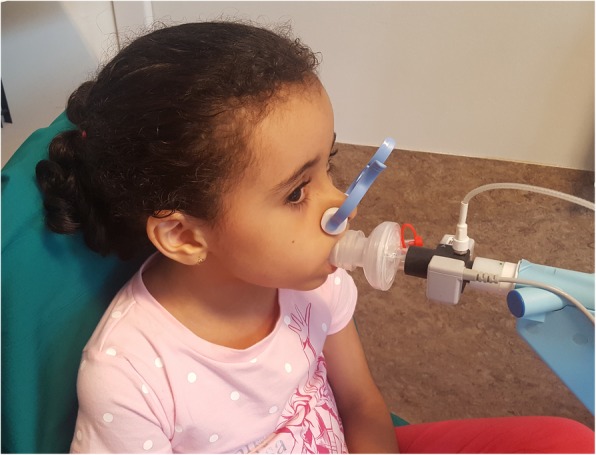
The Lung Clearance Index (LCI) is an index derived from washout recordings, able to detect early peripheral airway damage in subjects with cystic fibrosis (CF) with a greater sensitivity than spirometry.LCI is a marker of overall lung ventilation inhomogeneity; in fact, as pulmonary ventilation worsens, the number of tidal breaths and the expiratory volumes required to clear the lungs of a marker gas are increased, as documented by a greater value.In the field of CF, LCI allows indirect investigation of the small airways (< 2 mm) the site where, from a pathophysiologic point of view, the disease begins due to the defect of the CF transmembrane-conductance regulator (CFTR) protein. Infant pulmonary function changes seem to occur before clinically overt symptoms of lower respiratory illness occur.When performing the test, it is important to refer to the American Thoracic Society and European Respiratory Society consensus statements and apply a strict standardization.In Italy the first tests were carried out in 2014 for research purpose and now approximately 10 centers are collecting data and are experiencing a consistency in repeating exams.Currently in Italian centers children at pre-school age are the main target: in this population it is important to have a sensitive and feasible test, non-invasive, that can be performed at tidal volume without sedation, and requiring minimal cooperation and coordination, and that can be used longitudinally over time. Another target could be the transplanted subjects to detect early signs of lung function decline.The content of this paper captures the experience and discussions among some of the Italian centers where LCI is currently used for research and/or in clinical practice about the method and the need to have a common approach.The aim of this paper is not to describe the methodology of MBW, but to inform the pediatric community about the possible application of LCI in CF.
肺清除指数(LCI)是一种从清除记录中得出的指数,能够比肺活量测定法更早地检测出囊性纤维化(CF)患者的外周气道损伤,具有更高的敏感性。LCI 是整个肺通气不均一性的标志物;事实上,随着肺通气恶化,清除标记气体所需的潮气量和呼气量增加,从而导致 LCI 值增加。在 CF 领域,LCI 允许间接研究小气道(<2mm),从病理生理角度来看,疾病首先在这些部位开始,因为 CF 跨膜电导调节剂(CFTR)蛋白缺陷。婴儿肺功能的变化似乎在出现下呼吸道疾病的临床症状之前就已经发生。进行测试时,重要的是参考美国胸科学会和欧洲呼吸学会的共识声明,并应用严格的标准化。在意大利,首次测试是在 2014 年为研究目的进行的,现在大约有 10 个中心正在收集数据,并在重复检查方面具有一致性。目前,意大利的主要研究对象是学龄前儿童:在这个人群中,重要的是要有一个敏感且可行的测试,非侵入性的,能够在潮气呼吸下进行,不需要镇静,需要最小的合作和协调,并且可以随着时间的推移进行纵向研究。另一个目标可能是移植患者,以检测肺功能下降的早期迹象。本文的内容反映了一些意大利中心的经验和讨论,这些中心目前正在将 LCI 用于研究和/或临床实践,涉及该方法以及需要采用共同方法的问题。本文的目的不是描述 MBW 的方法学,而是向儿科社区介绍 LCI 在 CF 中的可能应用。