Department of Ecology and Evolutionary Biology, University of California Irvine, Irvine, California, United States of America.
Department of Neurology, University of California Irvine, Irvine, California, United States of America.
PLoS One. 2019 May 2;14(5):e0216369. doi: 10.1371/journal.pone.0216369. eCollection 2019.
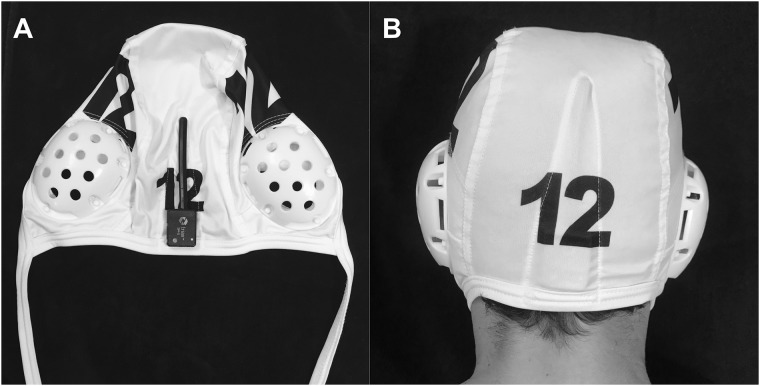
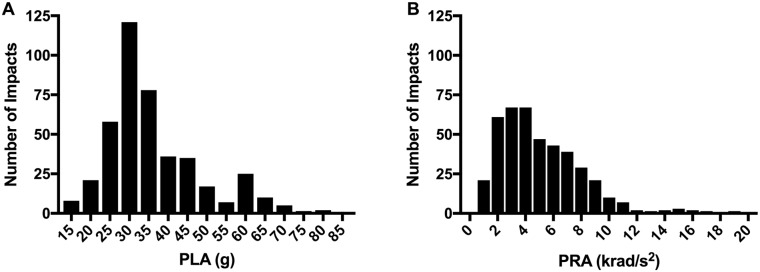
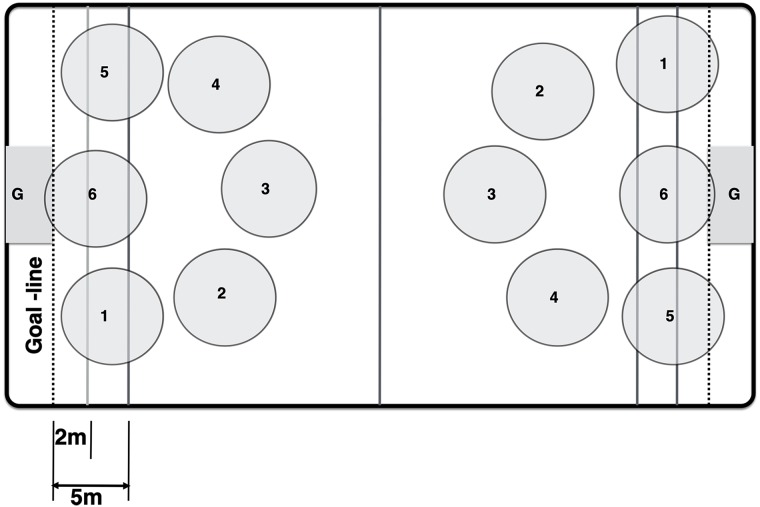
Water polo is a contact sport that is gaining popularity in the United States and carries a risk of repeated head impacts and concussion. The frequency and magnitude of sport-related head impacts have not been described for water polo. We aimed to compare patterns of empirically measured head impact exposure of male collegiate water polo players to patterns previously reported by a survey of current and former water polo athletes. Participants wore water polo caps instrumented with head impact sensors during three seasons of collegiate water polo. Peak linear acceleration (PLA) and peak rotational acceleration (PRA) were recorded for head impacts. Athlete positions were recorded by research staff at the occurrence of each head impact. Head impacts were sustained by athletes in offensive positions more frequently than in defensive and transition positions (246, 59.9% vs. 93, 22.6% vs. 72, 17.5%). 37% of all head impacts during gameplay were sustained by athletes playing the offensive center position. Impact magnitude (means ± SD: PLA = 36.1±12.3g, PRA = 5.0±2.9 krads/sec2) did not differ between position or game scenario. Among goalies, impact frequency and magnitude were similar between games (means ± SD: 0.54±.51 hits/game, PLA = 36.9±14.2g, PRA = 4.3±4.2 krads/sec2) and practices (means ± SD: 0.96±1.11 hits/practice, PLA = 43.7±14.5g, PRA = 3.9±2.5 krads/sec2). We report that collegiate water polo athletes are at risk for sport-related head impacts and impact frequency is dependent on game scenario and player position. In contrast, magnitude does not differ between scenarios or across positions.
水球是一项在美国越来越受欢迎的接触性运动,存在着反复头部撞击和脑震荡的风险。目前还没有对水球运动中相关头部撞击的频率和强度进行描述。我们旨在比较男性大学生水球运动员的实际测量头部撞击暴露模式与之前对当前和前水球运动员的调查所报告的模式。参与者在三个大学生水球赛季中佩戴带有头部撞击传感器的水球帽。记录头部撞击的峰值线性加速度(PLA)和峰值旋转加速度(PRA)。研究人员在每次头部撞击发生时记录运动员的位置。在进攻位置的运动员比防守和过渡位置的运动员更频繁地遭受头部撞击(246 次,59.9% 比 93 次,22.6% 比 72 次,17.5%)。在比赛中,37%的头部撞击发生在进攻中心位置的运动员身上。撞击强度(平均值±SD:PLA=36.1±12.3g,PRA=5.0±2.9 krads/sec2)在位置或比赛场景之间没有差异。在守门员中,比赛和训练之间的撞击频率和强度相似(平均值±SD:0.54±.51 次/场,PLA=36.9±14.2g,PRA=4.3±4.2 krads/sec2;0.96±1.11 次/练习,PLA=43.7±14.5g,PRA=3.9±2.5 krads/sec2)。我们报告说,大学生水球运动员有运动相关头部撞击的风险,撞击频率取决于比赛场景和运动员位置。相比之下,撞击强度在不同场景或不同位置之间没有差异。