Internal Medicine III, Wakayama Medical University, Wakayama, Japan.
Department of Hematology, Oncology and Respiratory Medicine, Okayama University Graduate School of Medicine, Dentistry and Pharmaceutical Sciences, Okayama, Japan.
Int J Clin Oncol. 2019 Jul;24(7):731-770. doi: 10.1007/s10147-019-01431-z. Epub 2019 May 2.
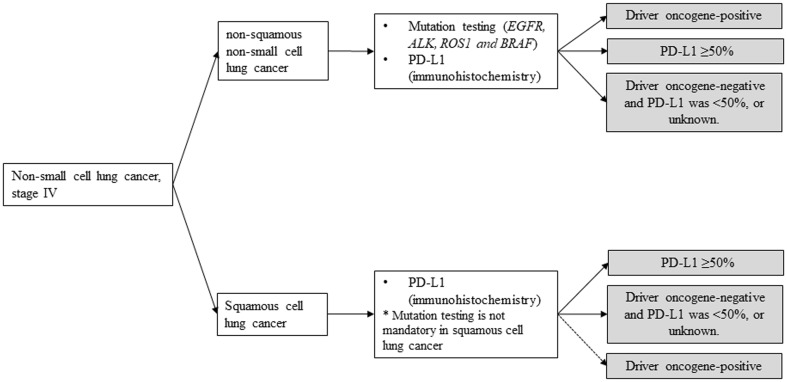
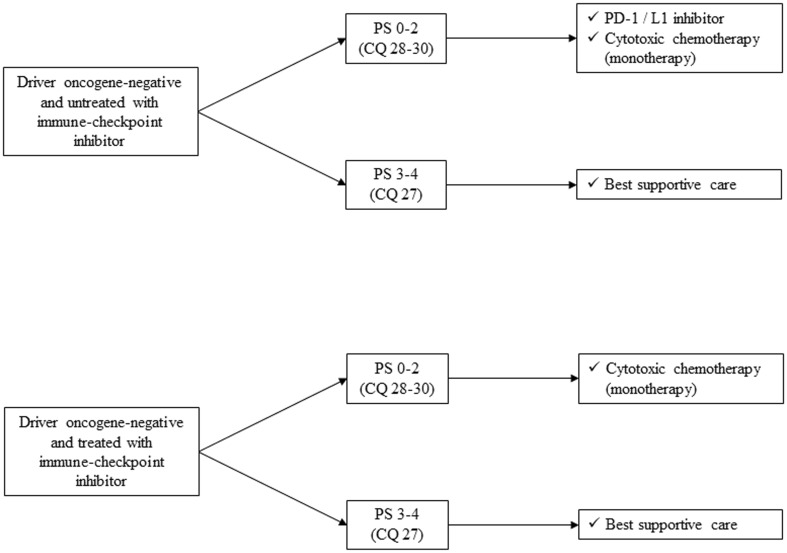
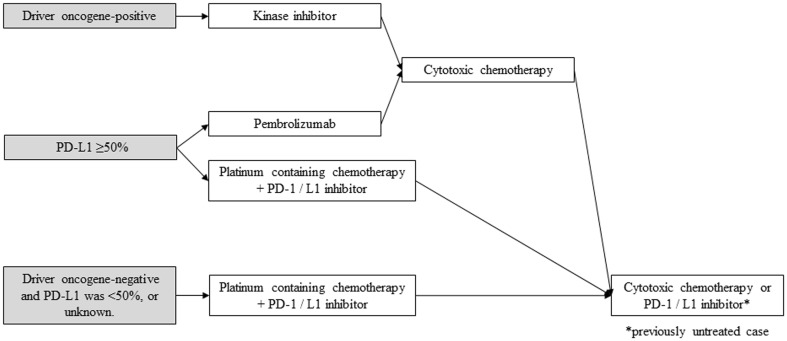
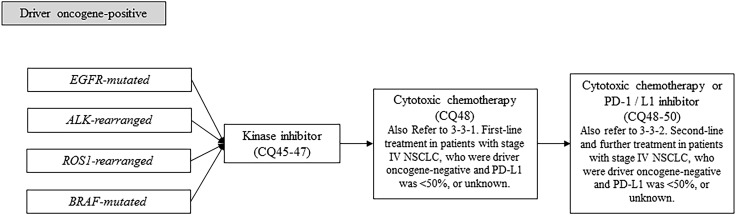
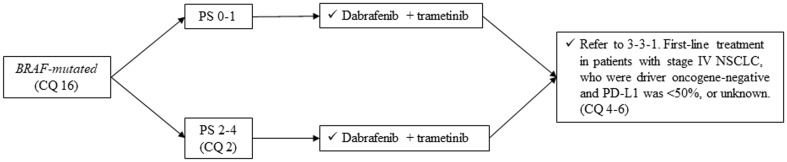
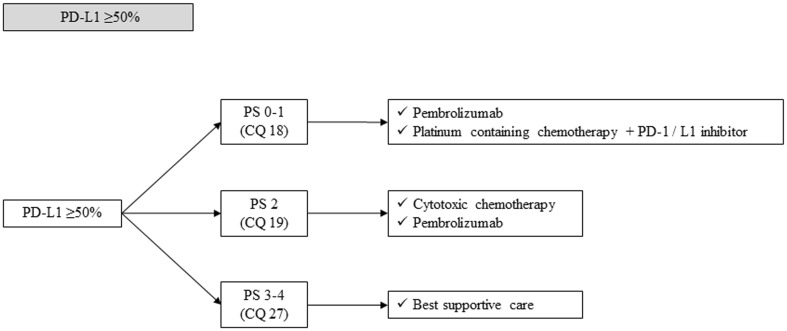
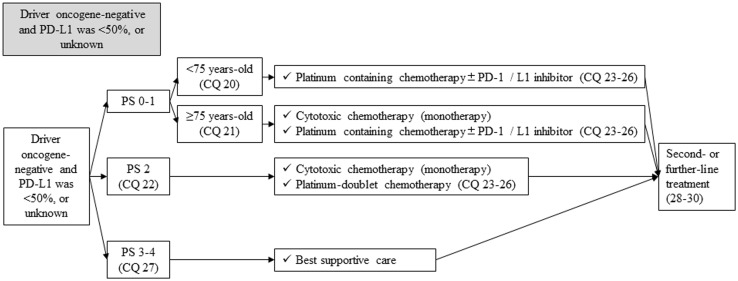
According to rapid development of chemotherapy in advanced non-small cell lung cancer (NSCLC), the Japan Lung Cancer Society has been updated its own guideline annually since 2010. In this latest version, all of the procedure was carried out in accordance with grading of recommendations assessment, development and evaluation (GRADE) system. It includes comprehensive literature search, systematic review, and determination of the recommendation by multidisciplinary expert panel which consisted of medical doctors, pharmacists, nurses, statisticians, and patients from patient advocacy group. Recently, we have had various types of chemotherapeutic drugs like kinase inhibitors or immune-checkpoint inhibitors. Thus, the guideline proposes to categorize patients into three entities: (1) driver oncogene-positive, (2) PD-L1 ≥ 50%, and (3) others. Based on this subgroup, 31 clinical questions were described. We believe that this attempt enables clinicians to choose appropriate treatment easier. Here, we report an English version of the Japan Lung Cancer Society Guidelines 2018 for NSCLC, stages IV.
根据晚期非小细胞肺癌(NSCLC)化疗的快速发展,自 2010 年以来,日本肺癌学会每年都在更新自己的指南。在最新版本中,所有程序均按照推荐评估、制定和评估(GRADE)系统进行分级。它包括全面的文献检索、系统评价以及由来自患者权益组织的医生、药剂师、护士、统计学家和患者组成的多学科专家小组确定推荐意见。最近,我们有了各种类型的化疗药物,如激酶抑制剂或免疫检查点抑制剂。因此,该指南将患者分为三种类型:(1)驱动基因阳性,(2)PD-L1≥50%,和(3)其他。在此亚组的基础上,描述了 31 个临床问题。我们相信,这种尝试可以使临床医生更容易选择合适的治疗方法。在这里,我们报告了英文版的日本肺癌学会 2018 年 NSCLC 第四阶段指南。