Department of Hematology, The First People`s Hospital of Hefei, Hefei, China.
Basic College of Medicine, Anhui Medical University, Hefei, China.
Cancer Med. 2019 Jun;8(6):2930-2941. doi: 10.1002/cam4.2193. Epub 2019 May 2.
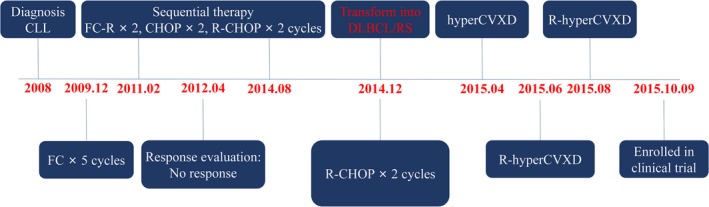
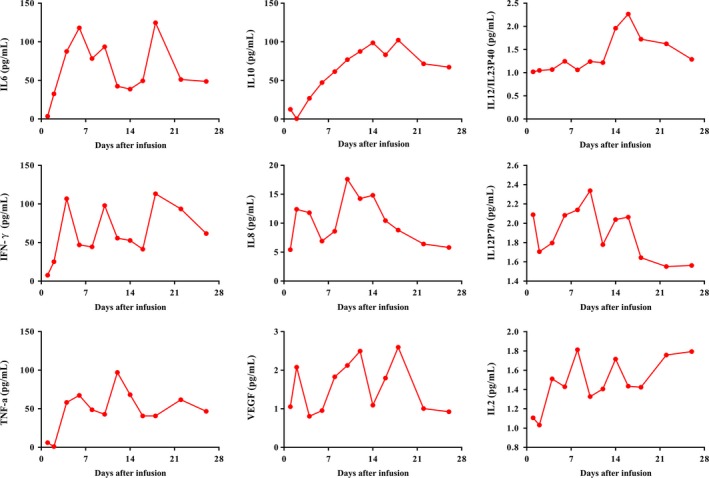
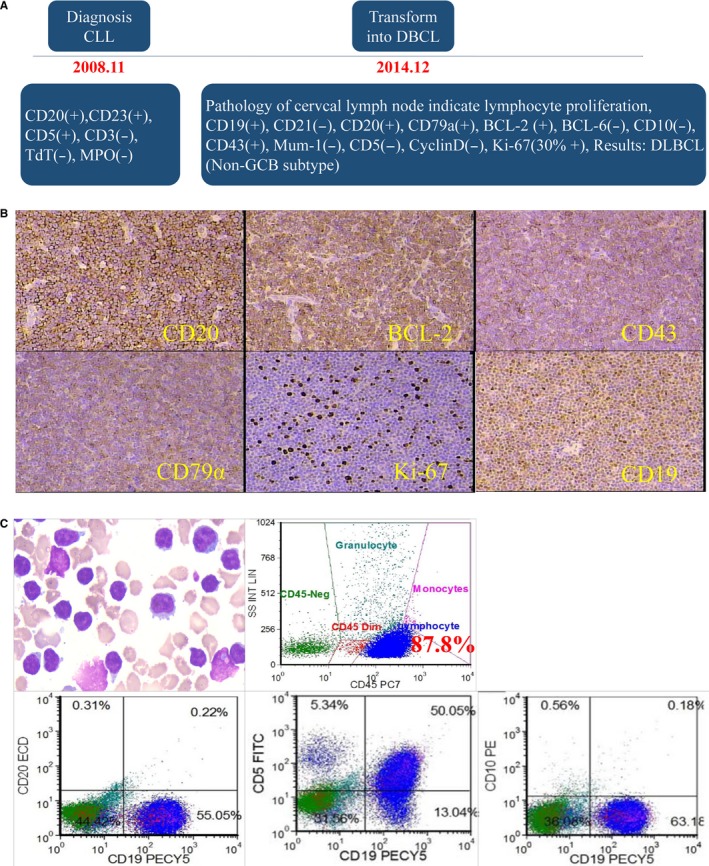
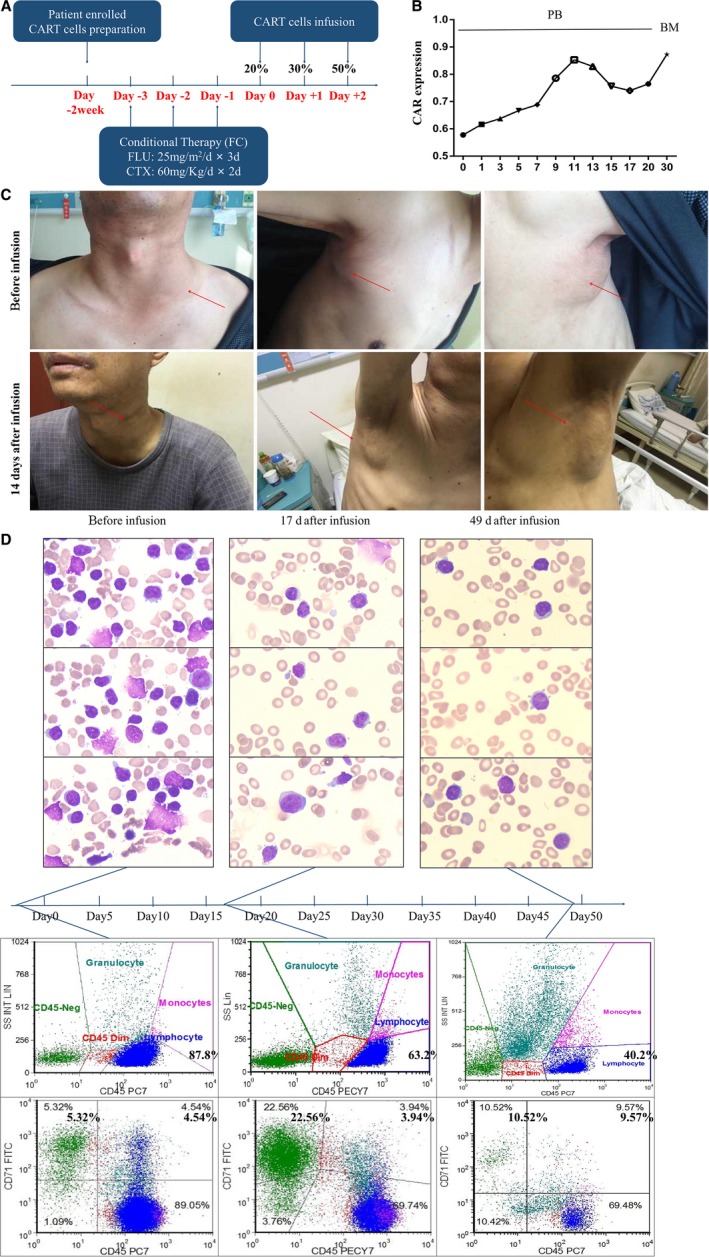
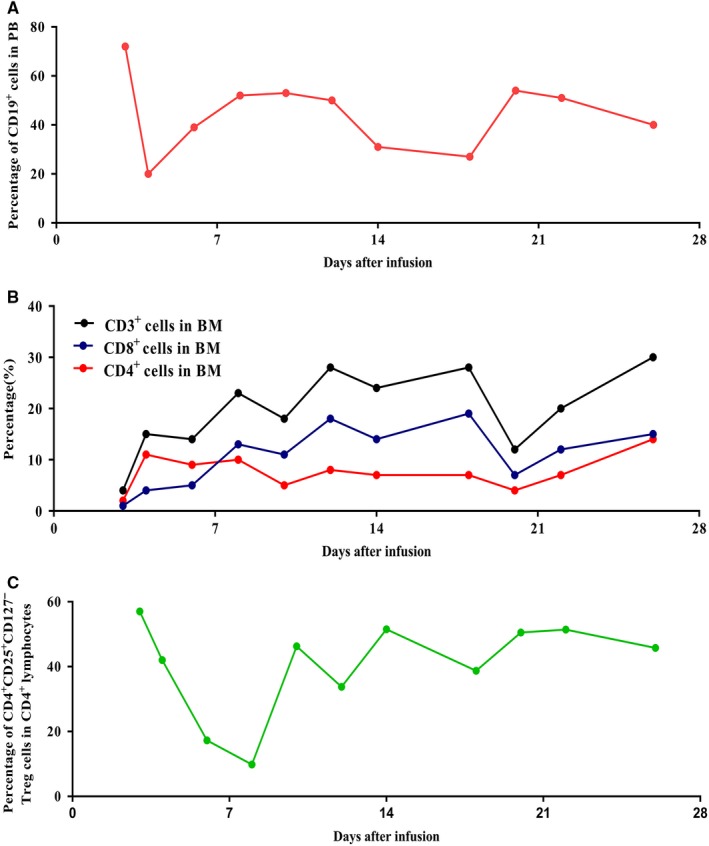
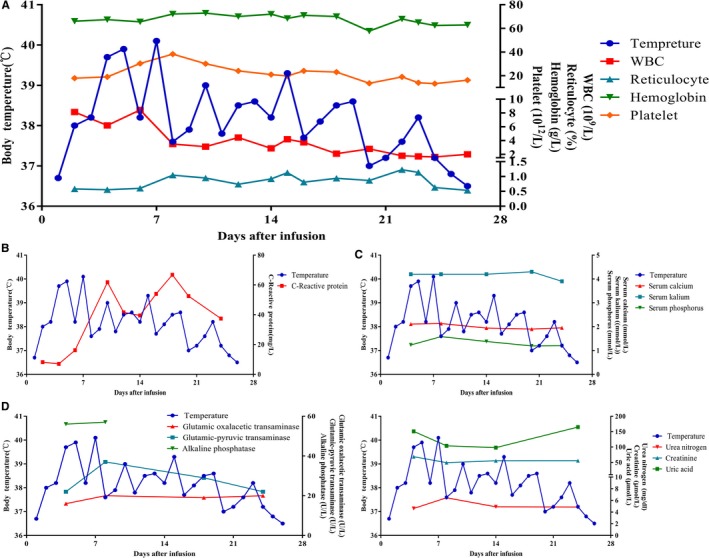
Richter syndrome (RS) indicates the transformation of chronic lymphocytic leukemia (CLL) into an aggressive lymphoma (mostly DLBCL). Richter syndrome is a rare complication with an aggressive clinical course, bearing an unfavorable prognosis. Currently, there is no effective treatment for it. As a novel cellular-based immune therapy, chimeric antigen receptor-modified T (CART) cells treatment is gradually used in treating hematological malignancies, especially in CD19 B-cell malignancy. Therefore, CD19-directed chimeric antigen receptor-modified T cells (CART-19) treatment is promising to be used as a new method for RS patients. In our study, one RS patient expressing high level of CD19 molecule was enrolled in clinical trial; he has received a series of treatments but did not achieve a satisfactory therapeutic effect. The patient totally received 3.55 × 10 autologous CART-19 cells infusion. After CART-19 infusion, the mainly clinical side effect was repeated fever. The maximal duration period was 24 days and the highest temperature was 40.1°C. Pancytopenia and significantly serum cytokines level rise were observed, including IFN-γ, IL-6, and IL-10. Before discharge, the level of cytokines reduced to normal levels. In addition, we detected the serum biochemical indices as like K , Ca , creatinine, and glutamic-pyruvic transaminase, all of these indices were normal. This showed that there was no tumor necrosis syndrome after treatment. The proportion of B cells in patient's peripheral blood decreased from 72% to 40.2% after infusion, co-occurring with reduction in lymph nodes and hematopoietic reconstitution. Based on the recent revolution in the therapeutic landscape for hematological malignancies including B-cell lymphomas, CART-CD19 cell therapy as a new therapeutic option for RS might be available in the coming years. It aims to reduce patient's tumor burden, prolong their survival time, and provide opportunities for other sequential therapy such as chemotherapy and bone marrow transplantation.
里希特综合征(RS)是指慢性淋巴细胞白血病(CLL)向侵袭性淋巴瘤(主要为弥漫性大 B 细胞淋巴瘤)的转化。RS 是一种罕见的并发症,具有侵袭性的临床病程,预后不良。目前,尚无有效的治疗方法。嵌合抗原受体修饰 T 细胞(CART)治疗作为一种新型的细胞免疫疗法,逐渐应用于治疗血液系统恶性肿瘤,尤其是 CD19 B 细胞恶性肿瘤。因此,CD19 导向的嵌合抗原受体修饰 T 细胞(CART-19)治疗有望成为 RS 患者的一种新方法。在我们的研究中,一名表达高水平 CD19 分子的 RS 患者入组了临床试验;他接受了一系列治疗,但未取得满意的治疗效果。该患者总共接受了 3.55×10 个自体 CART-19 细胞输注。CART-19 输注后,主要的临床副作用是反复发热。发热持续时间最长为 24 天,最高温度为 40.1°C。观察到全血细胞减少和明显的血清细胞因子水平升高,包括 IFN-γ、IL-6 和 IL-10。出院前,细胞因子水平降至正常水平。此外,我们检测了血清生化指标,如 K、Ca、肌酐和谷氨酸-丙酮酸转氨酶,所有这些指标均正常。这表明治疗后无肿瘤坏死综合征。输注后,患者外周血中 B 细胞的比例从 72%下降到 40.2%,同时淋巴结缩小,造血重建。基于血液系统恶性肿瘤包括 B 细胞淋巴瘤治疗领域的最新进展,CART-CD19 细胞治疗作为 RS 的一种新的治疗选择,可能在未来几年内得到应用。其目的是减轻患者的肿瘤负担,延长其生存时间,并为其他序贯治疗(如化疗和骨髓移植)提供机会。