Department of Microbiology and Immunology, Stritch School of Medicine, Loyola University Chicago, Maywood, IL 60153, USA.
Infectious Disease and Immunology Research Institute, Stritch School of Medicine, Loyola University Chicago, Maywood, IL 60153, USA.
Viruses. 2019 Apr 30;11(5):403. doi: 10.3390/v11050403.
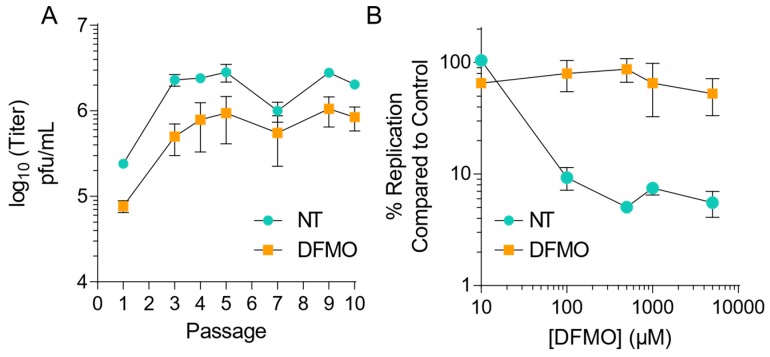
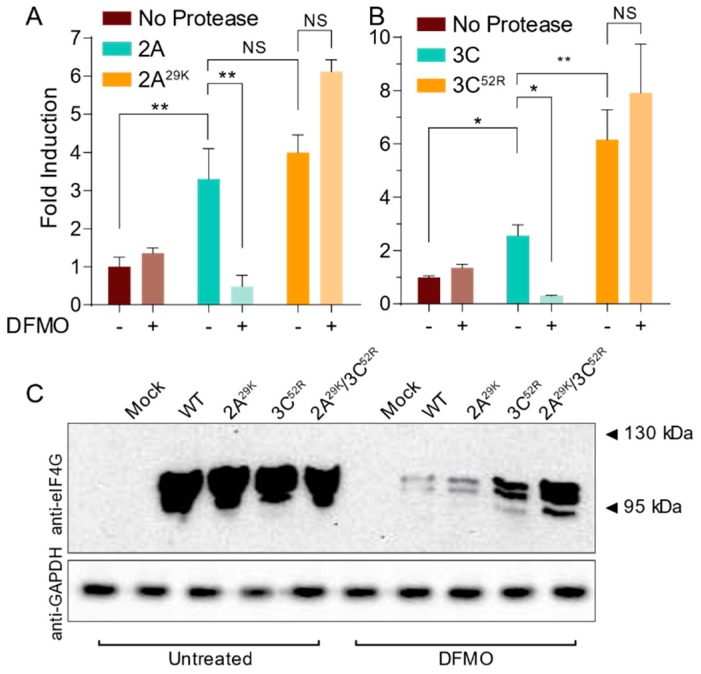
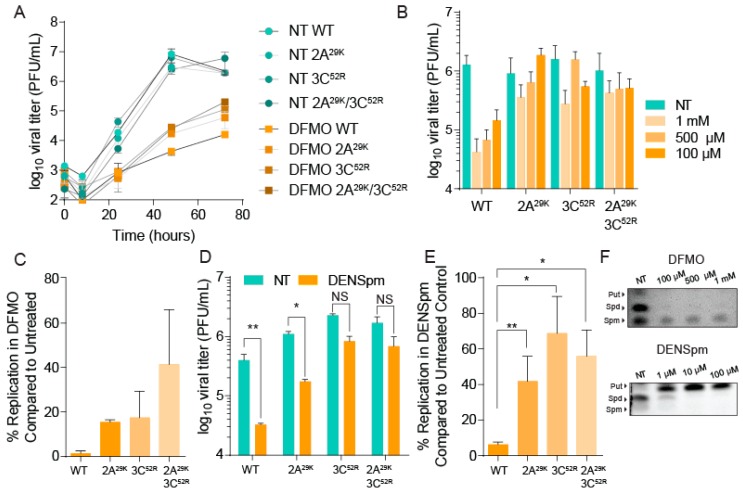
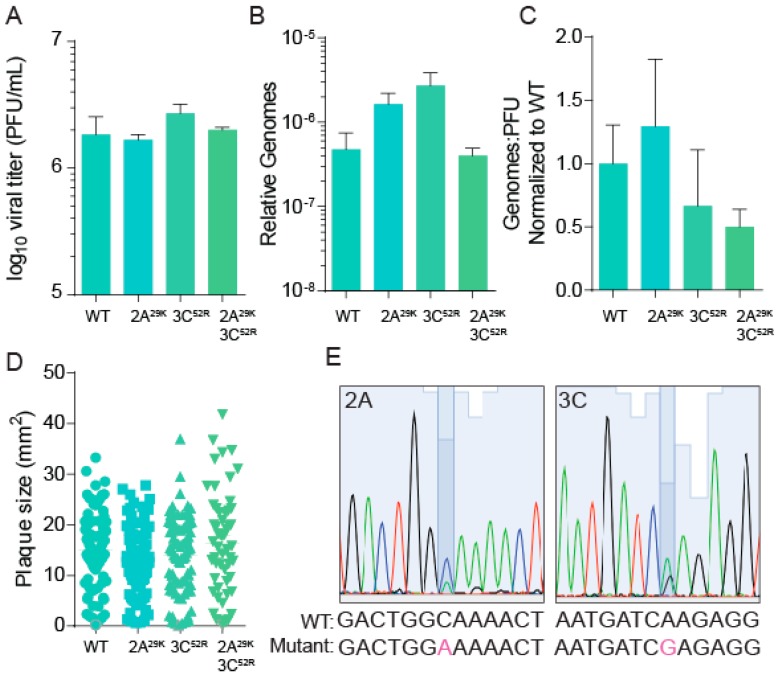
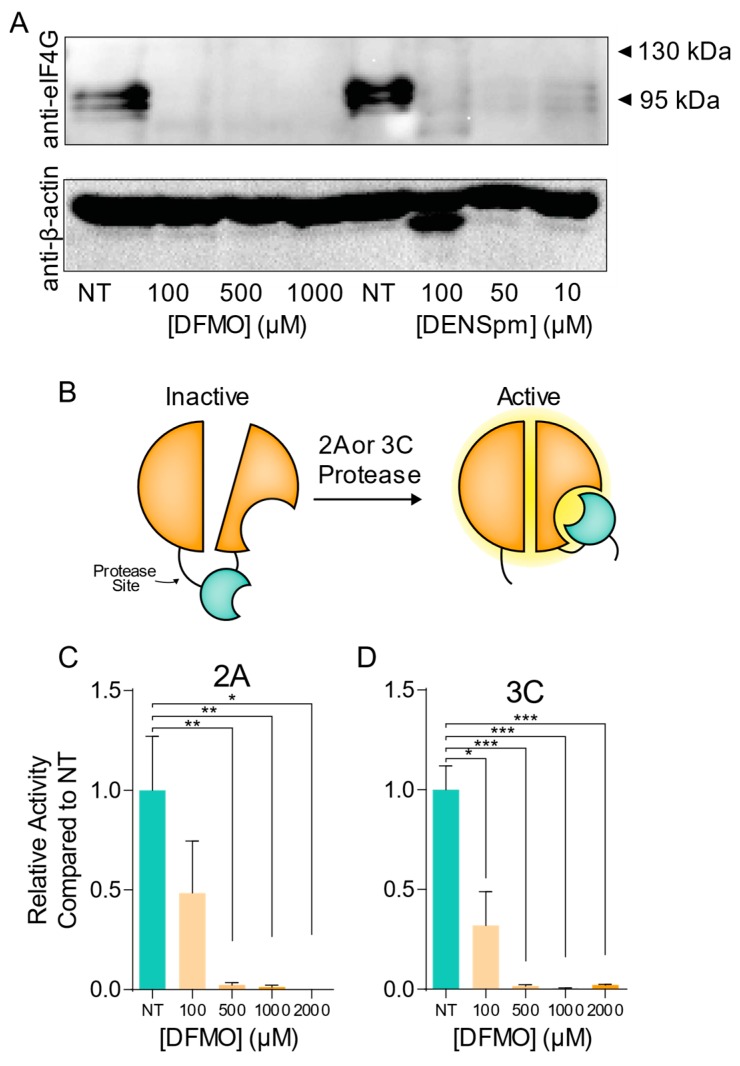
Polyamines are small positively-charged molecules abundant in eukaryotic cells that are crucial to RNA virus replication. In eukaryotic cells, polyamines facilitate processes such as transcription, translation, and DNA replication, and viruses similarly rely on polyamines to facilitate transcription and translation. Whether polyamines function at additional stages in viral replication remains poorly understood. Picornaviruses, including Coxsackievirus B3 (CVB3), are sensitive to polyamine depletion both in vitro and in vivo; however, precisely how polyamine function in picornavirus infection has not been described. Here, we describe CVB3 mutants that arise with passage in polyamine-depleted conditions. We observe mutations in the 2A and 3C proteases, and we find that these mutant proteases confer resistance to polyamine depletion. Using a split luciferase reporter system to measure protease activity, we determined that polyamines facilitate viral protease activity. We further observe that the 2A and 3C protease mutations enhance reporter protease activity in polyamine-depleted conditions. Finally, we find that these mutations promote cleavage of cellular eIF4G during infection of polyamine-depleted cells. In sum, our results suggest that polyamines are crucial to protease function during picornavirus infection. Further, these data highlight viral proteases as potential antiviral targets and highlight how CVB3 may overcome polyamine-depleting antiviral therapies.
多胺是真核细胞中丰富的带正电荷的小分子,对 RNA 病毒复制至关重要。在真核细胞中,多胺有助于转录、翻译和 DNA 复制等过程,病毒也同样依赖多胺来促进转录和翻译。多胺在病毒复制的其他阶段是否发挥作用仍知之甚少。小 RNA 病毒,包括柯萨奇病毒 B3(CVB3),在体外和体内都对多胺耗竭敏感;然而,多胺在小 RNA 病毒感染中的作用尚未被描述。在这里,我们描述了在多胺耗尽条件下通过传代产生的 CVB3 突变体。我们观察到 2A 和 3C 蛋白酶的突变,并且发现这些突变蛋白酶赋予了对多胺耗竭的抗性。使用分割荧光素酶报告系统来测量蛋白酶活性,我们确定多胺有助于病毒蛋白酶活性。我们进一步观察到,在多胺耗尽条件下,2A 和 3C 蛋白酶突变增强了报告蛋白酶活性。最后,我们发现这些突变促进了多胺耗尽细胞感染过程中细胞 eIF4G 的切割。总之,我们的结果表明多胺对小 RNA 病毒感染期间的蛋白酶功能至关重要。此外,这些数据突出了病毒蛋白酶作为潜在的抗病毒靶点,并强调了 CVB3 如何克服多胺耗竭的抗病毒疗法。