Department of Gastroenterology and Hepatology, The Second Affiliated Hospital of Harbin Medical University, Harbin, Heilongjiang, China (mainland).
Department of Gastroenterology and Hepatology, The First Affiliated Hospital of Zhengzhou University, Zhengzhou, Henan, China (mainland).
Med Sci Monit. 2019 May 5;25:3303-3315. doi: 10.12659/MSM.916009.
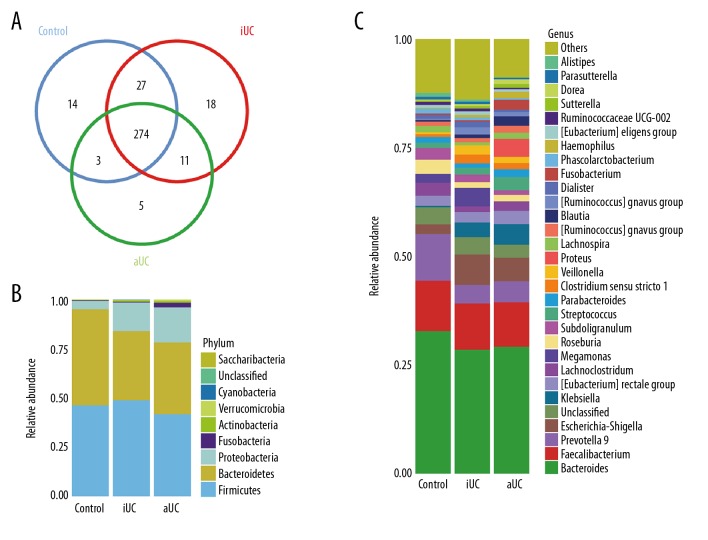
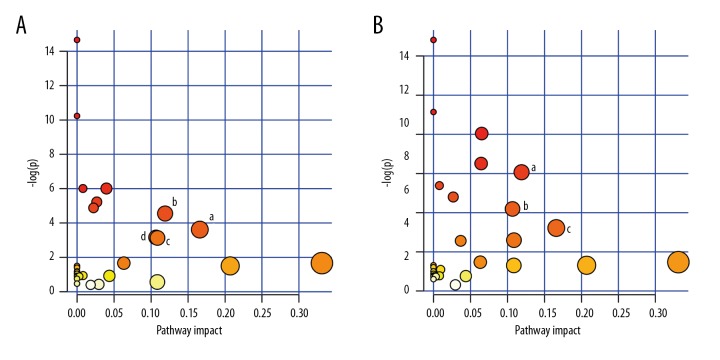
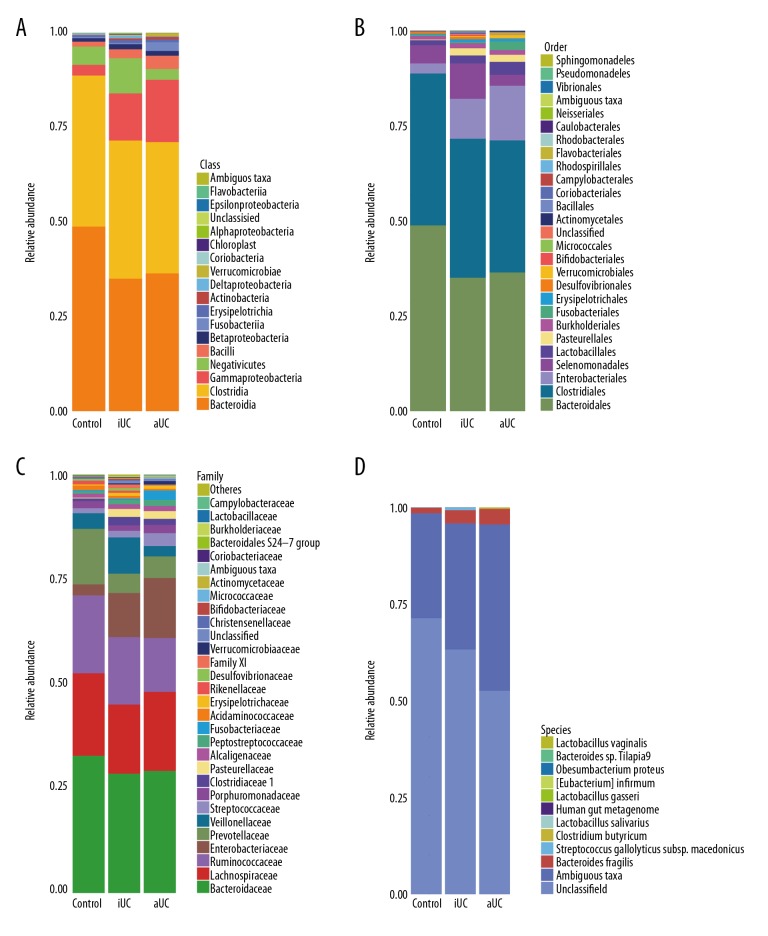
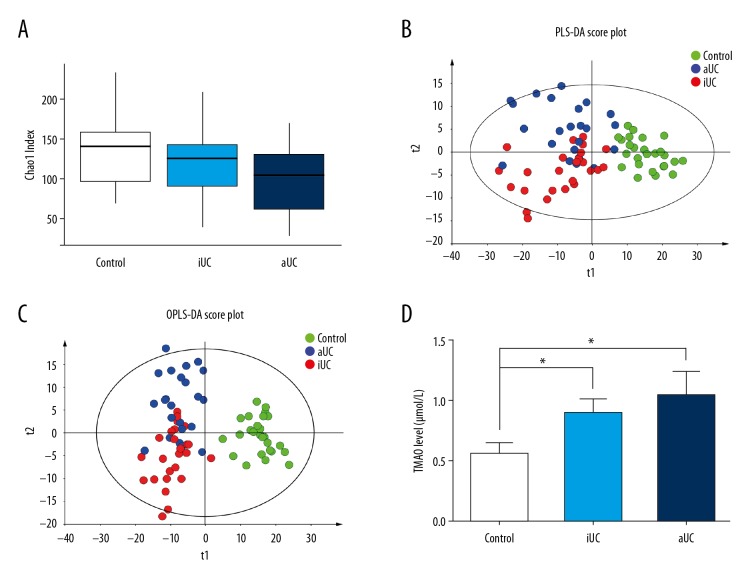
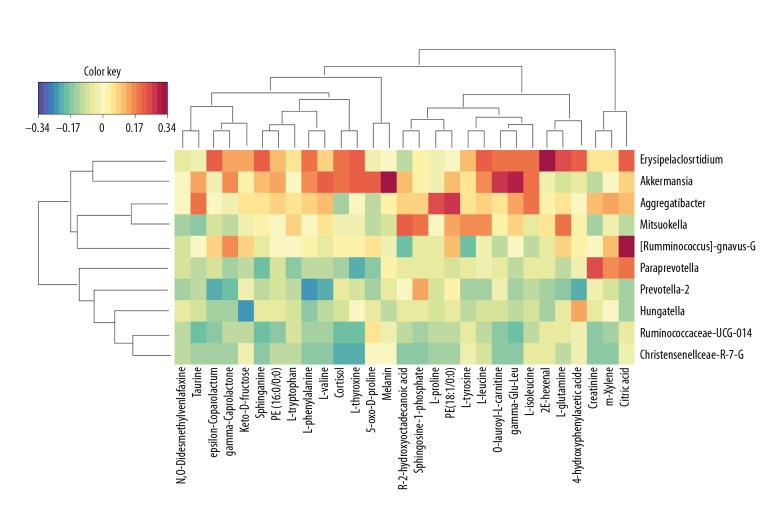
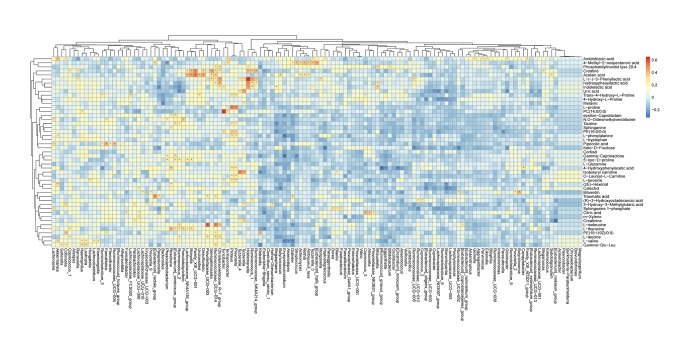
BACKGROUND Ulcerative colitis is a chronic, idiopathic inflammatory disease that destroys the colon structure. Nevertheless, the exact pathogenesis is not clear and needs to be fully elucidated. MATERIAL AND METHODS Stool and plasma samples were used for 16S ribosomal RNA sequencing and liquid chromatography mass spectrometry, respectively. In addition, we detected the level of trimethylamine N-oxide. Finally, we performed Pearson correlation analysis between the microbiome and the metabolome. RESULTS Twenty-three active ulcerative colitis, 25 inactive ulcerative colitis, and 30 control cases were included. Thirty-four significantly different metabolites were found between the active ulcerative colitis and control groups, 38 were found between the inactive ulcerative colitis and control groups, and only 1 was found between the active ulcerative colitis and inactive ulcerative colitis groups. The plasma trimethylamine N-oxide level of the inactive ulcerative colitis and active ulcerative colitis groups was significantly higher than that of the control group. Moreover, we identified significant changes in 24, 18, and 12 bacterial genera for active ulcerative colitis-control, inactive ulcerative colitis-control, and active ulcerative colitis-inactive ulcerative colitis, respectively. Cross-correlation indicated an association between sphingosine 1-phosphate and Roseburia, Klebsiella, and Escherichia-Shigella. Through the pathway analysis, we found sphingolipid metabolism was one of the most significantly increased pathways. CONCLUSIONS Although levels of trimethylamine N-oxide were higher in ulcerative colitis patients, they did not achieve statistical significance in active ulcerative colitis and inactive ulcerative colitis groups. Sphingosine 1-phosphate was increased in ulcerative colitis patients and there were several microbiota associated with it. Although further study is still needed, sphingosine 1-phosphate will probably become a new target for treatment of ulcerative colitis.
溃疡性结肠炎是一种慢性、特发性炎症性疾病,可破坏结肠结构。然而,确切的发病机制尚不清楚,需要充分阐明。
分别使用粪便和血浆样本进行 16S 核糖体 RNA 测序和液相色谱-质谱分析。此外,我们还检测了三甲胺 N-氧化物的水平。最后,我们对微生物组和代谢组进行了 Pearson 相关性分析。
共纳入 23 例活动期溃疡性结肠炎、25 例缓解期溃疡性结肠炎和 30 例对照组。在活动期溃疡性结肠炎与对照组之间发现了 34 种显著不同的代谢物,在缓解期溃疡性结肠炎与对照组之间发现了 38 种,而在活动期溃疡性结肠炎与缓解期溃疡性结肠炎之间仅发现了 1 种。缓解期和活动期溃疡性结肠炎患者的血浆三甲胺 N-氧化物水平明显高于对照组。此外,我们分别鉴定出活动期溃疡性结肠炎-对照组、缓解期溃疡性结肠炎-对照组和活动期溃疡性结肠炎-缓解期溃疡性结肠炎-对照组中 24、18 和 12 个细菌属发生显著变化。交叉相关表明,鞘氨醇 1-磷酸与 Roseburia、Klebsiella 和 Escherichia-Shigella 之间存在关联。通过通路分析,我们发现鞘脂代谢是最显著增加的通路之一。
尽管溃疡性结肠炎患者的三甲胺 N-氧化物水平较高,但在活动期和缓解期溃疡性结肠炎组中未达到统计学意义。溃疡性结肠炎患者鞘氨醇 1-磷酸增加,并有几种与之相关的微生物群。尽管还需要进一步研究,但鞘氨醇 1-磷酸可能成为治疗溃疡性结肠炎的新靶点。