Sanofi Genzyme, 55 Corporation Drive, Bridgewater, NJ, 08807, USA.
Daiichi Sankyo, Inc, Basking Ridge, NJ, USA.
Clin Pharmacokinet. 2019 Nov;58(11):1455-1467. doi: 10.1007/s40262-019-00765-1.
Sarilumab binds to the interleukin-6 receptor with high affinity, inhibiting cis and trans signaling by interleukin-6. Sarilumab has demonstrated efficacy and safety in patients with rheumatoid arthritis. The objective of this study was to develop a population-pharmacokinetic model using data from 1770 patients with rheumatoid arthritis across phase I-III studies.
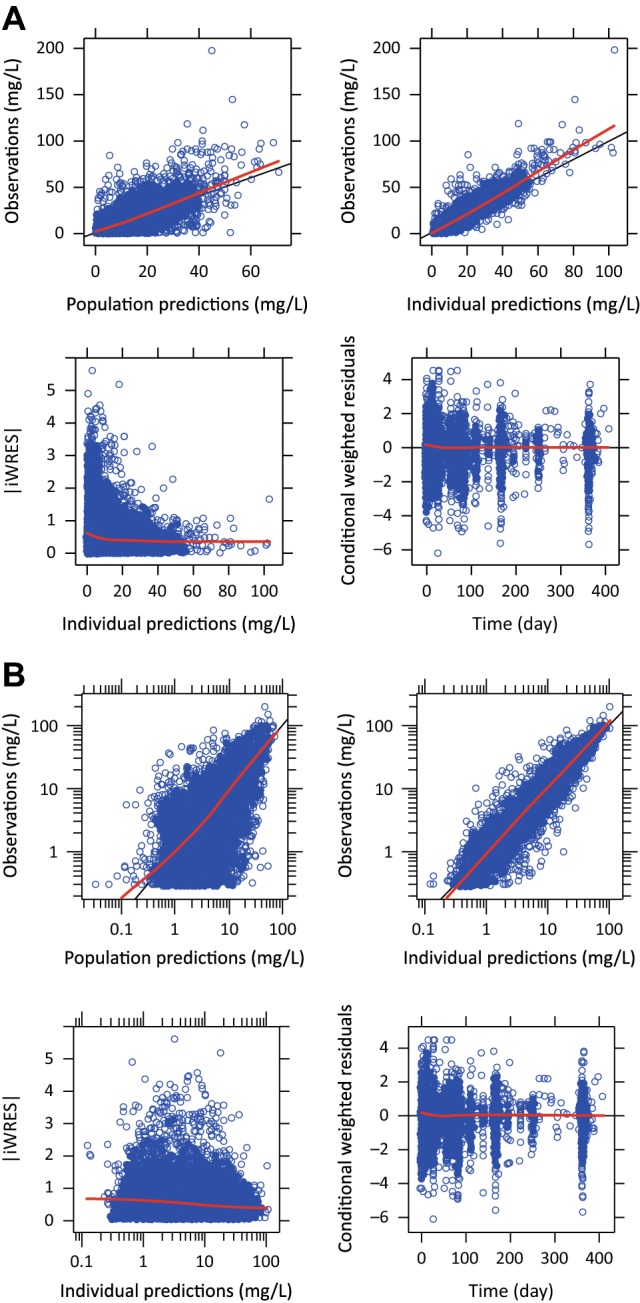
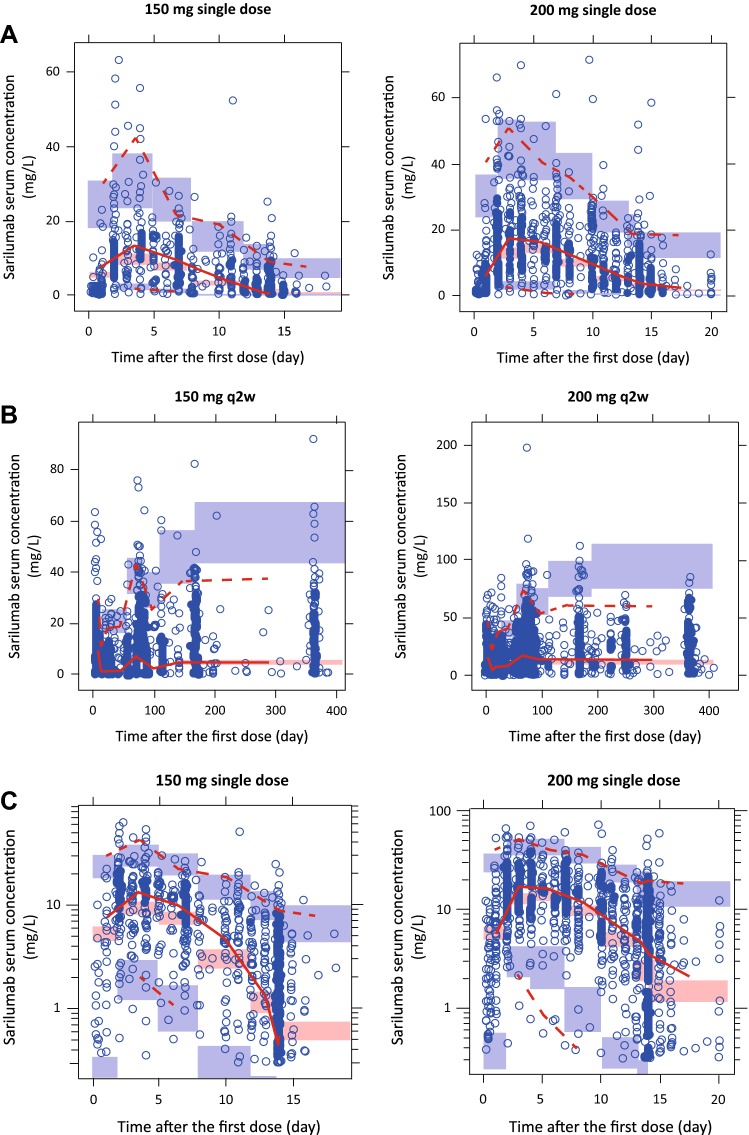
Potential covariates were identified using a stepwise forward-addition and backward-deletion strategy, and the final model was evaluated by visual predictive check and bootstrap methods.
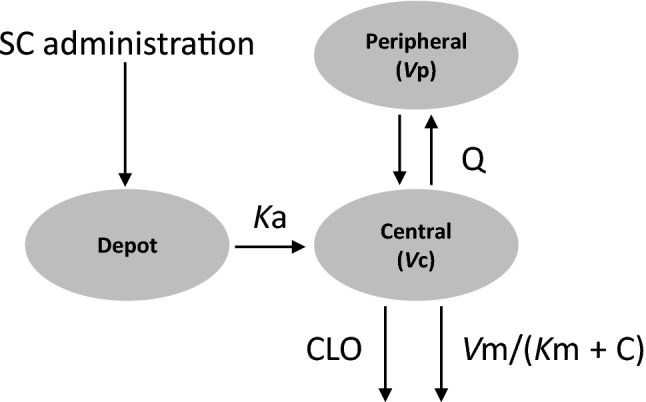
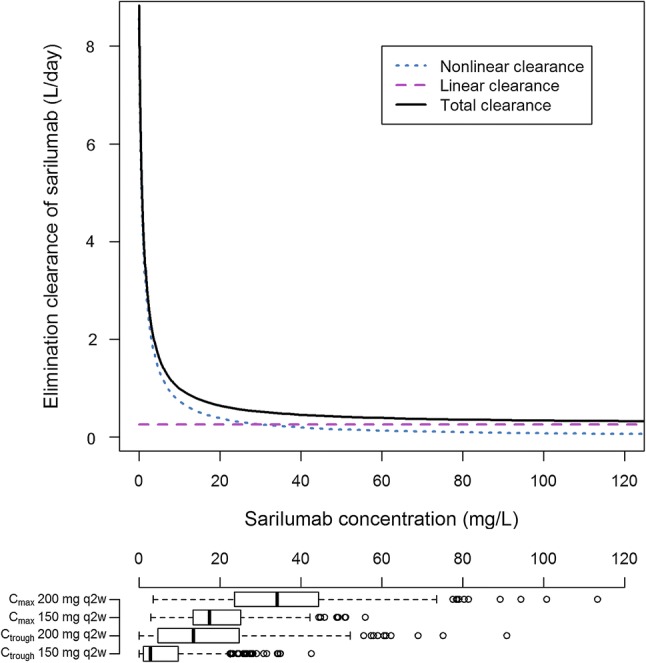
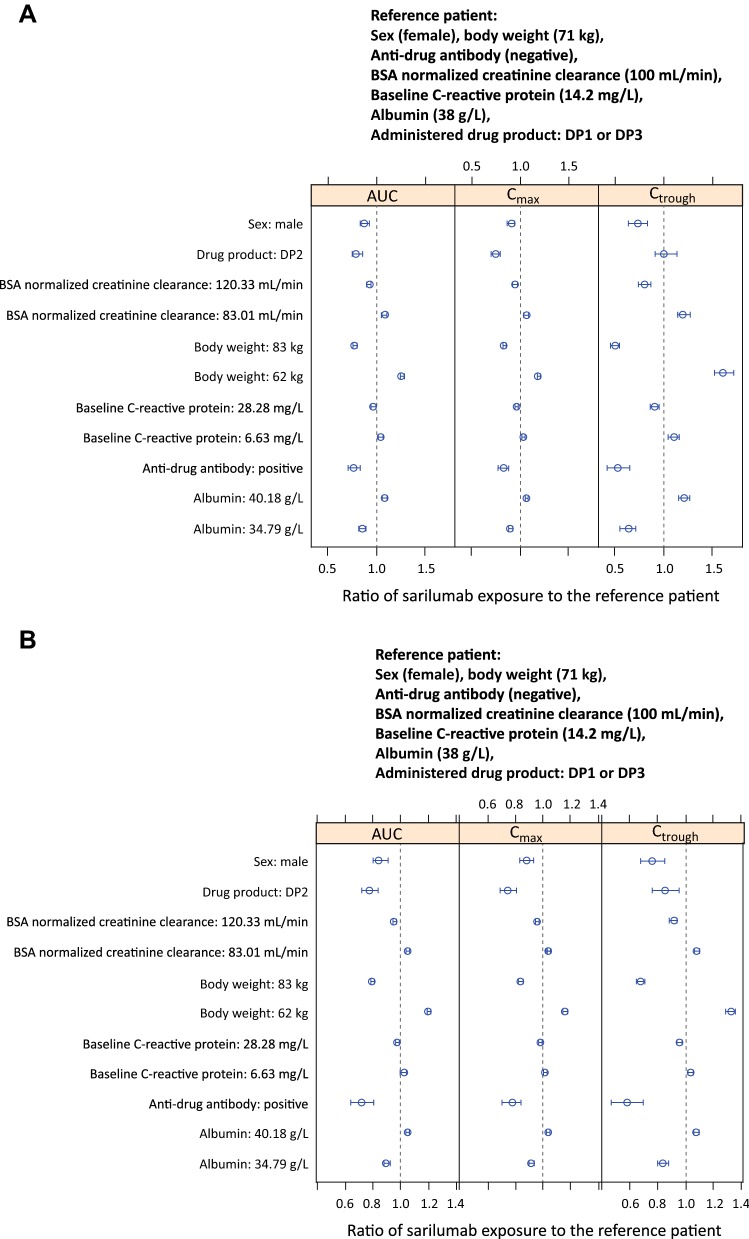
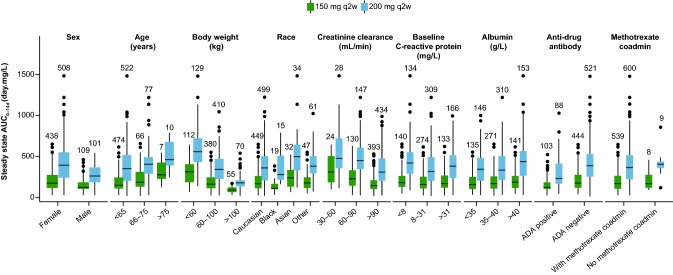
Sarilumab pharmacokinetics is described by a two-compartment model with first-order absorption and parallel linear and nonlinear Michaelis-Menten elimination. A subcutaneous dose of sarilumab 200 mg every 2 weeks resulted in more pronounced saturation of the nonlinear clearance pathway over the dosing interval than 150 mg every 2 weeks. Steady-state exposure (area under the plasma concentration-time curve from day 0 to day 14) increased twofold with dose escalation from 150 to 200 mg every 2 weeks. Body weight, anti-drug antibody status, sarilumab drug product, sex, creatinine clearance, albumin, and baseline C-reactive protein levels were identified as significant covariates according to the predefined statistical significance criteria in stepwise covariate searches. The main intrinsic source of pharmacokinetic variability in exposure was body weight. Compared with a typical 71-kg patient, the area under the plasma concentration-time curve from day 0 to day 14 was 20-23% lower for an 83-kg patient and 20-25% higher for a 62-kg patient.
These findings, combined with the safety and efficacy data, indicated limited clinical relevance of body-weight effect on sarilumab exposure. No adjustment in sarilumab dose is required for body weight or any other demographics assessed.
沙利鲁单抗与白细胞介素-6 受体具有高亲和力,通过白细胞介素-6 抑制顺式和反式信号传导。沙利鲁单抗在类风湿关节炎患者中显示出疗效和安全性。本研究的目的是使用来自 I-III 期研究的 1770 例类风湿关节炎患者的数据建立群体药代动力学模型。
使用逐步正向添加和反向删除策略确定潜在的协变量,最后通过可视化预测检查和自举方法评估模型。
沙利鲁单抗药代动力学特征描述为具有一级吸收和并行线性及非线性米氏消除的两室模型。每 2 周皮下注射 200mg 沙利鲁单抗比每 2 周注射 150mg 更显著地在给药间隔内饱和非线性清除途径。从第 0 天到第 14 天的稳态暴露(血浆浓度-时间曲线下面积)随着剂量从 150mg 增加到 200mg 每 2 周增加两倍。根据逐步协变量搜索中预设的统计学意义标准,体重、抗药物抗体状态、沙利鲁单抗药物产品、性别、肌酐清除率、白蛋白和基线 C 反应蛋白水平被确定为显著协变量。暴露中内在药代动力学变异性的主要来源是体重。与典型的 71kg 患者相比,83kg 患者的第 0 天到第 14 天的血浆浓度-时间曲线下面积降低了 20-23%,62kg 患者的血浆浓度-时间曲线下面积升高了 20-25%。
这些发现与安全性和疗效数据相结合表明,体重对沙利鲁单抗暴露的影响具有有限的临床意义。无需根据体重或任何其他评估的人口统计学因素调整沙利鲁单抗剂量。