Venkatesh Kusuma, Deepak D C, Venkatesha V T
Department of Pathology, Kempegowda Institute of Medical Sciences, Bengaluru, Karnataka, India.
ESIC Model Hospital, Bengaluru, Karnataka, India.
Heart Views. 2018 Oct-Dec;19(4):128-136. doi: 10.4103/HEARTVIEWS.HEARTVIEWS_49_17.
Cardiovascular disease is the most common cause of death worldwide which includes coronary heart disease (CHD) as the major contributor. The foremost cause of CHD is atherosclerosis of coronary arteries leading to angina to sudden deaths which is sharply increasing in India; sadly more in the younger people. In this study, results were compared to an autopsy result performed a decade earlier.
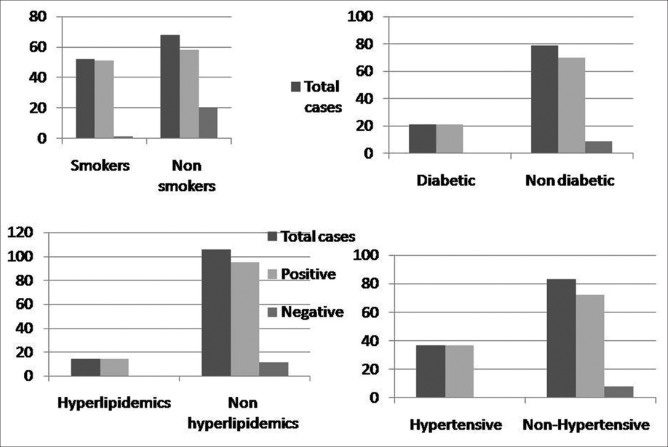
Both autopsy studies were conducted to assess the frequency of coronary atherosclerosis, morphological types of lesions and the degree of stenosis in three major coronary arteries. The association of the disease to age, sex, socio-economic status, diet and obesity were studied along with correlating the severity with major risk factors such as hypertension, diabetes mellitus, hyperlipidemia and smoking.
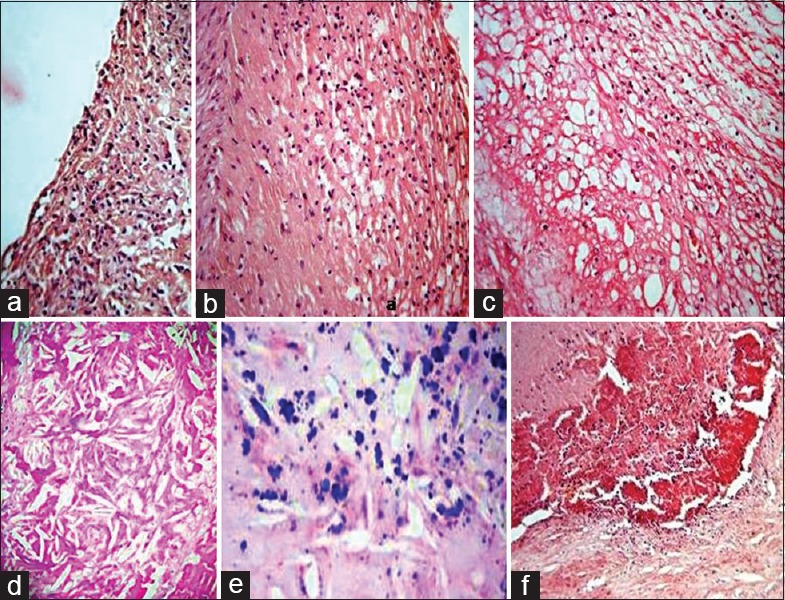
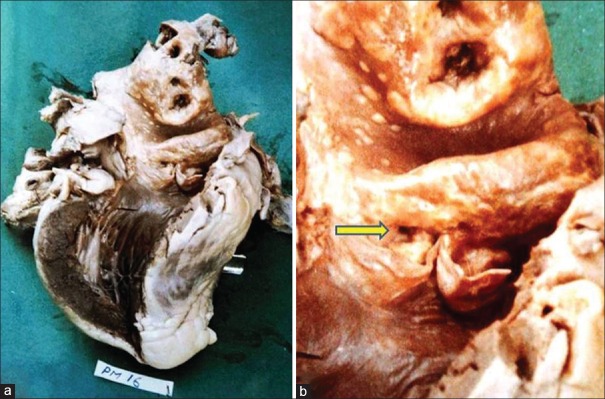
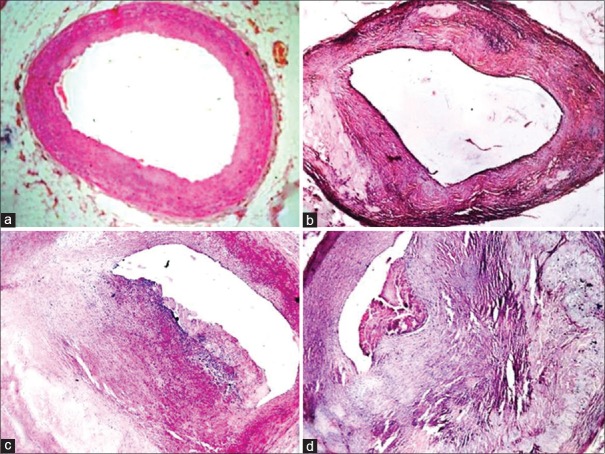
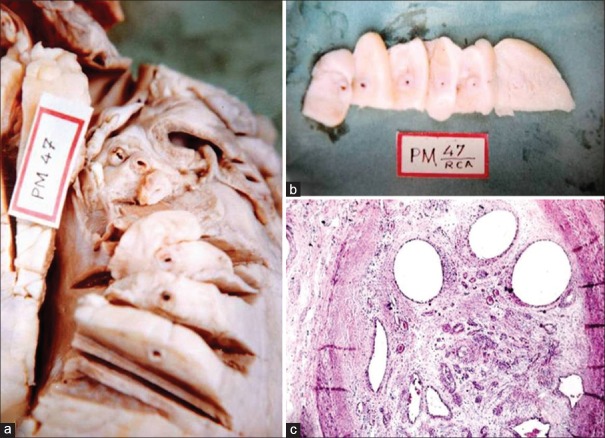
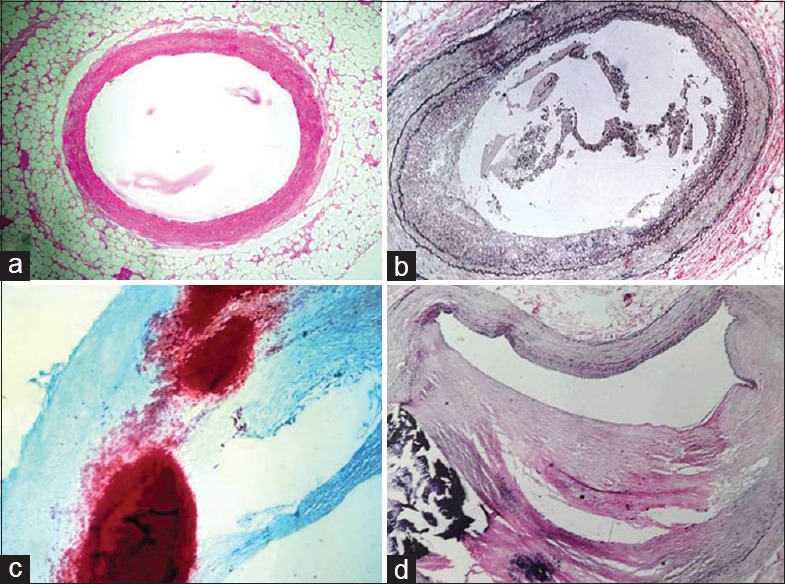
60 hearts in the 1st study and 120 in the 2 study were studied after collecting from Forensic department with details of the deceased. Hearts were dissected by Virchow's method and three major coronary arteries were studied by making serial sectioning. The atherosclerotic lesions were examined histopathologically and typed according to American Heart Association classification along with grading of the luminal stenosis.
The second study showed an alarmingly higher incidence of atherosclerosis (90.83%), especially in younger age. Compared to the older study in which 68.33% had coronary atherosclerosis. In both studies coronary atherosclerosis was more in males, severity increased with age and proximal segment of left anterior descending coronary artery was the most commonly affected part with higher grade lesions.
The frequency of occurrence of coronary atherosclerosis has definitely increased steeply in the past two decades and alarmingly more in the younger people, with the severity being common in the fourth decade of life itself. There is strong positive correlation with major risk factors reiterating the importance of clinical screening and preventive programs.
心血管疾病是全球最常见的死亡原因,其中冠心病(CHD)是主要因素。冠心病的首要原因是冠状动脉粥样硬化,可导致心绞痛甚至猝死,在印度这种情况正在急剧增加;可悲的是,在年轻人中更为常见。在本研究中,将结果与十年前进行的尸检结果进行了比较。
两项尸检研究均旨在评估冠状动脉粥样硬化的频率、病变的形态类型以及三条主要冠状动脉的狭窄程度。研究了该疾病与年龄、性别、社会经济地位、饮食和肥胖的关联,并将严重程度与高血压、糖尿病、高脂血症和吸烟等主要危险因素进行了关联分析。
从法医部门收集了60例心脏用于第一项研究,120例用于第二项研究,并记录了死者的详细信息。采用维尔肖氏方法解剖心脏,并通过连续切片对三条主要冠状动脉进行研究。对动脉粥样硬化病变进行组织病理学检查,并根据美国心脏协会的分类进行分型,同时对管腔狭窄进行分级。
第二项研究显示动脉粥样硬化的发生率高得惊人(90.83%),尤其是在年轻人中。相比之下,较早的研究中冠状动脉粥样硬化的发生率为68.33%。在两项研究中,男性的冠状动脉粥样硬化更为常见,严重程度随年龄增加,左前降支冠状动脉近端是最常受累的部位,病变程度更高。
在过去二十年中,冠状动脉粥样硬化的发生率肯定急剧上升,在年轻人中更为惊人,严重程度在生命的第四个十年就很常见。与主要危险因素有很强的正相关性,这再次强调了临床筛查和预防计划的重要性。