Department of Ophthalmology, The First Affiliated Hospital of Nanchang University, Jiangxi Province Ocular Disease Clinical Research Center, Nanchang, Jiangxi 330006, P.R. China.
Eye Institute of Xiamen University, Fujian Provincial Key Laboratory of Ophthalmology and Visual Science, Xiamen, Fujian 361000, P.R. China.
Mol Med Rep. 2019 Jun;19(6):4832-4840. doi: 10.3892/mmr.2019.10147. Epub 2019 Apr 10.
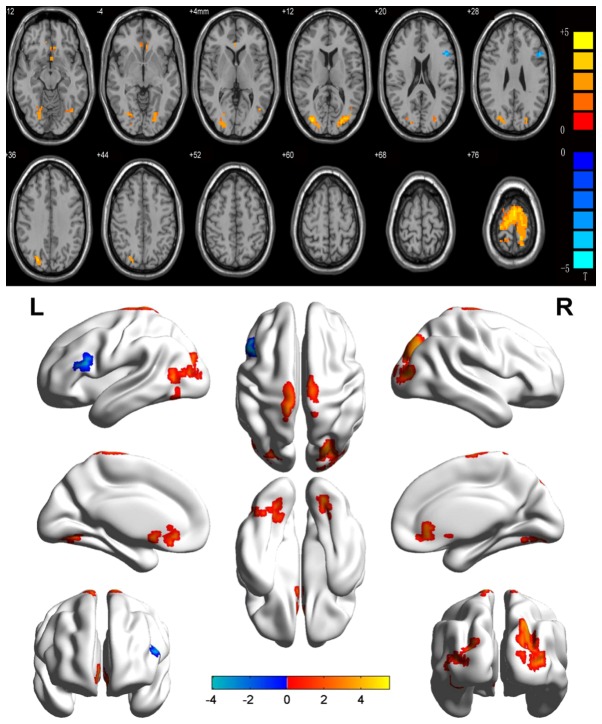
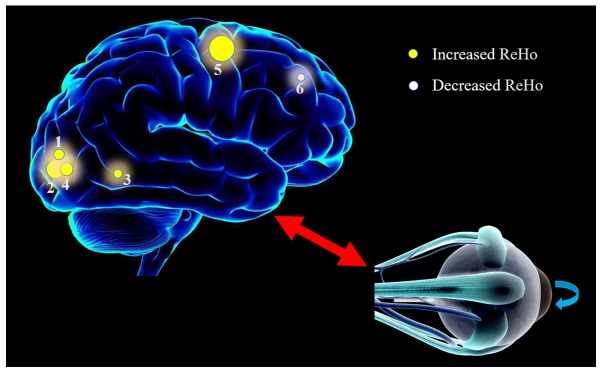
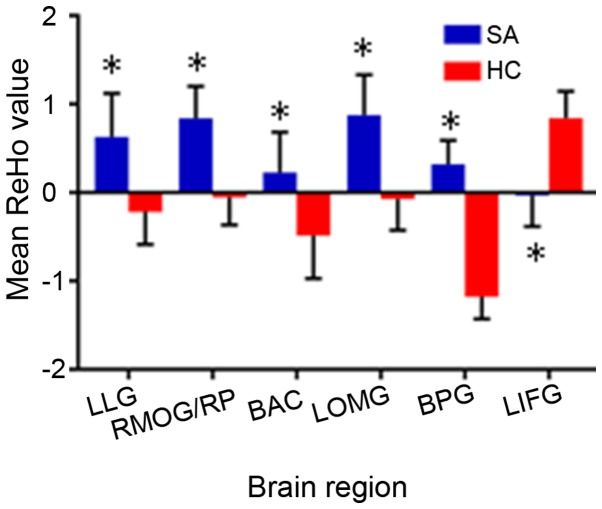
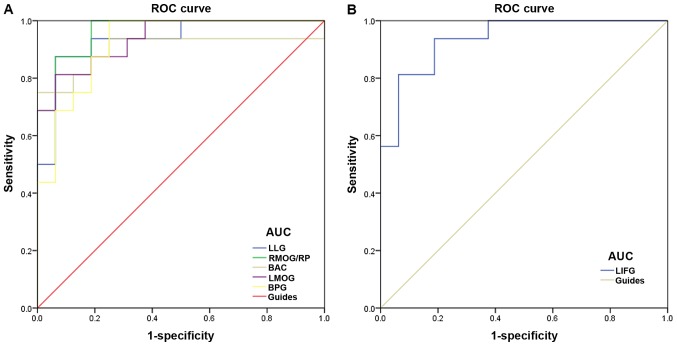
Previous studies have demonstrated that strabismus or amblyopia can result in marked brain function and anatomical alterations. However, differences in spontaneous brain activity in strabismus and amblyopia (SA) patients as compared with control individuals remain unclear. The present study aimed to analyze the potential brain activity changes in SA patients and their association with behavioral performance. In total, 16 patients with SA (10 women and 6 men) and 16 healthy controls (HCs; 6 men and 10 women) with matched age and sex were recruited. All subjects were examined with resting‑state functional magnetic resonance imaging (rs‑fMRI), and changes in the spontaneous brain activity of SA patients were evaluated by the regional homogeneity (ReHo) method. The diagnostic ability of the ReHo method was assessed using receiver operating characteristic (ROC) curve analysis. In addition, the association between the mean ReHo value in different brain regions and the behavioral performance was explored by correlation analysis. It was observed that the ReHo value was significantly increased in SA patients compared with HCs in the following brain regions: left lingual gyrus, right middle occipital gyrus/precuneus, bilateral anterior cingulate, left middle occipital gyrus and bilateral precentral gyrus. By contrast, the ReHo value of the left inferior frontal gyrus was significantly lower than that in HCs. ROC curve analysis indicated that the ReHo method has certain credibility for the diagnosis of SA patients. In addition, no similar changes were detected in other brain regions. These results revealed abnormal spontaneous brain activity in certain parts of the brain in adult patients with SA, which suggests the involvement of the neuropathological or compensatory mechanism in these patients, and may be beneficial for clinical treatment.
先前的研究表明,斜视或弱视会导致明显的大脑功能和解剖结构改变。然而,斜视和弱视(SA)患者与正常对照个体之间自发脑活动的差异尚不清楚。本研究旨在分析 SA 患者潜在的脑活动变化及其与行为表现的关系。共纳入 16 例 SA 患者(10 名女性和 6 名男性)和 16 名健康对照者(HCs;6 名男性和 10 名女性),两组年龄和性别相匹配。所有受试者均接受静息态功能磁共振成像(rs-fMRI)检查,采用局部一致性(ReHo)方法评估 SA 患者自发脑活动的变化。采用受试者工作特征(ROC)曲线分析评估 ReHo 方法的诊断能力。此外,通过相关性分析探讨了不同脑区平均 ReHo 值与行为表现之间的关系。结果显示,与 HCs 相比,SA 患者的 ReHo 值在以下脑区显著升高:左侧舌回、右侧中枕叶/楔前叶、双侧前扣带回、左侧中枕叶和双侧中央前回。相比之下,左侧额下回的 ReHo 值明显低于 HCs。ROC 曲线分析表明,ReHo 方法对 SA 患者的诊断具有一定的可信度。此外,在其他脑区未发现类似的变化。这些结果表明,SA 成年患者某些脑区存在异常自发脑活动,提示这些患者存在神经病理学或代偿机制参与,可能有助于临床治疗。