Houang Evelyne M, Bartos Jason, Hackel Benjamin J, Lodge Timothy P, Yannopoulos Demetris, Bates Frank S, Metzger Joseph M
Department of Integrative Biology and Physiology, University of Minnesota Medical School, Minneapolis, Minnesota.
Department of Medicine-Cardiovascular Division, University of Minnesota Medical School, Minneapolis, Minnesota.
JACC Basic Transl Sci. 2019 Apr 29;4(2):275-287. doi: 10.1016/j.jacbts.2019.01.009. eCollection 2019 Apr.
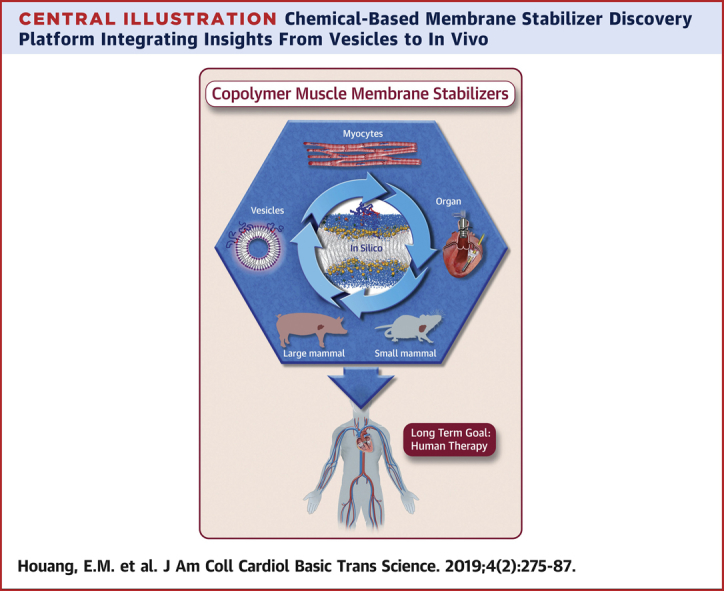
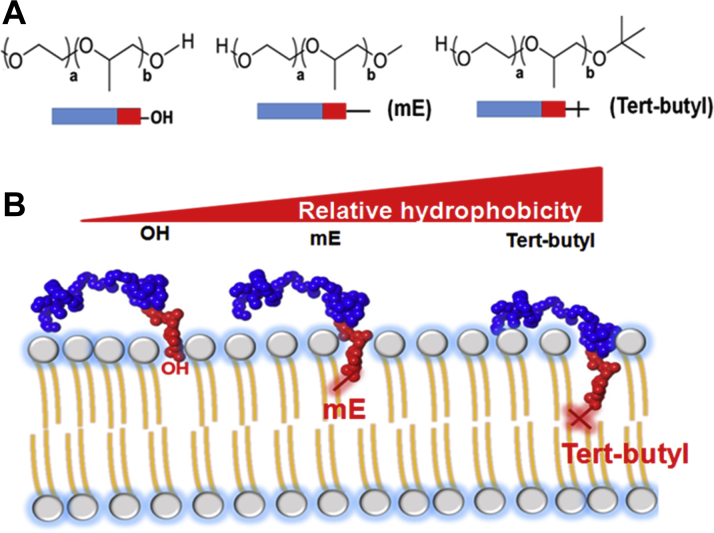
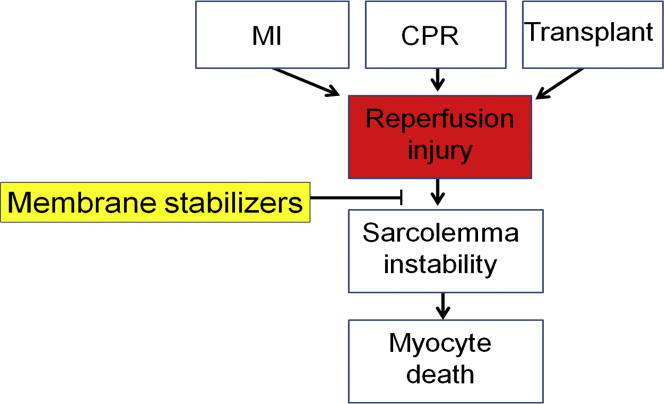
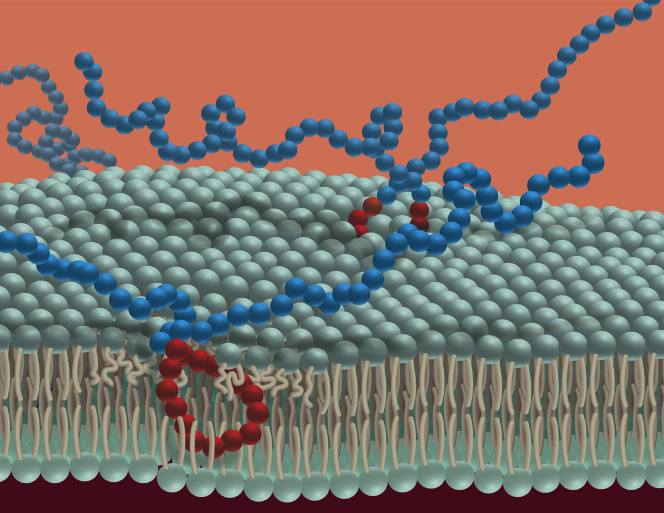
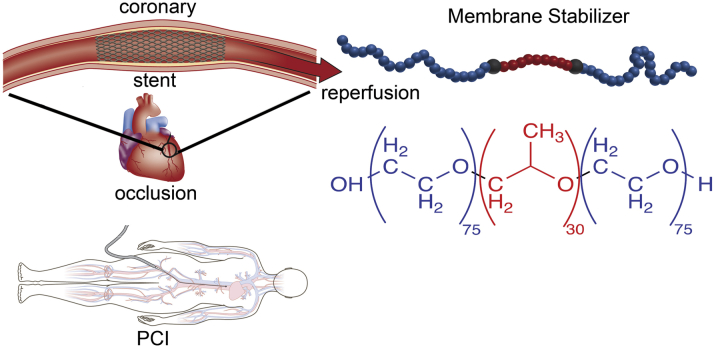
The phospholipid bilayer membrane that surrounds each cell in the body represents the first and last line of defense for preserving overall cell viability. In several forms of cardiac and skeletal muscle disease, deficits in the integrity of the muscle membrane play a central role in disease pathogenesis. In Duchenne muscular dystrophy, an inherited and uniformly fatal disease of progressive muscle deterioration, muscle membrane instability is the primary cause of disease, including significant heart disease, for which there is no cure or highly effective treatment. Further, in multiple clinical forms of myocardial ischemia-reperfusion injury, the cardiac sarcolemma is damaged and this plays a key role in disease etiology. In this review, cardiac muscle membrane stability is addressed, with a focus on synthetic block copolymers as a unique chemical-based approach to stabilize damaged muscle membranes. Recent advances using clinically relevant small and large animal models of heart disease are discussed. In addition, mechanistic insights into the copolymer-muscle membrane interface, featuring atomistic, molecular, and physiological structure-function approaches are highlighted. Collectively, muscle membrane instability contributes significantly to morbidity and mortality in prominent acquired and inherited heart diseases. In this context, chemical-based muscle membrane stabilizers provide a novel therapeutic approach for a myriad of heart diseases wherein the integrity of the cardiac muscle membrane is at risk.
包围人体每个细胞的磷脂双分子层膜是维持细胞整体活力的第一道也是最后一道防线。在几种形式的心脏和骨骼肌疾病中,肌膜完整性的缺陷在疾病发病机制中起着核心作用。在杜兴氏肌肉营养不良症中,这是一种遗传性且普遍致命的进行性肌肉退化疾病,肌膜不稳定是疾病的主要原因,包括严重的心脏病,对此尚无治愈方法或高效治疗手段。此外,在多种临床形式的心肌缺血 - 再灌注损伤中,心肌肌膜会受到损伤,这在疾病病因中起关键作用。在本综述中,我们探讨了心肌膜稳定性,重点关注合成嵌段共聚物作为一种独特的基于化学方法来稳定受损肌膜。讨论了使用与临床相关的心脏病小型和大型动物模型的最新进展。此外,还强调了对共聚物 - 肌膜界面的机制性见解,其采用了原子、分子和生理结构 - 功能方法。总体而言,肌膜不稳定在显著的后天性和遗传性心脏病的发病率和死亡率中起重要作用。在此背景下,基于化学的肌膜稳定剂为众多心肌膜完整性面临风险的心脏病提供了一种新的治疗方法。