Department of Chemistry and Biochemistry, Institute of Molecular Biology, University of Oregon, Eugene, United States.
Elife. 2019 May 8;8:e45815. doi: 10.7554/eLife.45815.
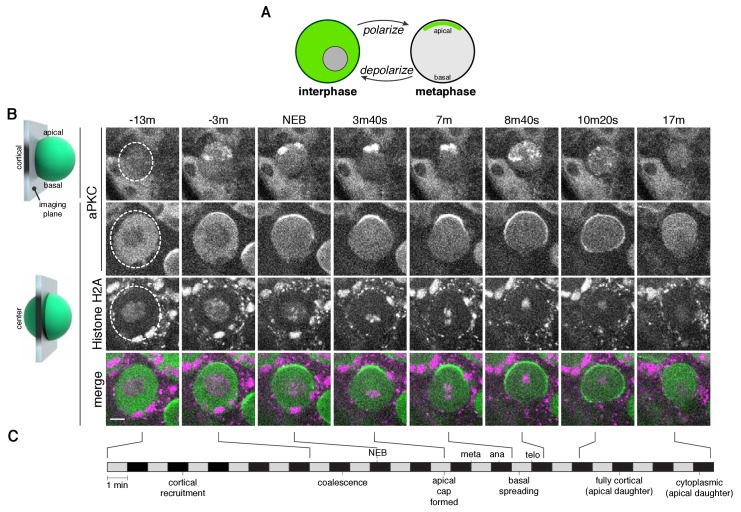
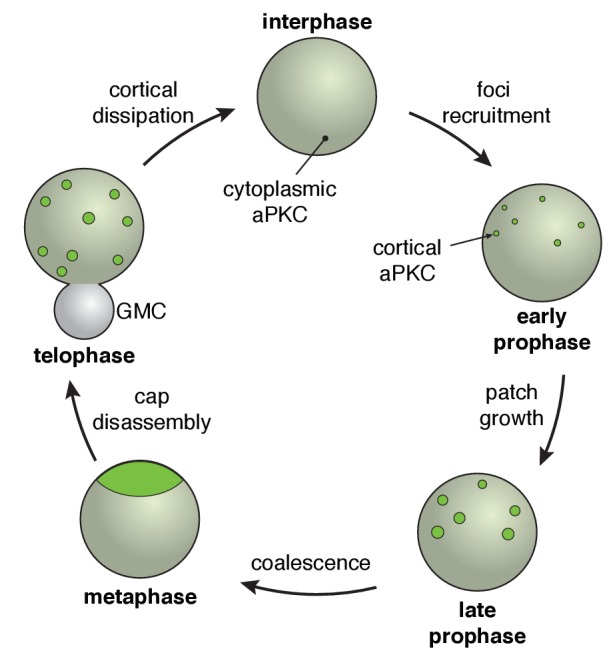
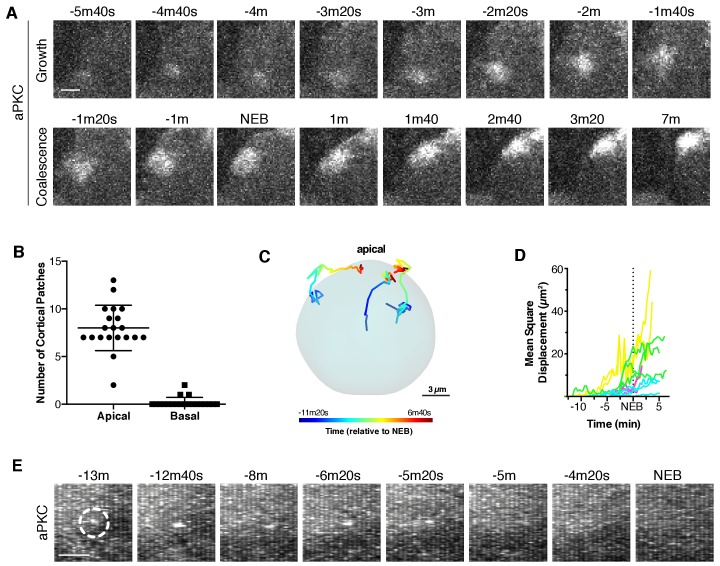
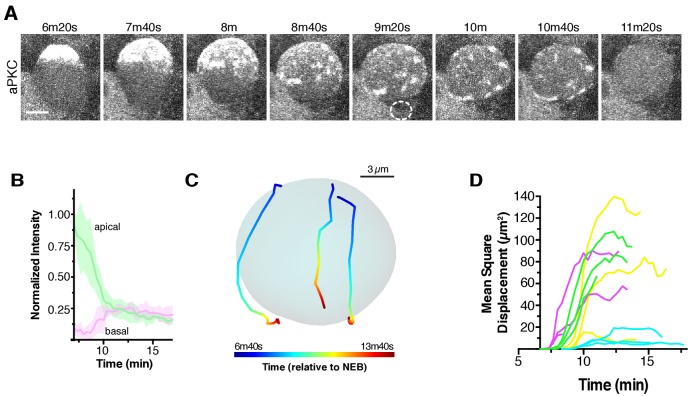
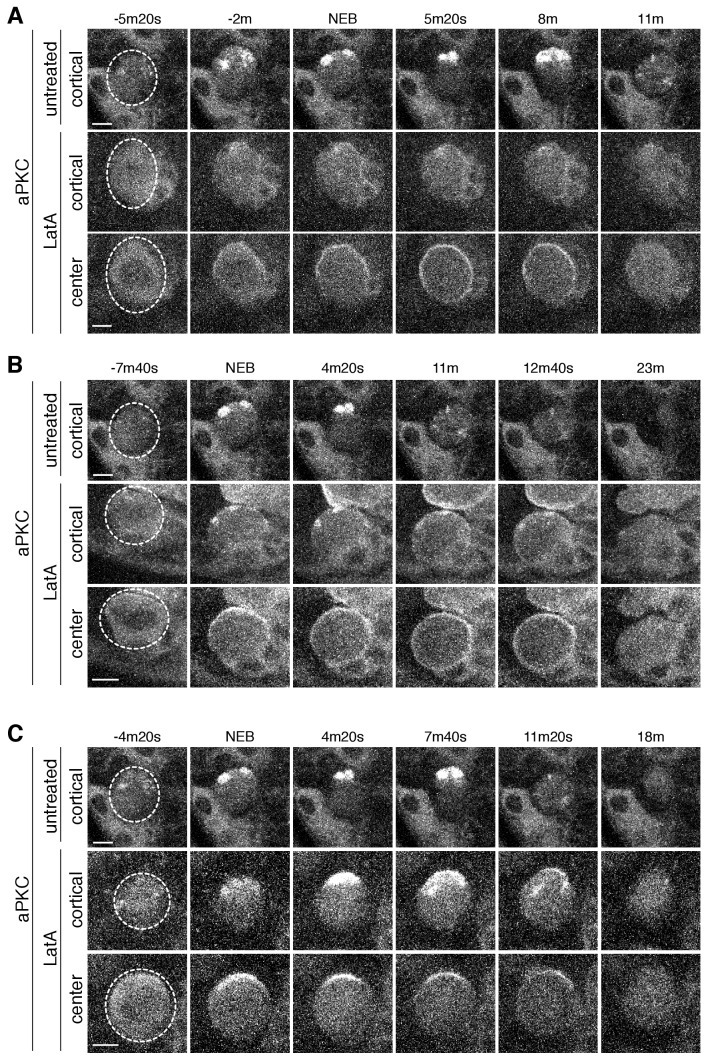
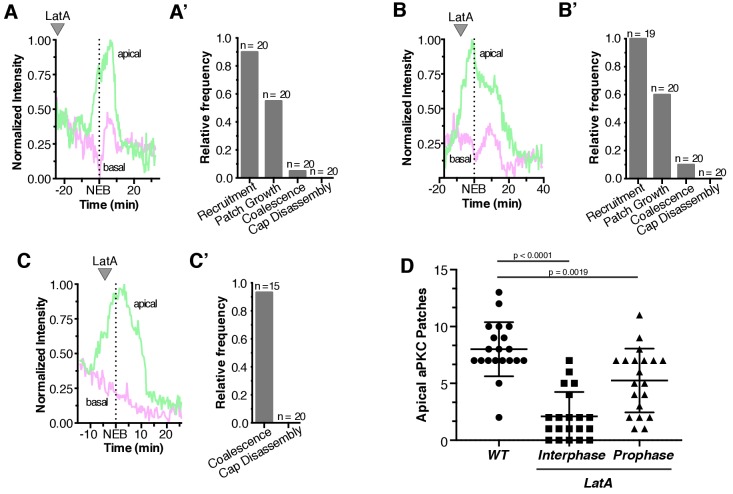
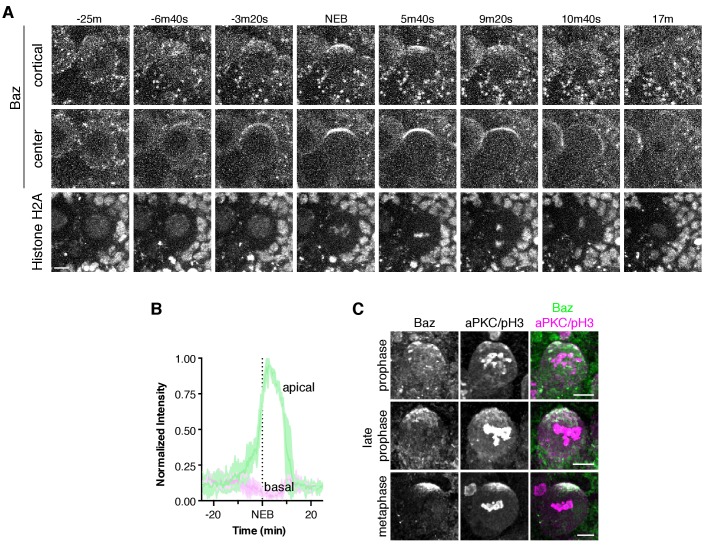
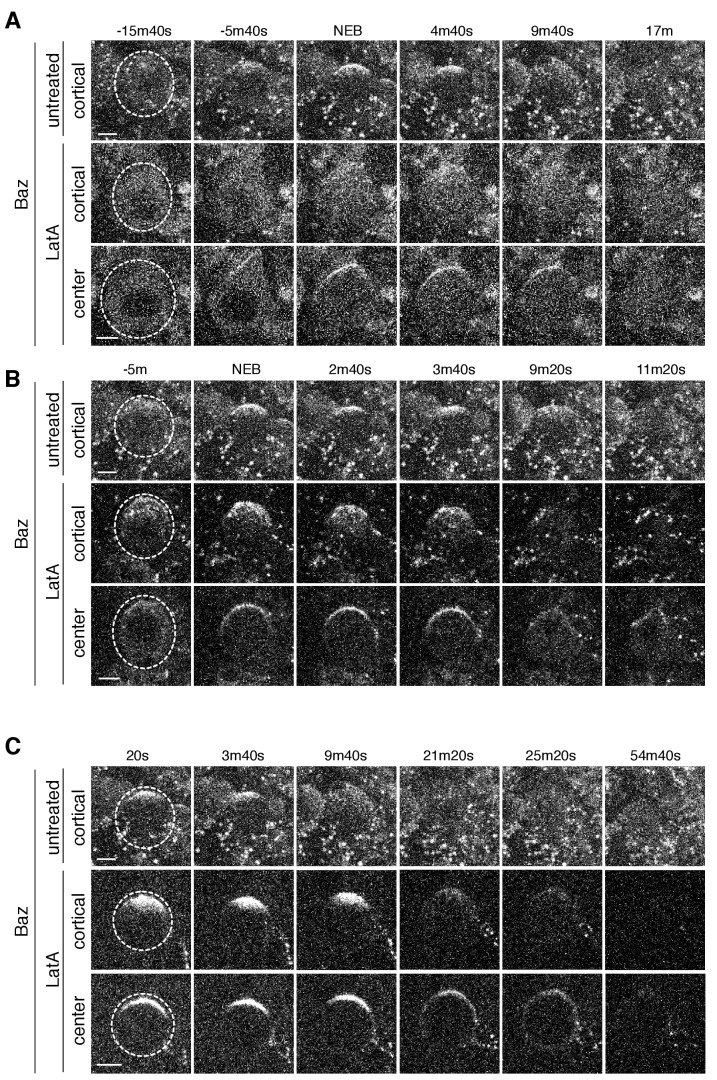
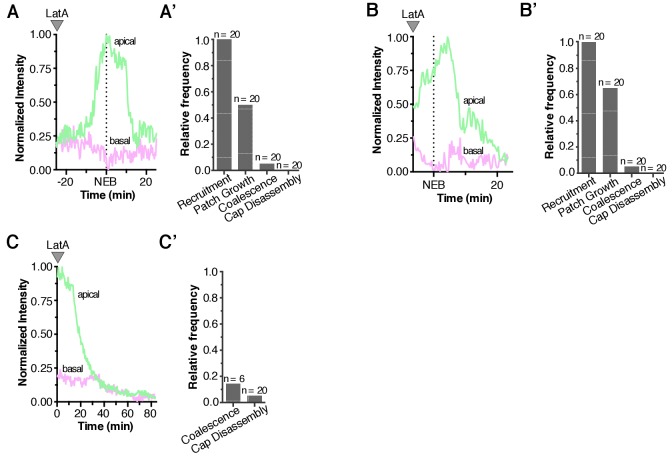
During the asymmetric divisions of neuroblasts, the Par polarity complex cycles between the cytoplasm and an apical cortical domain that restricts differentiation factors to the basal cortex. We used rapid imaging of the full cell volume to uncover the dynamic steps that underlie transitions between neuroblast polarity states. Initially, the Par proteins aPKC and Bazooka form discrete foci at the apical cortex. Foci grow into patches that together comprise a discontinuous, unorganized structure. Coordinated cortical flows that begin near metaphase and are dependent on the actin cytoskeleton rapidly transform the patches into a highly organized apical cap. At anaphase onset, the cap disassembles as the cortical flow reverses direction toward the emerging cleavage furrow. Following division, cortical patches dissipate into the cytoplasm allowing the neuroblast polarity cycle to begin again. Our work demonstrates how neuroblasts use asymmetric recruitment and cortical flows to dynamically polarize during asymmetric division cycles.
在神经母细胞的不对称分裂过程中,Par 极性复合物在细胞质和限制分化因子到基底皮质的顶端皮质域之间循环。我们使用全细胞体积的快速成像来揭示神经母细胞极性状态转变背后的动态步骤。最初,Par 蛋白 aPKC 和 Bazooka 在顶端皮质形成离散焦点。焦点生长成斑块,共同组成一个不连续的、无组织的结构。从中期开始并依赖肌动蛋白细胞骨架的协调皮层流迅速将斑块转化为高度组织化的顶端帽。在有丝分裂开始时,帽随着皮层流向新出现的分裂沟的方向反转而解体。分裂后,皮质斑块消散到细胞质中,允许神经母细胞极性循环再次开始。我们的工作展示了神经母细胞如何在不对称分裂周期中利用不对称募集和皮层流来动态极化。