Institute of Molecular Biology, Department of Chemistry and Biochemistry, University of Oregon, Eugene, OR 97403, USA.
Institute of Molecular Biology, Department of Chemistry and Biochemistry, University of Oregon, Eugene, OR 97403, USA.
Cell Rep. 2021 May 18;35(7):109146. doi: 10.1016/j.celrep.2021.109146.
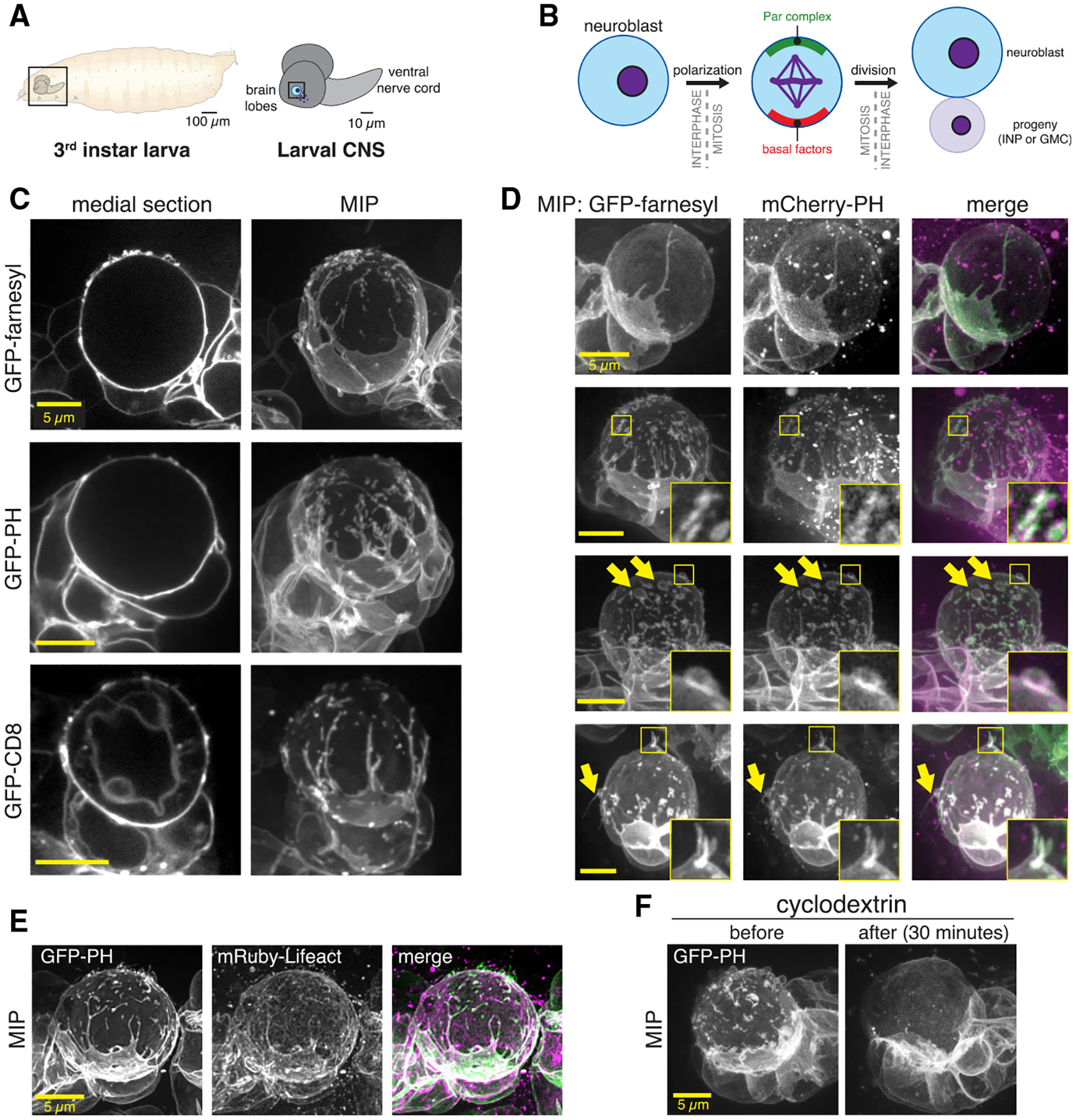
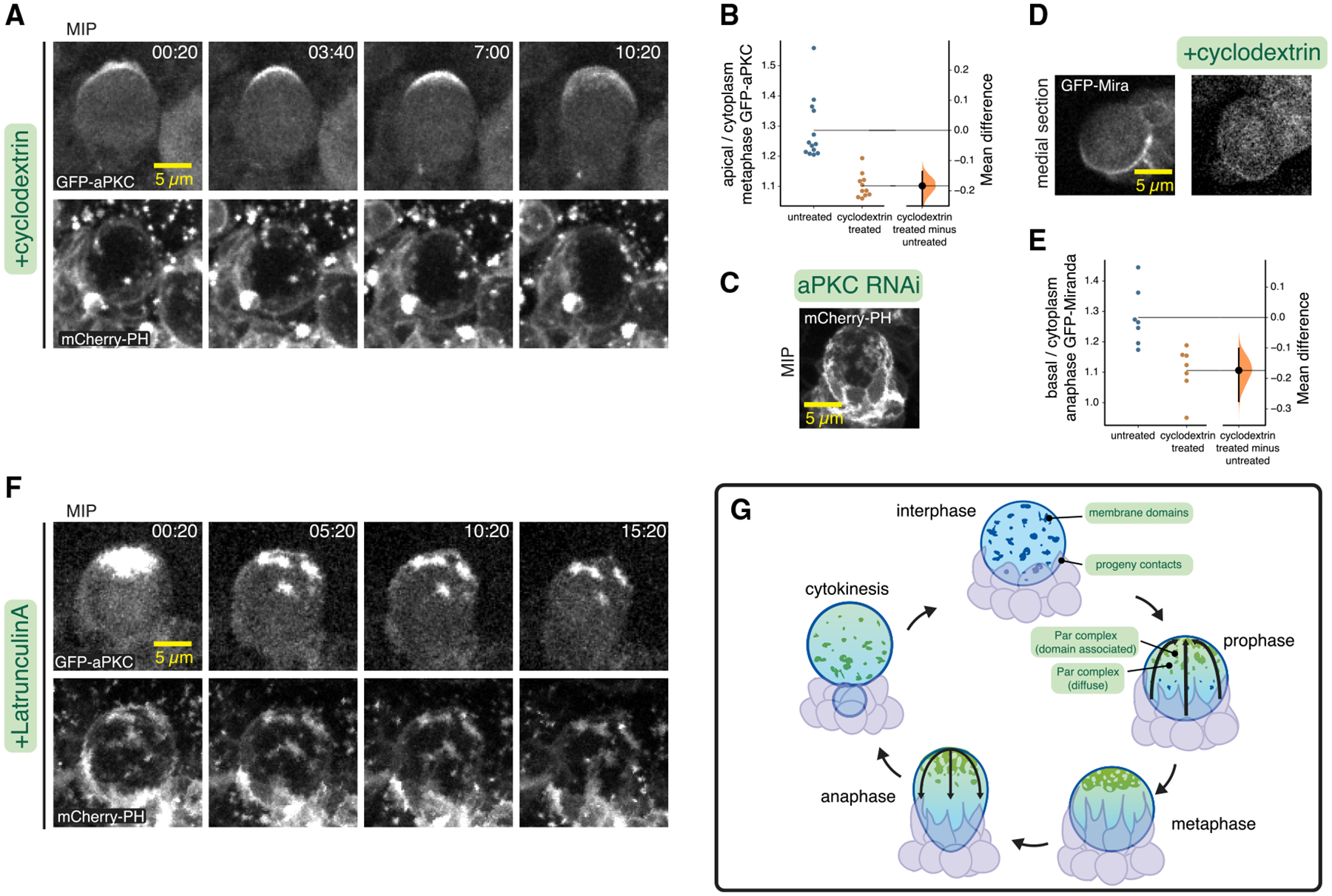
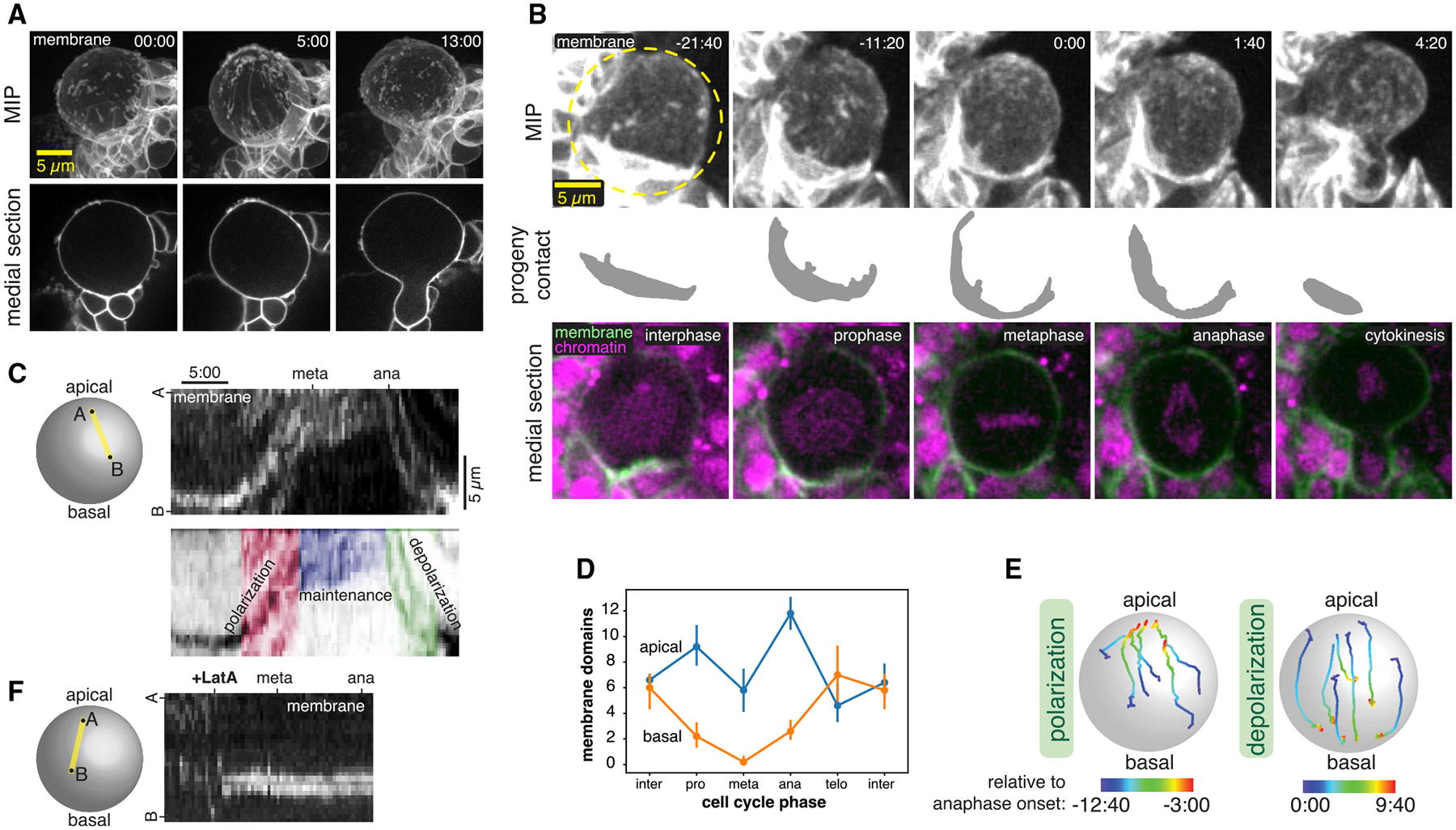
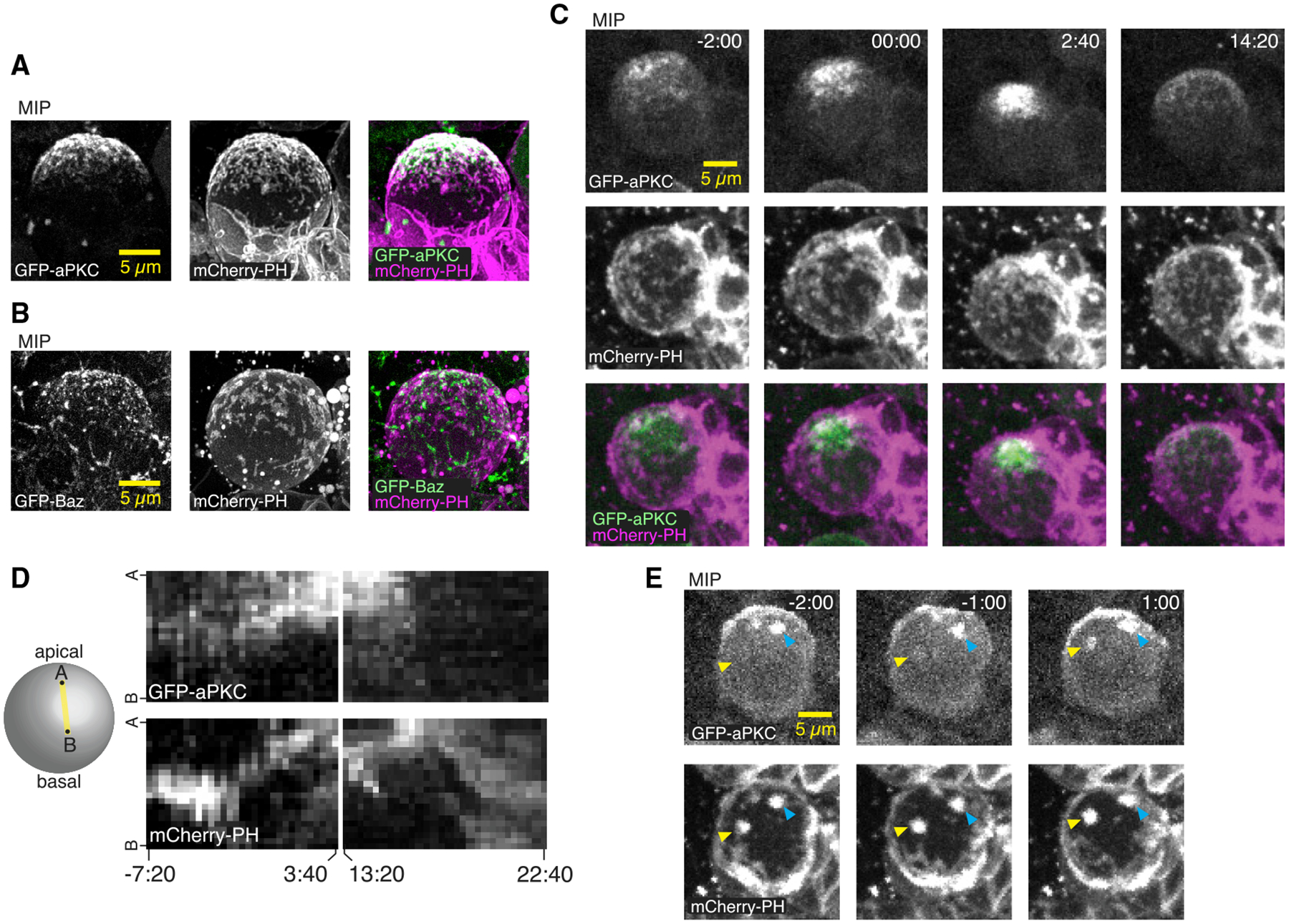
The Par complex directs fate-determinant segregation from the apical membrane of asymmetrically dividing Drosophila neuroblasts. While the physical interactions that recruit the Par complex have been extensively studied, little is known about how the membrane itself behaves during polarization. We examined the membrane dynamics of neuroblasts and surrounding cells using a combination of super-resolution and time-lapse imaging, revealing cellular-scale movements of diverse membrane features during asymmetric division cycles. Membrane domains that are distributed across the neuroblast membrane in interphase become polarized in early mitosis, where they mediate formation of cortical patches of the Par protein atypical protein kinase C (aPKC). Membrane and protein polarity cycles are precisely synchronized and are generated by extensive actin-dependent forces that deform the surrounding tissue. In addition to suggesting a role for the membrane in asymmetric division, our results reveal the mechanical nature of the neuroblast polarity cycle.
Par 复合物指导命运决定因素从果蝇神经母细胞的顶膜不对称分裂。虽然已经广泛研究了募集 Par 复合物的物理相互作用,但对于膜本身在极化过程中的行为知之甚少。我们使用超分辨率和延时成像的组合来检查神经母细胞和周围细胞的膜动力学,揭示了不对称分裂周期中各种膜特征的细胞尺度运动。在有丝分裂早期,分布在神经母细胞膜上的膜域变得极化,在那里它们介导 Par 蛋白非典型蛋白激酶 C(aPKC)的皮质斑的形成。膜和蛋白质的极性循环精确地同步,并由广泛的依赖肌动蛋白的力产生,这些力使周围组织变形。除了表明膜在不对称分裂中的作用外,我们的结果还揭示了神经母细胞极性循环的机械性质。