Sir Peter Mansfield Imaging Centre, School of Physics and Astronomy, University of Nottingham, Nottingham, United Kingdom.
Nottingham Digestive Diseases Centre and National Institute for Health Research (NIHR) Nottingham Biomedical Research Centre, Nottingham University Hospitals NHS Trust and University of Nottingham, Nottingham, United Kingdom.
PLoS One. 2019 May 8;14(5):e0216528. doi: 10.1371/journal.pone.0216528. eCollection 2019.
Complications of diverticular disease are increasingly common, possibly linked to increasing obesity. Visceral fat could contribute to the development of symptomatic diverticular disease through its pro-inflammatory effects.
The study had 2 aims. A) to develop a semi-automated algorithm to measure abdominal adipose tissue from 2-echo magnetic resonance imaging (MRI) data; B) to use this to determine if visceral fat was associated with bowel symptoms and inflammatory markers in patients with symptomatic and asymptomatic diverticular disease.
An observational study measuring visceral fat using MRI together with serum adiponectin, leptin, stool calprotectin and patient-reported somatisation and bowel habit.
Medical and imaging research centres of a university hospital.
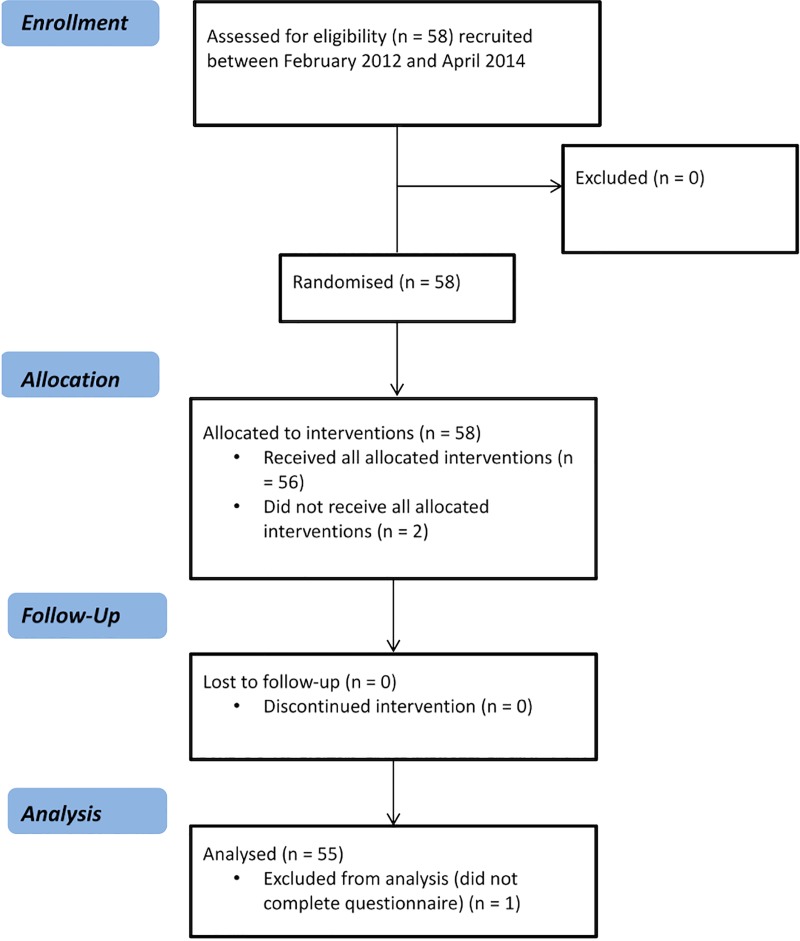
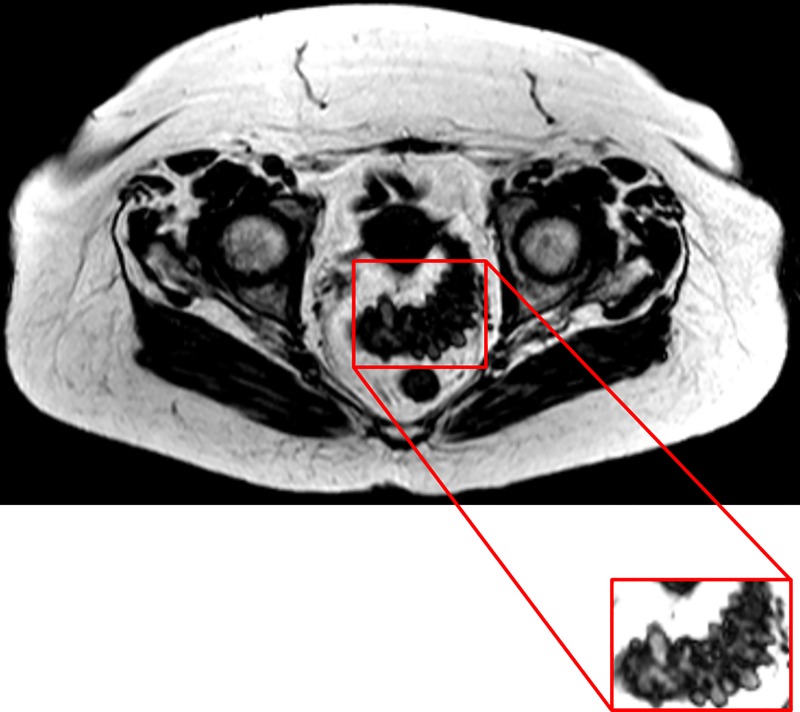
MRI scans were performed on 55 patients after an overnight fast measuring abdominal subcutaneous and visceral adipose tissue volumes together with small bowel water content (SBWC). Blood and stool samples were collected and patients kept a 2 week stool diary and completed a somatisation questionnaire.
Difference in the volume of visceral fat between symptomatic and asymptomatic patients.
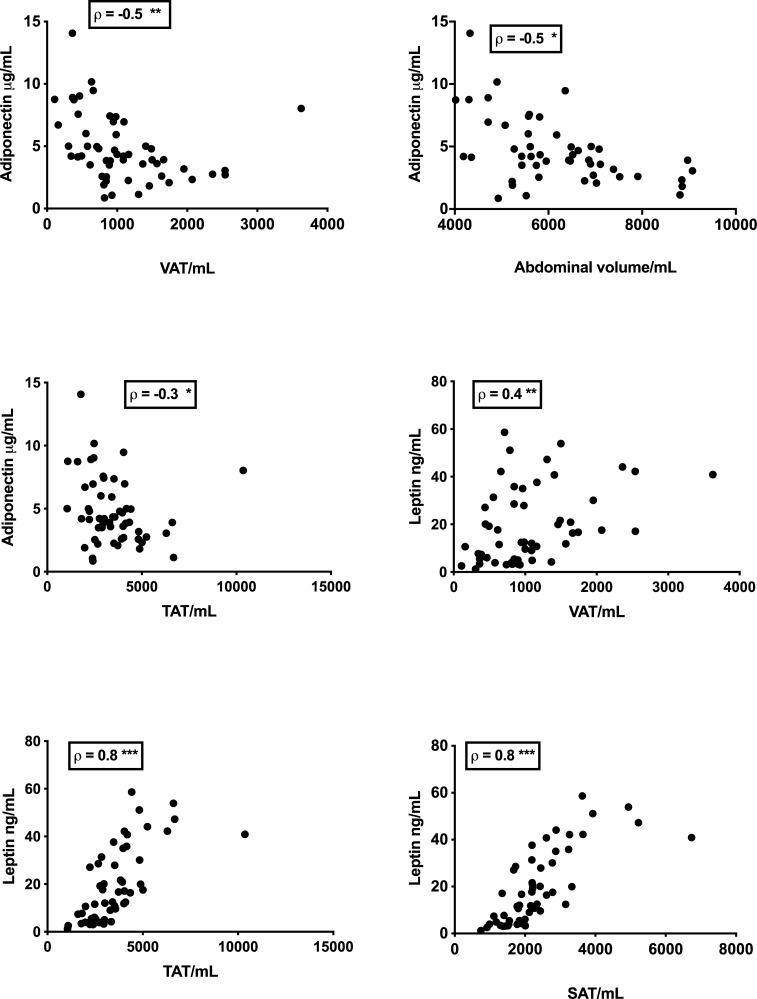
There were no significant differences in visceral (p = 0.98) or subcutaneous adipose (p = 0.60) tissue between symptomatic and asymptomatic patients. However measured fat volumes were associated with serum adipokines. Adiponectin showed an inverse correlation with visceral adipose tissue (VAT) (Spearman ρ = -0.5, p = 0.0003), which correlated negatively with SBWC (ρ = -0.3, p = 0.05). Leptin correlated positively with subcutaneous adipose tissue (ρ = 0.8, p < 0.0001). Overweight patients (BMI > 25 kgm-2) showed a moderate correlation between calprotectin and VAT (ρ = 0.3, p = 0.05). Somatization scores were significantly higher in symptomatic patients (p < 0.0003).
Increasing visceral fat is associated with lower serum adiponectin and increased faecal calprotectin suggesting a pro-inflammatory effect which may predispose to the development of complications of diverticulosis.
憩室疾病的并发症越来越常见,可能与肥胖的增加有关。内脏脂肪可能通过其促炎作用导致有症状的憩室疾病的发展。
本研究有两个目的。A)开发一种半自动算法来测量 2 个回声磁共振成像(MRI)数据中的腹部脂肪组织;B)使用该算法确定内脏脂肪是否与有症状和无症状憩室疾病患者的肠道症状和炎症标志物有关。
一项观察性研究,使用 MRI 测量内脏脂肪,同时测量血清脂联素、瘦素、粪便钙卫蛋白和患者报告的躯体化和肠道习惯。
一所大学医院的医学和影像研究中心。
55 名患者在禁食一夜后进行 MRI 扫描,测量腹部皮下和内脏脂肪组织体积以及小肠含水量(SBWC)。采集血液和粪便样本,患者保留两周粪便日记,并完成躯体化问卷。
有症状和无症状患者之间内脏脂肪体积的差异。
有症状和无症状患者之间的内脏(p = 0.98)或皮下脂肪(p = 0.60)组织无显著差异。然而,测量的脂肪体积与血清脂联素有关。脂联素与内脏脂肪组织(VAT)呈负相关(Spearman ρ = -0.5,p = 0.0003),与 SBWC 呈负相关(ρ = -0.3,p = 0.05)。瘦素与皮下脂肪组织呈正相关(ρ = 0.8,p < 0.0001)。超重患者(BMI > 25 kgm-2)中,粪便钙卫蛋白与 VAT 之间呈中度相关性(ρ = 0.3,p = 0.05)。躯体化评分在有症状患者中明显更高(p < 0.0003)。
内脏脂肪增加与血清脂联素降低和粪便钙卫蛋白增加有关,提示促炎作用可能导致憩室病并发症的发生。