Patel Sheila, Klagholz Stephen, Peterson Christine T, Weiss Lizabeth, Chopra Deepak, Mills Paul J
Department of Family Medicine and Public Health, Center of Excellence for Research and Training in Integrative Health, University of California San Diego, La Jolla, California.
Mind-Body Medical Group, The Chopra Center for Wellbeing, Carlsbad, California.
Glob Adv Health Med. 2019 Apr 29;8:2164956119843814. doi: 10.1177/2164956119843814. eCollection 2019.
As individuals are increasingly attending health and wellness courses outside of the conventional medical system, there is a need to obtain objective data on the effects of those programs on well-being.
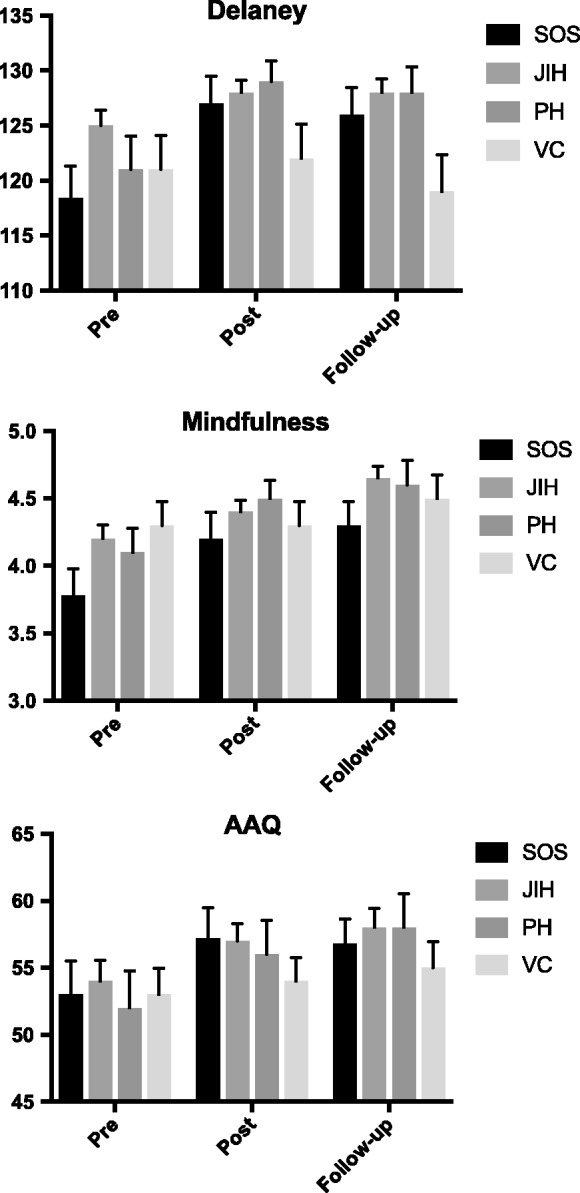
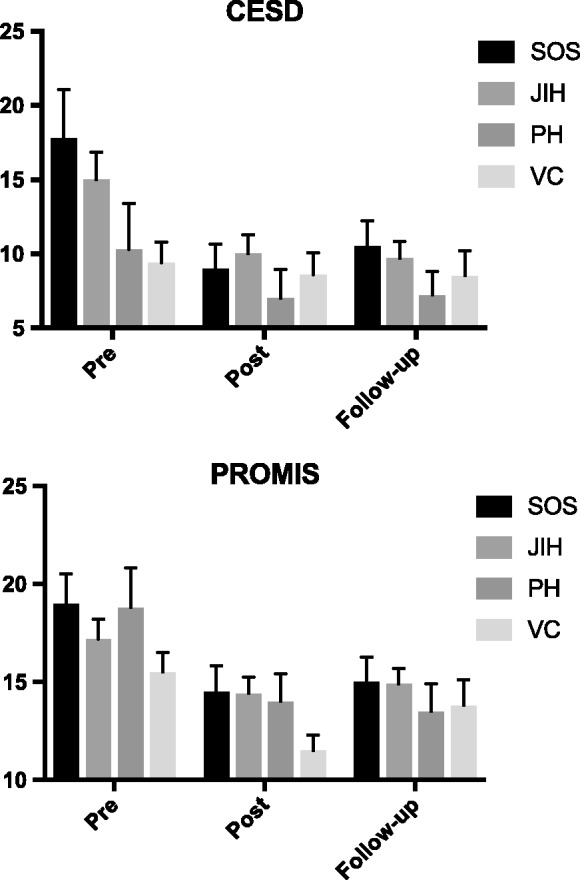
In total, 154 men and women (mean age 54.7 years; range 25-83) participated in 3 different holistic wellness programs based on Ayurvedic Medicine principles (Seduction of Spirit, Journey into Healing, and Perfect Health) or a vacation control group. Psychosocial outcomes included spirituality (Delaney Spirituality Scale), mindful awareness (Mindful Attention Awareness Scale), psychological flexibility (Acceptance and Action Questionnaire), mood (Center for Epidemiology Studies-Depression), and anxiety (Patient-Reported Outcomes Measurement System Anxiety Scale).
Participants in the Seduction of Spirit ( < .004), Journey into Healing ( < .05), and Perfect Health ( < .004) courses showed significant increases in spirituality as compared to vacation controls. Participants in Seduction of Spirit ( < .007) also showed significant increases in mindfulness as compared to vacation controls. Participants in the Seduction of Spirit ( < .001) and Journey into Healing ( < .05) courses showed significant decreases in depressed mood as compared to those in the Perfect Health and vacation control groups. All study participants showed similar increases in psychological flexibility ( < .01) and decreases in anxiety ( < .01).
Participation in wellness courses that incorporate a mind-body-spirit approach to health improves multiple domains of psychosocial well-being, which persists even after course participation.
随着人们越来越多地参加传统医疗系统之外的健康养生课程,有必要获取关于这些课程对幸福感影响的客观数据。
共有154名男性和女性(平均年龄54.7岁;年龄范围25 - 83岁)参加了3种基于阿育吠陀医学原则的不同整体健康养生项目(《精神的诱惑》《治愈之旅》和《完美健康》)或一个度假对照组。心理社会结果包括精神性(德莱尼精神性量表)、正念觉察(正念注意觉知量表)、心理灵活性(接纳与行动问卷)、情绪(流行病学研究中心抑郁量表)和焦虑(患者报告结局测量系统焦虑量表)。
与度假对照组相比,参加《精神的诱惑》(P <.004)、《治愈之旅》(P <.05)和《完美健康》(P <.004)课程的参与者在精神性方面有显著提高。与度假对照组相比,参加《精神的诱惑》的参与者(P <.007)在正念方面也有显著提高。与参加《完美健康》课程和度假对照组的参与者相比,参加《精神的诱惑》(P <.001)和《治愈之旅》(P <.05)课程的参与者抑郁情绪显著降低。所有研究参与者在心理灵活性方面均有类似程度的提高(P <.01),在焦虑方面均有降低(P <.01)。
参与采用身心灵方法促进健康的养生课程可改善心理社会幸福感的多个方面,且即使在课程结束后仍持续存在。