Phillips Evan H, Lorch Adam H, Durkes Abigail C, Goergen Craig J
Weldon School of Biomedical Engineering, Purdue University, West Lafayette, Indiana 47907, USA.
Department of Biology, Purdue University, West Lafayette, Indiana 47907, USA.
APL Bioeng. 2018 Dec 20;2(4):046106. doi: 10.1063/1.5053708. eCollection 2018 Dec.
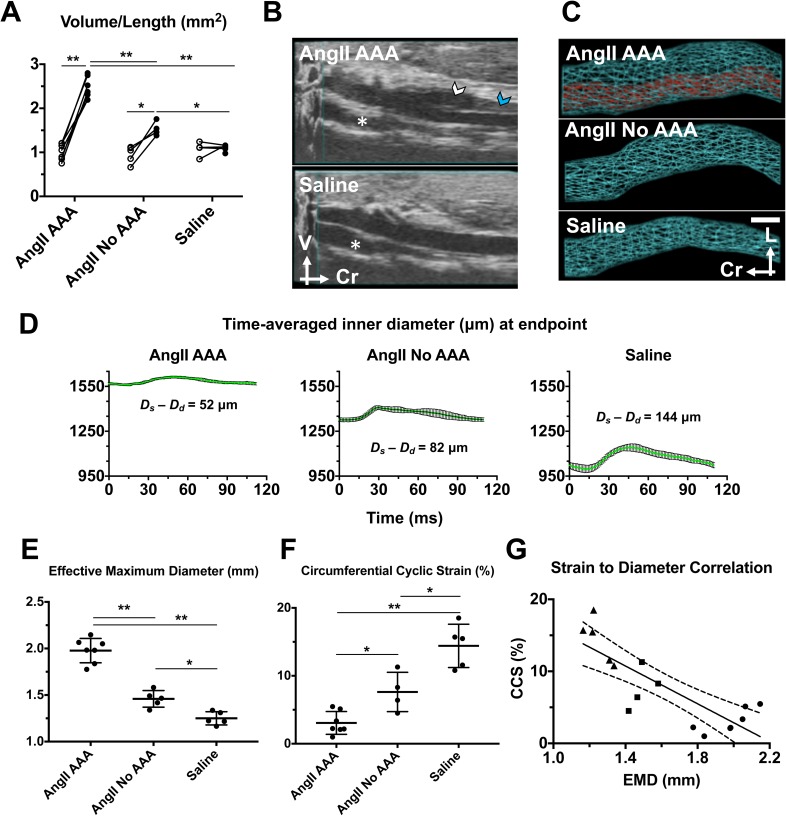
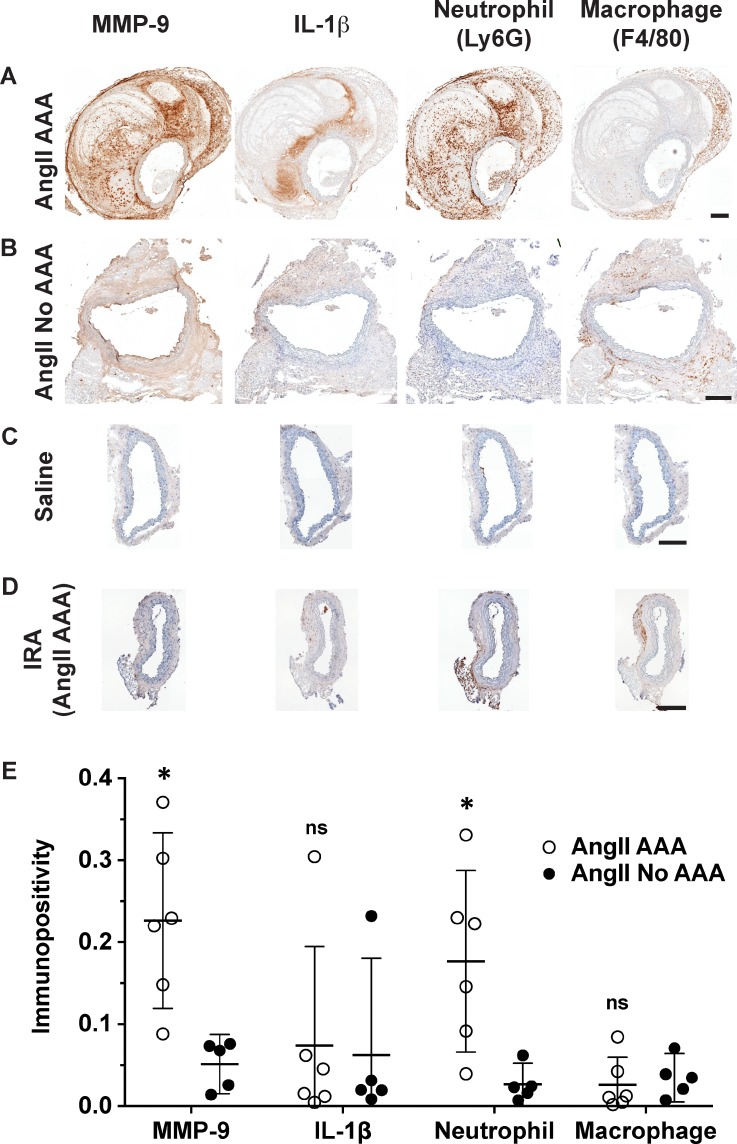
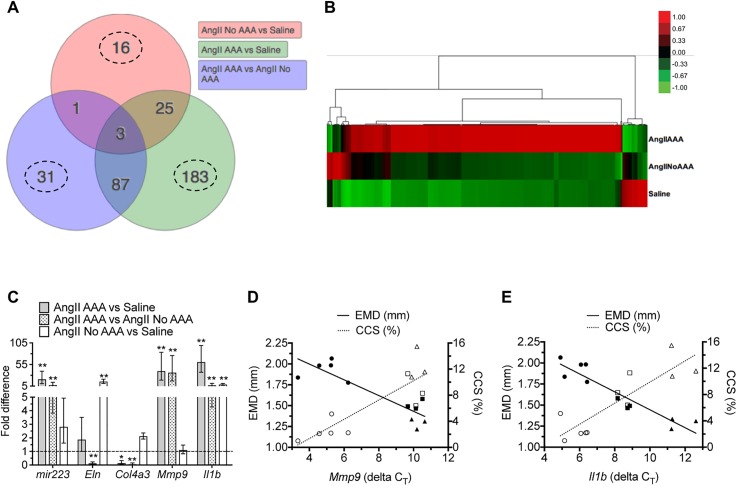
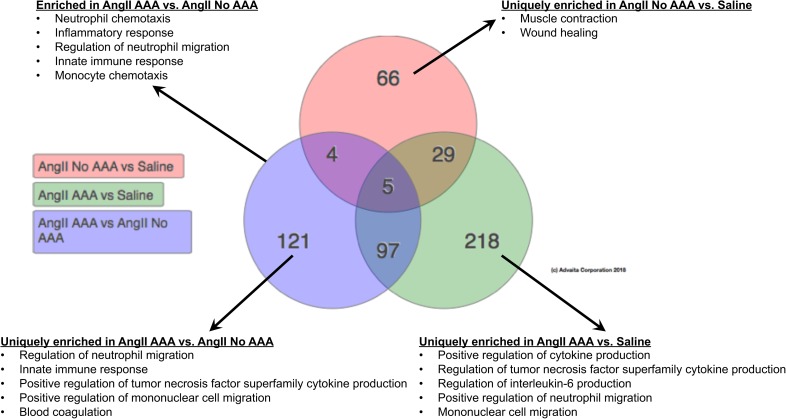
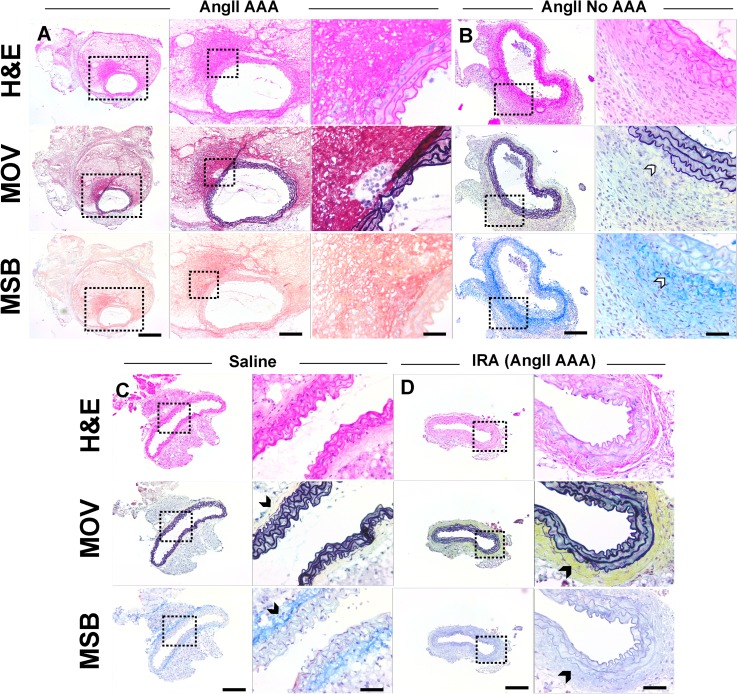
We report here on the early pathology of a well-established murine model of dissecting abdominal aortic aneurysms (AAAs). Continuous infusion of angiotensin II (AngII) into apolipoprotein E-deficient mice induces the formation of aortic dissection and expansion at some point after implantation of miniosmotic pumps containing AngII. While this model has been studied extensively at a chronic stage, we investigated the early pathology of dissecting AAA formation at multiple scales. Using high-frequency ultrasound, we screened 12-week-old male mice daily for initial formation of these aneurysmal lesions between days 3 and 10 post-implantation. We euthanized animals on the day of diagnosis of a dissecting AAA or at day 10 if no aneurysmal lesion developed. Aortic expansion and reduced vessel wall strain occurred in animals regardless of whether a dissecting AAA developed by day 10. The aortas of mice that did not develop dissecting AAAs showed intermediate changes in morphology and biomechanical properties. RNA sequencing and gene expression analysis revealed multiple proinflammatory and matrix remodeling genes to be upregulated in the suprarenal aorta of AngII-infused mice as compared to saline-infused controls. Histology and immunohistochemistry confirmed that extracellular matrix remodeling and inflammatory cell infiltration, notably neutrophils and macrophages, occurred in AngII-infused mice with and without dissecting AAAs but not saline-infused controls. Understanding early disease processes is a critical step forward in translating experimental results in cardiovascular disease research. This work advances our understanding of this well-established murine model with applications for improving early diagnosis and therapy of acute aortic syndrome in humans.
我们在此报告一种成熟的腹主动脉夹层动脉瘤(AAA)小鼠模型的早期病理学情况。向载脂蛋白E缺陷小鼠持续输注血管紧张素II(AngII),在植入含AngII的微量渗透泵后的某个时间点会诱导主动脉夹层形成和扩张。虽然该模型在慢性阶段已得到广泛研究,但我们在多个尺度上研究了夹层AAA形成的早期病理学。使用高频超声,我们每天对12周龄雄性小鼠进行筛查,以检测植入后第3天至第10天这些动脉瘤性病变的初始形成情况。在诊断出夹层AAA的当天或如果未出现动脉瘤性病变则在第10天对动物实施安乐死。无论在第10天是否发生夹层AAA,动物均出现主动脉扩张和血管壁应变降低。未发生夹层AAA的小鼠主动脉在形态和生物力学特性方面表现出中间变化。RNA测序和基因表达分析显示,与输注生理盐水的对照组相比,输注AngII的小鼠肾上腺上主动脉中有多个促炎和基质重塑基因上调。组织学和免疫组织化学证实,在输注AngII的小鼠中,无论有无夹层AAA,均发生细胞外基质重塑和炎性细胞浸润,尤其是中性粒细胞和巨噬细胞,而输注生理盐水的对照组则未出现。了解疾病早期过程是心血管疾病研究中转化实验结果的关键一步。这项工作增进了我们对这种成熟小鼠模型的理解,有助于改善人类急性主动脉综合征的早期诊断和治疗。