Charité -Universitätsmedizin Berlin, corporate member of Freie Universität Berlin, Humboldt-Universität Zu Berlin, and Berlin Institute of Health, Charitéplatz 1, 10117, Berlin, Germany.
Department of Veterinary Medicine, Institute of Animal Welfare, Animal Behavior and Laboratory Animal Science, Freie Universität Berlin, Königsweg 67, Building 21, 14163, Berlin, Germany.
Sci Rep. 2020 Sep 16;10(1):15206. doi: 10.1038/s41598-020-71817-x.
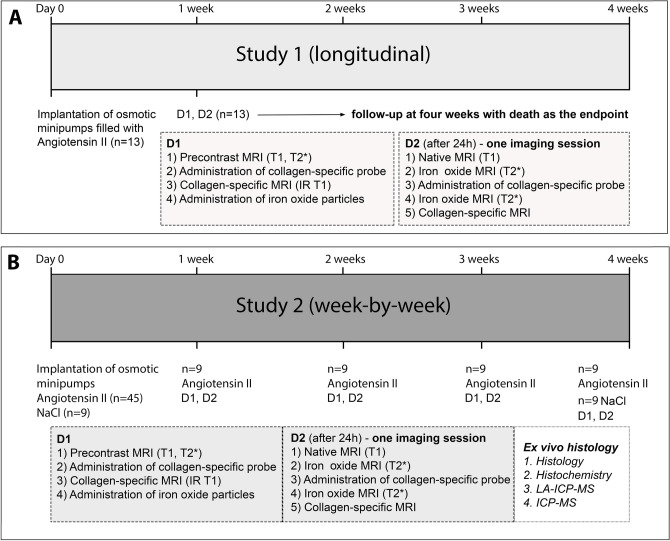
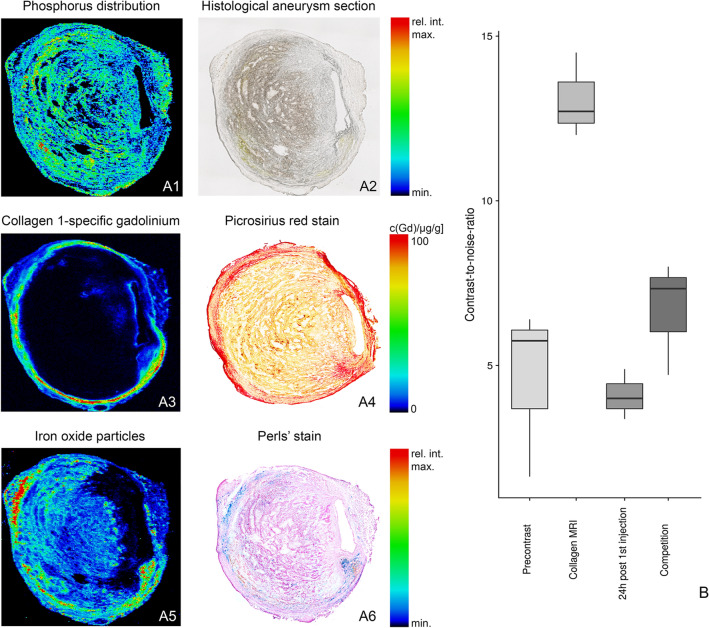
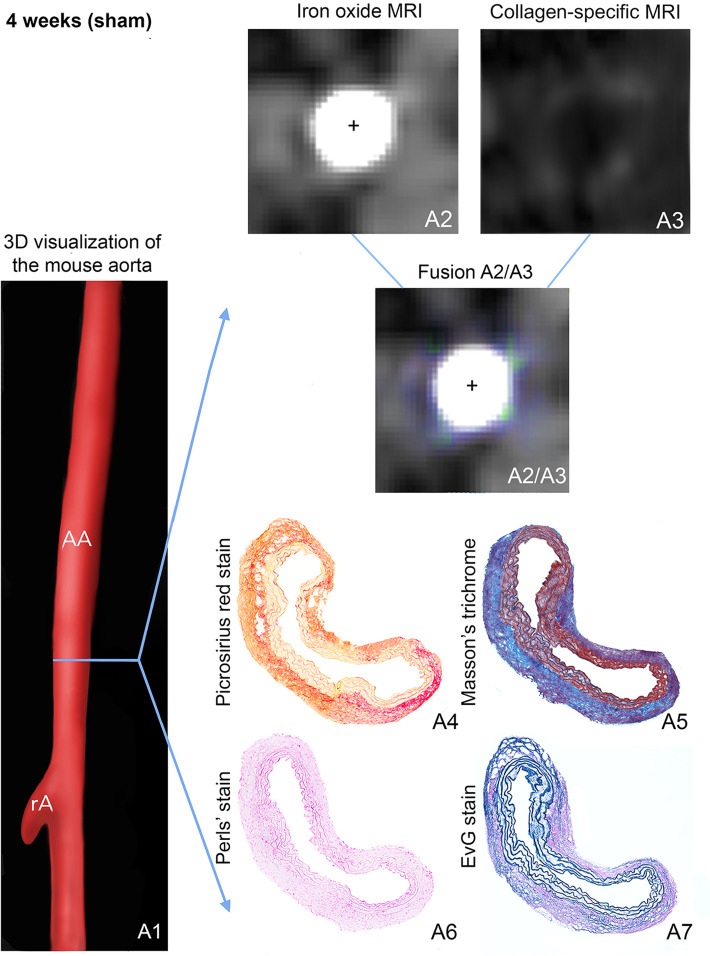
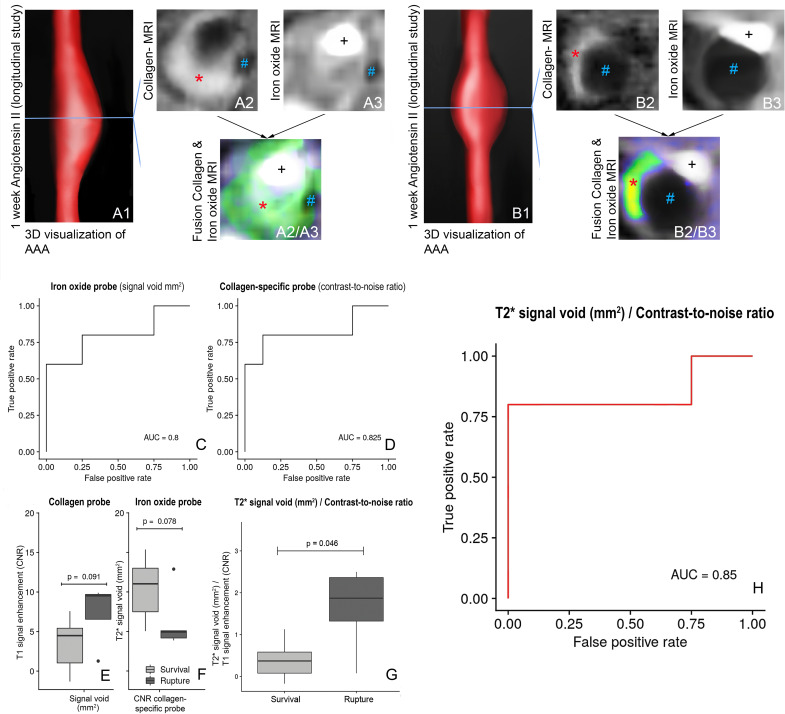
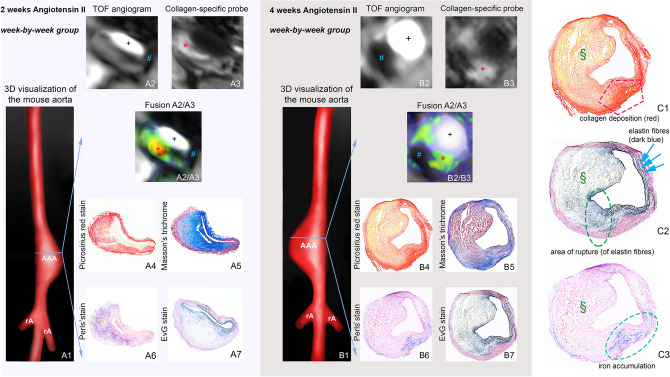
Abdominal aortic aneurysm (AAA) is a life-threatening vascular disease with an up to 80% mortality in case of rupture. Current biomarkers fail to account for size-independent risk of rupture. By combining the information of different molecular probes, multi-target molecular MRI holds the potential to enable individual characterization of AAA. In this experimental study, we aimed to examine the feasibility of simultaneous imaging of extracellular collagen and inflammation for size-independent prediction of risk of rupture in murine AAA. The study design consisted of: (1) A outcome-based longitudinal study with imaging performed once after one week with follow-up and death as the end-point for assessment of rupture risk. (2) A week-by-week study for the characterization of AAA development with imaging after 1, 2, 3 and 4 weeks. For both studies, the animals were administered a type 1 collagen-targeted gadolinium-based probe (surrogate marker for extracellular matrix (ECM) remodeling) and an iron oxide-based probe (surrogate marker for inflammatory activity), in one imaging session. In vivo measurements of collagen and iron oxide probes showed a significant correlation with ex vivo histology (p < 0.001) and also corresponded well to inductively-coupled plasma-mass spectrometry and laser-ablation inductively-coupled plasma mass spectrometry. Combined evaluation of collagen-related ECM remodeling and inflammatory activity was the most accurate predictor for AAA rupture (sensitivity 80%, specificity 100%, area under the curve 0.85), being superior to information from the individual probes alone. Our study supports the feasibility of a simultaneous assessment of collagen-related extracellular matrix remodeling and inflammatory activity in a murine model of AAA.
腹主动脉瘤(AAA)是一种危及生命的血管疾病,如果破裂,死亡率高达 80%。目前的生物标志物无法预测破裂的独立于大小的风险。通过结合不同分子探针的信息,多靶标分子 MRI 有可能实现 AAA 的个体特征描述。在这项实验研究中,我们旨在检查同时成像细胞外胶原和炎症以预测小鼠 AAA 破裂风险的独立于大小的可行性。研究设计包括:(1)一项基于结果的纵向研究,在一周后进行一次成像,以随访和死亡为终点评估破裂风险。(2)一项每周研究,用于在 1、2、3 和 4 周后进行成像以描述 AAA 的发展。对于这两项研究,动物都接受了一种 1 型胶原靶向的镧系元素基探针(细胞外基质(ECM)重塑的替代标志物)和一种氧化铁基探针(炎症活性的替代标志物),在一次成像过程中。体内测量胶原和氧化铁探针与离体组织学有显著相关性(p<0.001),也与电感耦合等离子体质谱和激光烧蚀电感耦合等离子体质谱非常吻合。联合评估胶原相关的 ECM 重塑和炎症活性是 AAA 破裂的最准确预测因子(敏感性 80%,特异性 100%,曲线下面积 0.85),优于单独使用单个探针的信息。我们的研究支持在 AAA 的小鼠模型中同时评估胶原相关的细胞外基质重塑和炎症活性的可行性。