Department of Earth Sciences, The University of Western Ontario, London, Ontario, Canada.
The Lyell Centre, School of Energy, Geoscience, Infrastructure and Society, Heriot-Watt University, Edinburgh, United Kingdom.
Sci Rep. 2019 May 9;9(1):7179. doi: 10.1038/s41598-019-43710-9.
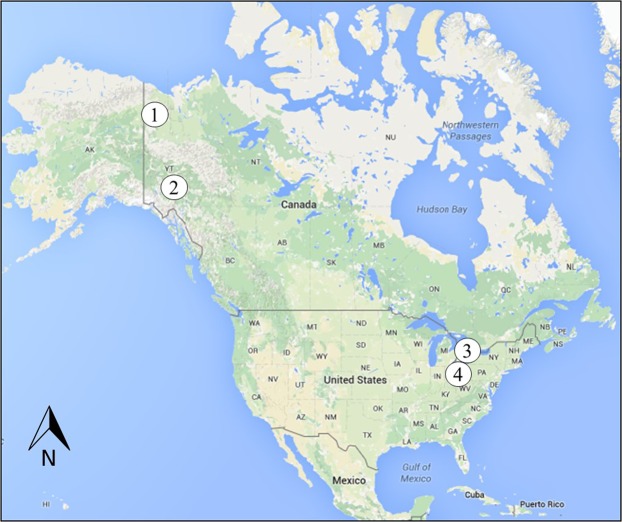
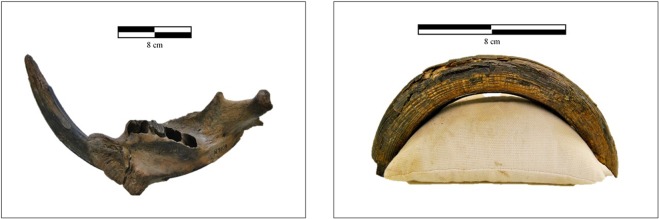
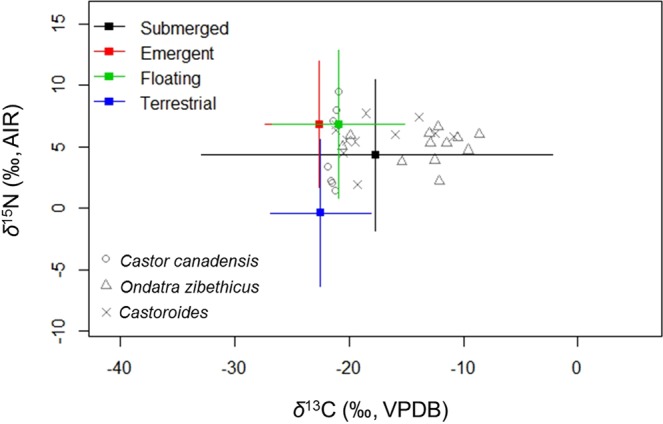
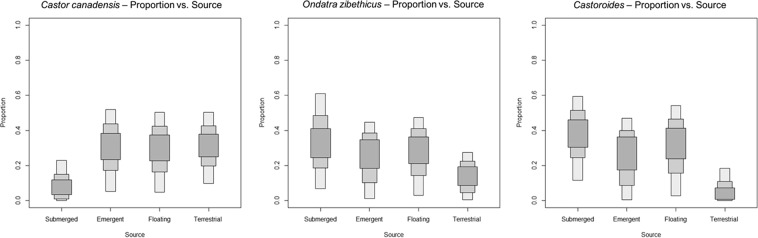
This is a multi-individual (n = 11), stable carbon and nitrogen isotope study of bone collagen (δC and δN) from the giant beaver (genus Castoroides). The now-extinct giant beaver was once one of the most widespread Pleistocene megafauna in North America. We confirm that Castoroides consumed a diet of predominantly submerged aquatic macrophytes. These dietary preferences rendered the giant beaver highly dependent on wetland habitat for survival. Castoroides' δC and δN do not support the hypothesis that the giant beaver consumed trees or woody plants, which suggests that it did not share the same behaviours as Castor (i.e., tree-cutting and harvesting). The onset of warmer, more arid conditions likely contributed to the extinction of Castoroides. Six new radiocarbon dates help establish the chronology of the northward dispersal of the giant beaver in Beringia, indicating a correlation with ice sheet retreat.
这是一项针对已灭绝的巨型海狸(Castoroides 属)骨骼胶原的稳定碳和氮同位素(δC 和 δN)的多个体(n=11)研究。巨型海狸曾是更新世北美的分布最广的巨型动物群之一。我们证实 Castoroides 主要以水下大型植物为食。这种饮食偏好使巨型海狸对湿地生境的生存高度依赖。巨型海狸的 δC 和 δN 并不支持巨型海狸食用树木或木本植物的假设,这表明它与 Castor(即砍树和收获)的行为不同。更温暖、更干燥的条件的出现可能导致了 Castoroides 的灭绝。六个新的放射性碳测年数据有助于确定巨型海狸在白令海峡向北扩散的年代,表明与冰盖后退有关。