Department of Environmental & Radiological Health Sciences, College of Veterinary Medicine & Biomedical Sciences, Colorado State University, Fort Collins, 80523, CO, USA.
Sci Rep. 2019 May 9;9(1):7137. doi: 10.1038/s41598-019-43661-1.
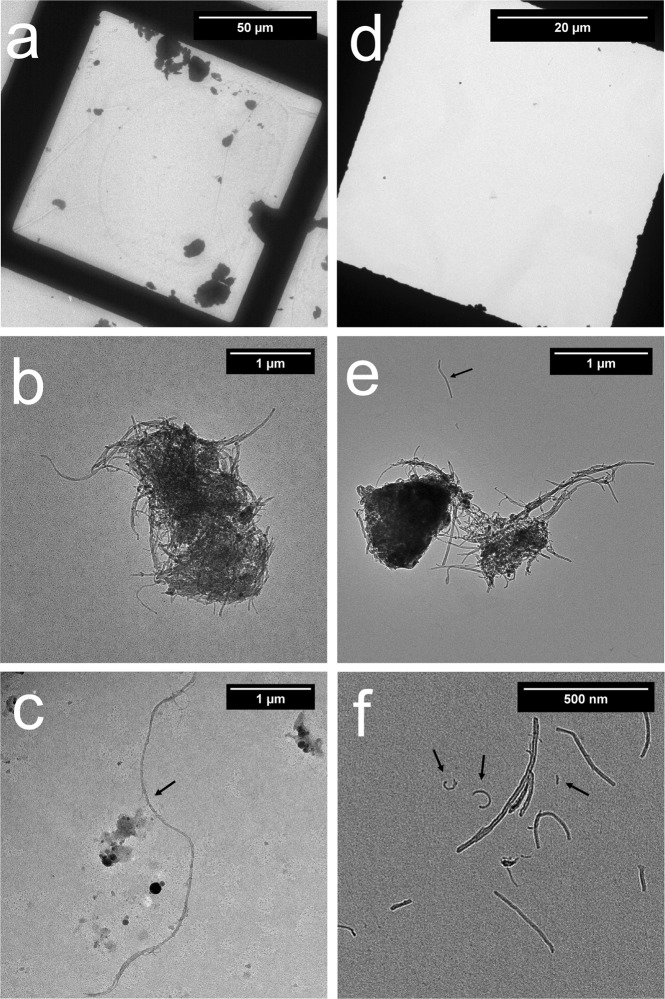
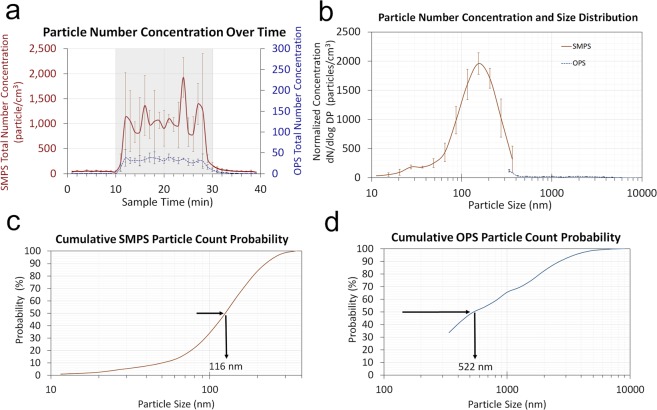
Carbon nanotube (CNT) sampling using an open-faced 25 mm cassette fiber sampling method and a newly developed direct sampling device was evaluated for the size fractioned analysis of collected airborne CNT fibers to improve the sampling and analytical methods. The open-faced 25 mm cassette fiber sampling method primarily collected large agglomerates, with the majority of collected particles being larger than two micrometer in size. Most of CNT structures collected by the new direct sampling device were individual fibers and clusters smaller than one micrometer with a high particle number concentration discrepancy compared to the open-faced 25 mm cassette method raising the concern of this sampling method to representatively characterize the respirable size fraction of CNT aerosols. This work demonstrates that a specialized technique is needed for collecting small fibers to provide a more representative estimate of exposure. It is recommended that an additional sampler be used to directly collect and analyze small fibers in addition to the widely accepted sampling method which utilizes an open-faced 25 mm cassette.
采用开口 25mm 盒式纤维采样法和新开发的直接采样装置对碳纳米管(CNT)进行采样,以对收集的空气中 CNT 纤维进行分级分析,从而改进采样和分析方法。开口 25mm 盒式纤维采样法主要收集大团聚体,收集的颗粒大部分尺寸大于两微米。与开口 25mm 盒式纤维采样法相比,新的直接采样装置收集的 CNT 结构大多数为单个纤维和小于一微米的簇,且颗粒数浓度差异较大,这引起了对该采样方法能够代表性地表征 CNT 气溶胶可吸入粒径的关注。本工作表明,需要专门的技术来收集小纤维,以提供更具代表性的暴露估计。建议在广泛接受的采样方法(利用开口 25mm 盒式纤维采样)之外,使用额外的采样器直接收集和分析小纤维。