IRCCS Centro Neurolesi Bonino-Pulejo, 98123 Messina, Italy.
Department of Chemical, Biological, Pharmaceutical, and Environmental Sciences, University of Messina, 98166 Messina, Italy.
Viruses. 2019 May 10;11(5):428. doi: 10.3390/v11050428.
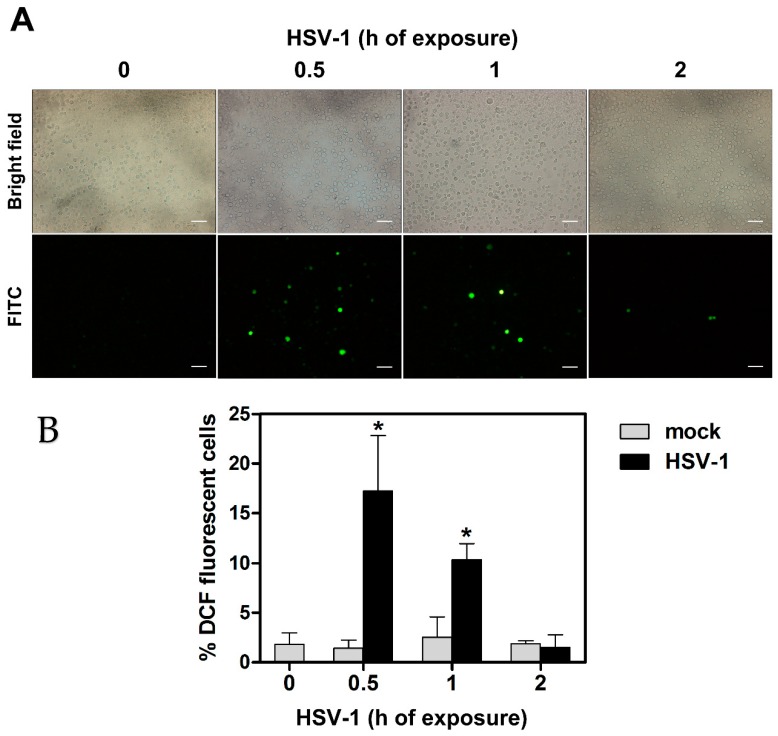
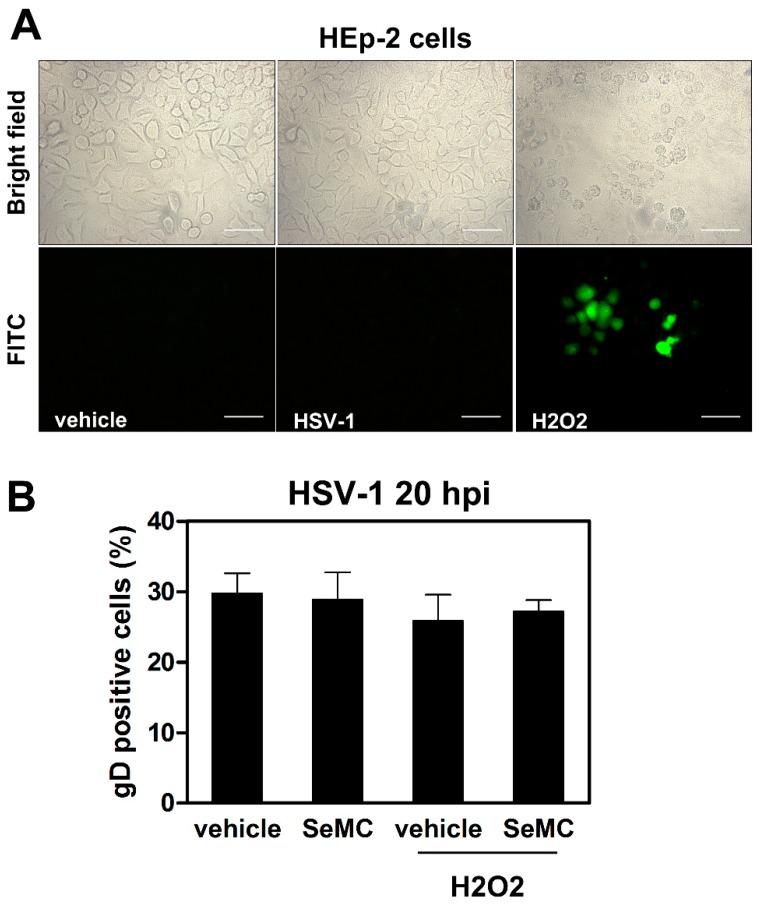
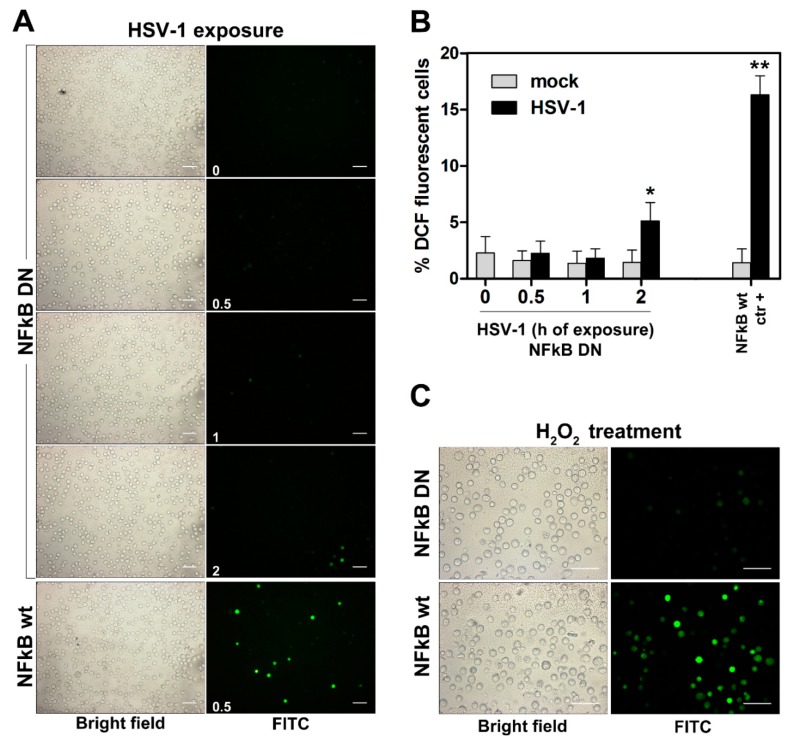
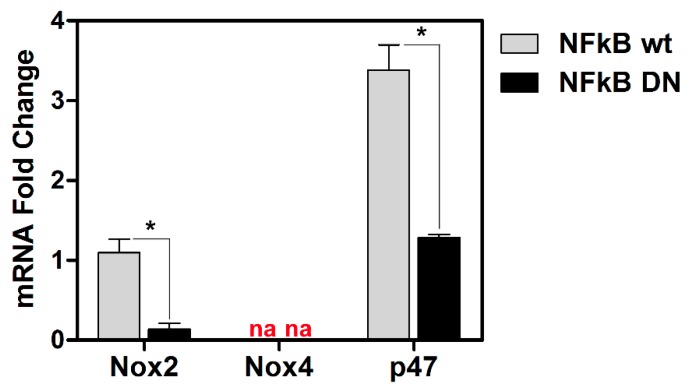
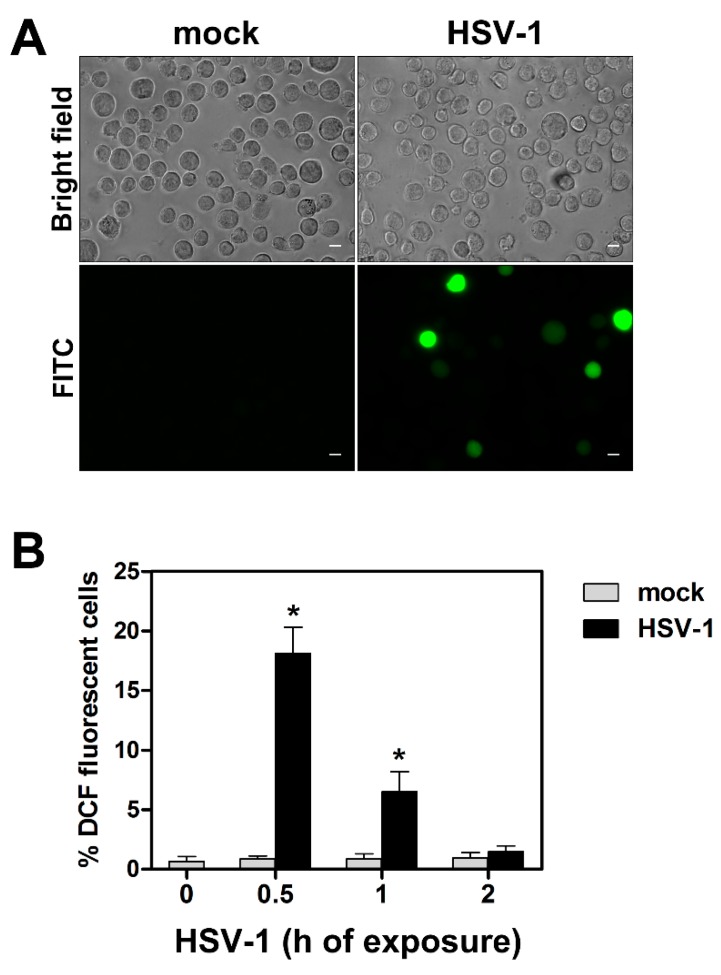
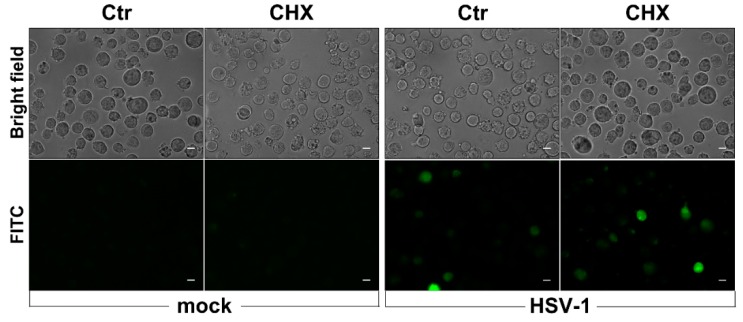
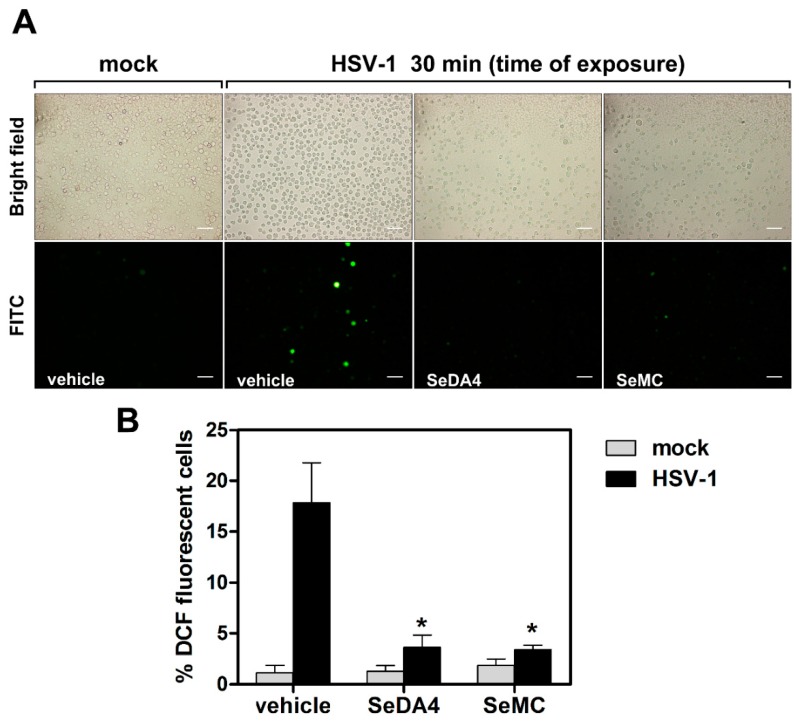
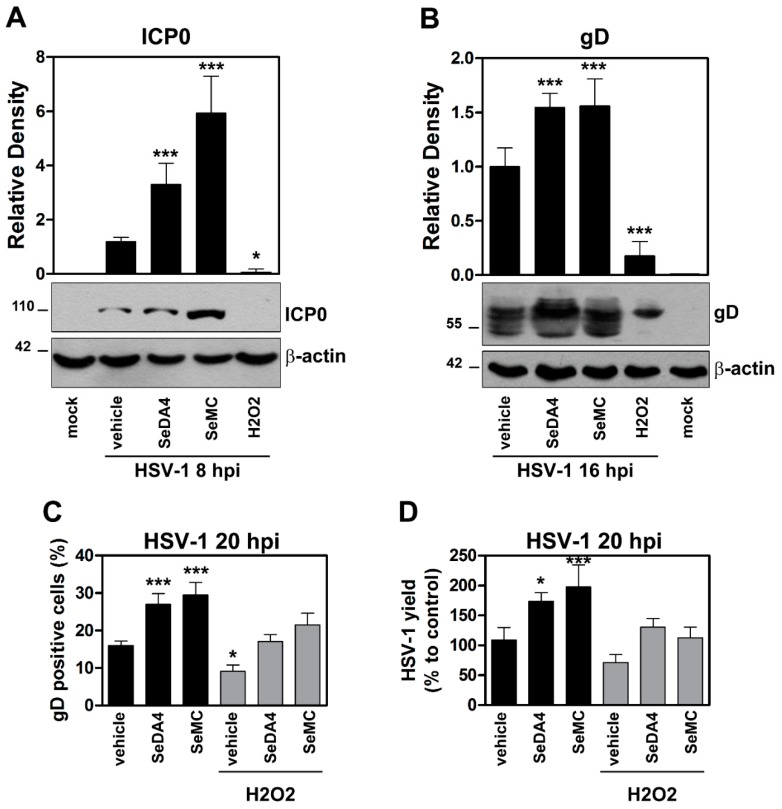
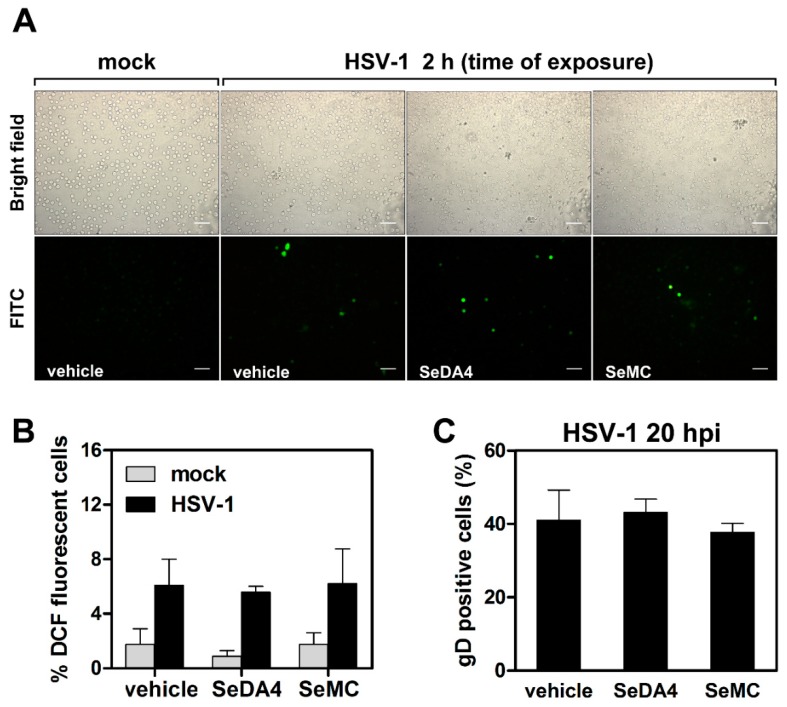
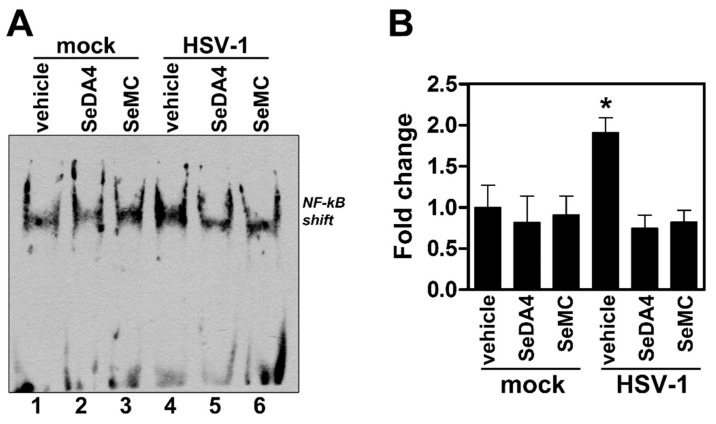
Herpes simplex virus 1 (HSV-1) can infect a wide range of cell types, including cells of the adaptive and innate immunity but, normally, it completes a fully-permissive replication cycle only in epithelial or neural cells. Complex mechanisms controlling this delicate balance in immune cells and consequent restriction of HSV-1 infection in these cells have not been completely elucidated. We have recently demonstrated that the transcription factor nuclear factor kappa B (NF-κB) can act as a main permissiveness regulator of HSV-1 infection in monocytic cells, however, mediators involved in this regulation have not been identified. To better define mechanisms involved in this phenomenon and, particularly, the possible involvement of ROS, wild type U937 cells or U937 cells stably transfected with a dominant-negative (DN) IκB-mutant and selenium-containing compounds, as anti-oxidants, were utilized. The main results can be summarized as follows. HSV-1 infection induces an immediate ROS production in U937 monocytic cells that can efficiently activate NF-κB but not in DN-IκB-mutant cells. Treatment with selenium-containing antioxidants efficiently inhibited HSV-1-induced ROS generation while producing increased levels of HSV-1 replication and a reduction of HSV-1-induced NF-κB activation in U937 monocytic cells. Our results suggest a scenario in which an efficient NF-κB-dependent ROS production in response to infection could contribute in limiting HSV-1 replication in monocytes/macrophages, thus avoiding possible irreparable damage to the innate immune system of the host during HSV-1 infection.
单纯疱疹病毒 1(HSV-1)可以感染多种细胞类型,包括适应性和固有免疫细胞,但通常仅在上皮细胞或神经细胞中完成完全允许的复制周期。控制免疫细胞中这种微妙平衡的复杂机制以及由此导致的 HSV-1 在这些细胞中的感染限制尚未完全阐明。我们最近证明,转录因子核因子 kappa B(NF-κB)可以作为单核细胞中 HSV-1 感染的主要允许性调节剂,然而,参与这种调节的介质尚未确定。为了更好地定义参与这一现象的机制,特别是 ROS 的可能参与,我们利用野生型 U937 细胞或稳定转染显性负(DN)IκB-突变体和含硒化合物的 U937 细胞作为抗氧化剂来进行研究。主要结果可以概括如下。HSV-1 感染诱导 U937 单核细胞中立即产生 ROS,这可以有效地激活 NF-κB,但在 DN-IκB-突变体细胞中则不能。用含硒抗氧化剂处理可有效抑制 HSV-1 诱导的 ROS 生成,同时增加 HSV-1 复制水平,并减少 HSV-1 诱导的 U937 单核细胞中 NF-κB 的激活。我们的结果表明,一种有效的 NF-κB 依赖性 ROS 产生可以有助于限制单核细胞/巨噬细胞中 HSV-1 的复制,从而避免在 HSV-1 感染期间对宿主固有免疫系统造成可能无法挽回的损害。