Molecular Virology and Immunology Unit (VIM), INRA, Université Paris-Saclay, 78350 Jouy-en-Josas, France.
Laboratory of Physical Chemistry (LCP), UMR 8000 CNRS, Université Paris Sud, 91400 Orsay, France.
Viruses. 2019 May 10;11(5):429. doi: 10.3390/v11050429.
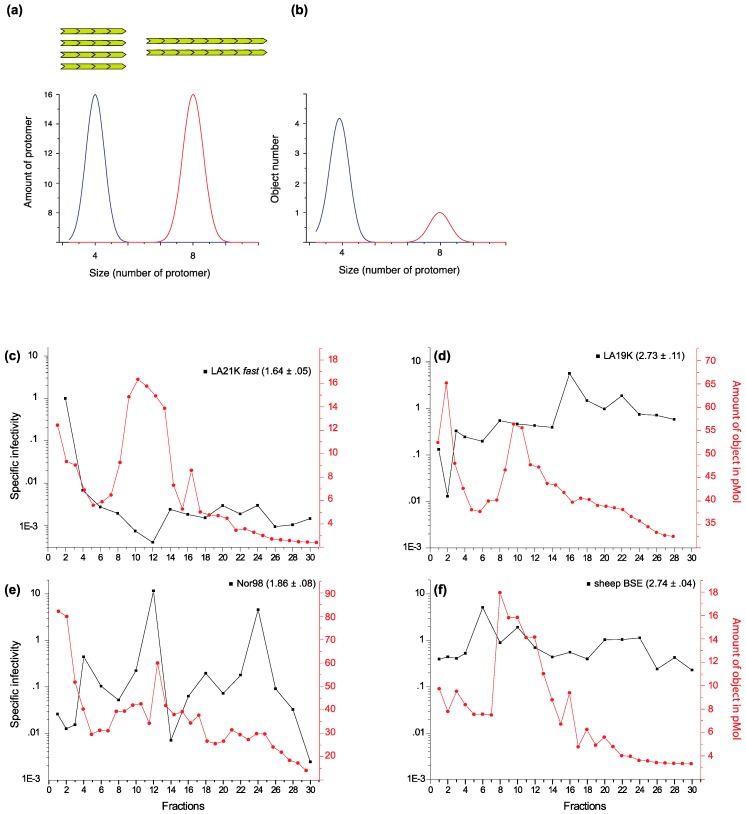
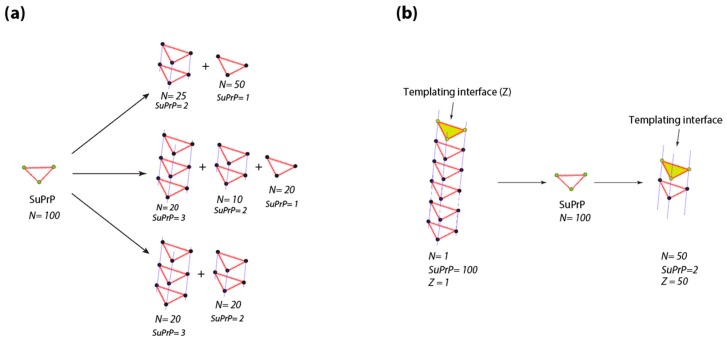
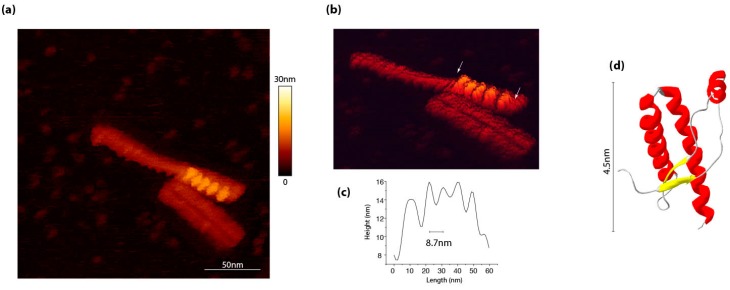
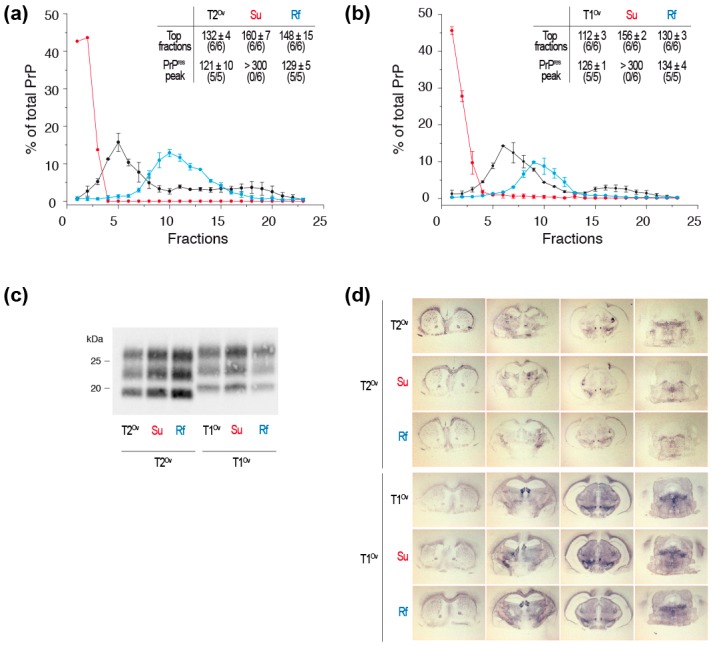
Prions are proteinaceous infectious agents responsible for a range of neurodegenerative diseases in animals and humans. Prion particles are assemblies formed from a misfolded, β-sheet rich, aggregation-prone isoform (PrP) of the host-encoded cellular prion protein (PrP). Prions replicate by recruiting and converting PrP into PrP, by an autocatalytic process. PrP is a pleiomorphic protein as different conformations can dictate different disease phenotypes in the same host species. This is the basis of the strain phenomenon in prion diseases. Recent experimental evidence suggests further structural heterogeneity in PrP assemblies within specific prion populations and strains. Still, this diversity is rather seen as a size continuum of assemblies with the same core structure, while analysis of the available experimental data points to the existence of structurally distinct arrangements. The atomic structure of PrP has not been elucidated so far, making the prion replication process difficult to understand. All currently available models suggest that PrP assemblies exhibit a PrP subunit as core constituent, which was recently identified. This review summarizes our current knowledge on prion assembly heterogeneity down to the subunit level and will discuss its importance with regard to the current molecular principles of the prion replication process.
朊病毒是一种蛋白质传染性病原体,可导致动物和人类的一系列神经退行性疾病。朊病毒颗粒是由宿主编码的细胞朊蛋白(PrP)的错误折叠、富含β-片层、易于聚集的异构体(PrP)形成的组装体。朊病毒通过自催化过程招募并将 PrP 转化为 PrP 进行复制。PrP 是一种多态性蛋白质,因为不同的构象可以在同一宿主物种中决定不同的疾病表型。这是朊病毒疾病中株现象的基础。最近的实验证据表明,在特定的朊病毒群体和株中,PrP 组装体中存在进一步的结构异质性。尽管如此,这种多样性更像是具有相同核心结构的组装体的大小连续体,而对现有实验数据的分析表明存在结构上不同的排列。迄今为止,尚未阐明 PrP 的原子结构,这使得朊病毒复制过程难以理解。所有现有的模型都表明,PrP 组装体表现出 PrP 亚基作为核心成分,最近已经确定了这一点。这篇综述总结了我们目前对朊病毒组装体异质性的了解,直至亚基水平,并将讨论其对朊病毒复制过程的当前分子原理的重要性。