Cadena Jose, Rathinavelu Selvalakshmi, Lopez-Alvarenga Juan C, Restrepo Blanca I
University of Texas Health, San Antonio, TX 78229, USA; South Texas Veterans Health Care System, San Antonio TX 78229, USA.
University of Texas Health Houston, School of Public Health, Brownsville Campus, Brownsville, TX 78520, USA.
Tuberculosis (Edinb). 2019 May;116S:S89-S97. doi: 10.1016/j.tube.2019.04.015. Epub 2019 May 3.
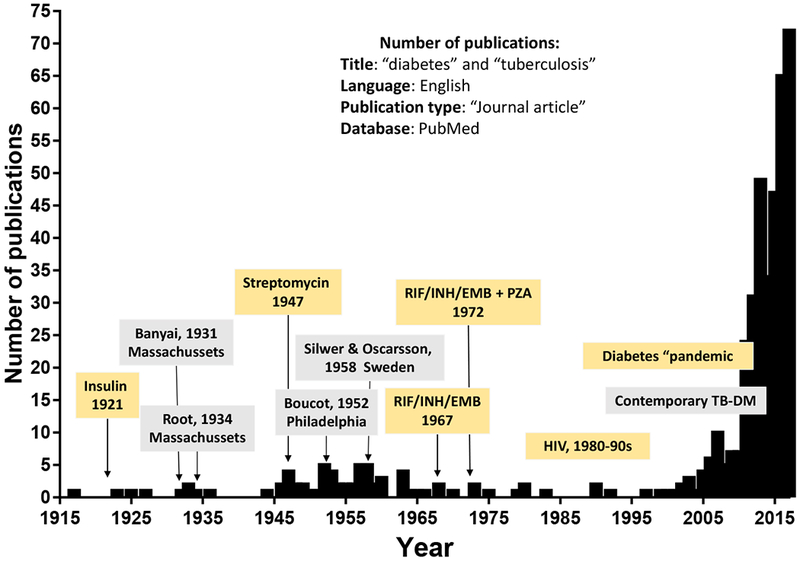
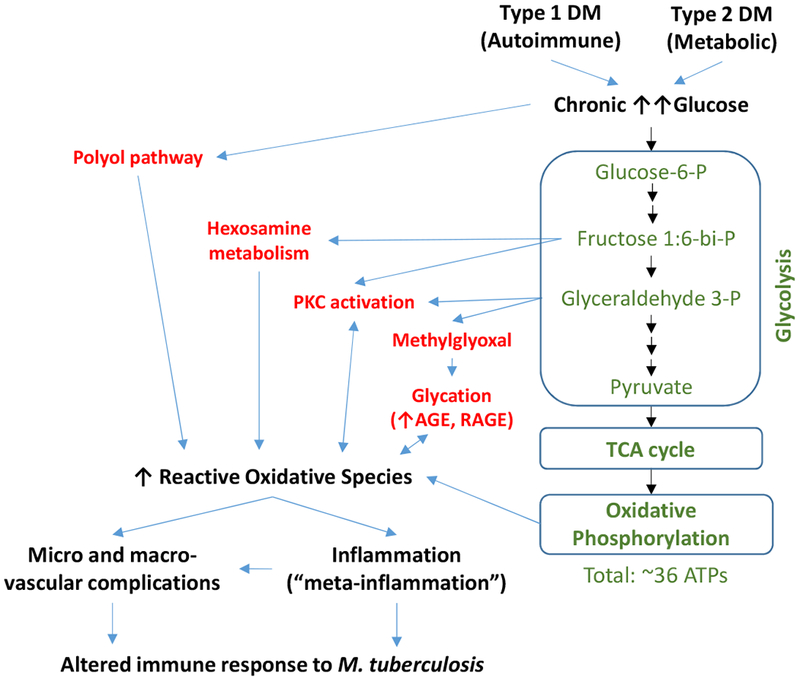
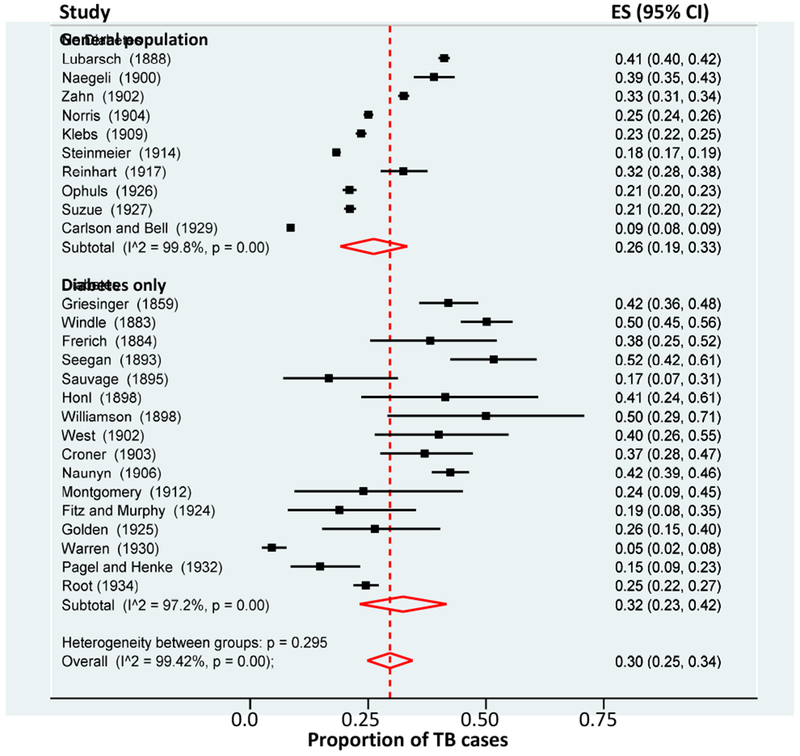
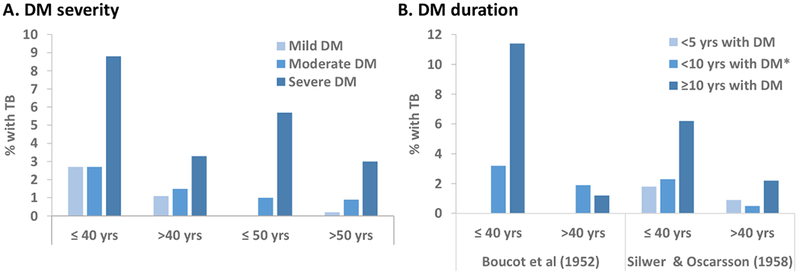
The association between tuberculosis (TB) and diabetes mellitus (DM) had a common place in the literature up to the first half of the 20th century, but virtually disappeared with the discovery of insulin to treat DM and antibiotics to cure TB. In the late 1990s the literature began to re-emerge with the worldwide increase in type 2 DM, particularly in TB-endemic countries. Today, type 2 DM is the most prevalent comorbidity among TB patients and the World Health Organization considers it a threat to TB control. We summarize the literature on TB and DM up to the 1960s. Then we evaluate unique aspects of this comorbidity in older times, such as the frequent diabetic comas that suggest challenges for proper DM management as insulin was being implemented, or the absence of antibiotics to cure TB. Despite the unique aspects of each study period, the literature across times is consistent in key aspects of the association. Namely, a higher TB prevalence among DM (versus non-DM patients), the importance of glucose control and chronic DM on TB susceptibility and the higher risk of death among patients with the co-morbidity. From the older literature, we can infer the likely contribution of type 1 DM to TB (in addition to type 2), regardless of their differing autoimmune or metabolic pathophysiology, respectively. Furthermore, in the older literature there was a notable reporting of DM development among TB patients, even though DM usually preceded TB. This observation deserves further epidemiological and basic studies to elucidate this intriguing aspect of the relationship between TB and DM.
在20世纪上半叶,结核病(TB)与糖尿病(DM)之间的关联在文献中屡见不鲜,但随着治疗糖尿病的胰岛素和治疗结核病的抗生素的发现,这种关联几乎消失了。20世纪90年代后期,随着全球2型糖尿病发病率的上升,尤其是在结核病流行国家,相关文献又开始出现。如今,2型糖尿病是结核病患者中最常见的合并症,世界卫生组织认为它对结核病控制构成威胁。我们总结了截至20世纪60年代关于结核病和糖尿病的文献。然后,我们评估了过去这种合并症的独特方面,比如在胰岛素应用过程中频繁出现的糖尿病昏迷,这表明糖尿病管理面临挑战,或者当时缺乏治疗结核病的抗生素。尽管每个研究时期都有独特之处,但不同时期的文献在这种关联的关键方面是一致的。即糖尿病患者(与非糖尿病患者相比)结核病患病率更高、血糖控制和慢性糖尿病对结核病易感性的重要性,以及合并症患者更高的死亡风险。从早期文献中,我们可以推断出1型糖尿病(除2型外)对结核病的可能影响,尽管它们分别具有不同的自身免疫或代谢病理生理学。此外,在早期文献中,有关于结核病患者中糖尿病发病的显著报道,尽管通常是糖尿病先于结核病出现。这一观察结果值得进一步进行流行病学和基础研究,以阐明结核病与糖尿病关系中这一有趣的方面。