Department of Molecular and Cellular Biology, Harvard University, Cambridge, MA, USA.
Center for Systems Biology, Harvard University, Cambridge, MA, USA.
Nat Microbiol. 2019 Aug;4(8):1294-1305. doi: 10.1038/s41564-019-0439-0. Epub 2019 May 13.
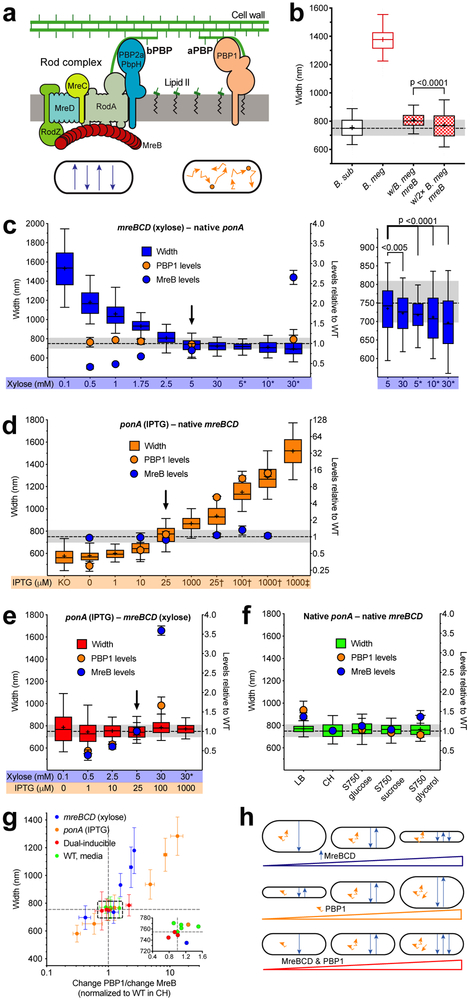
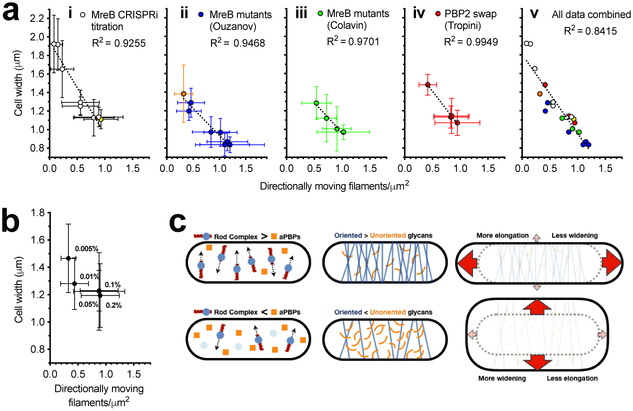
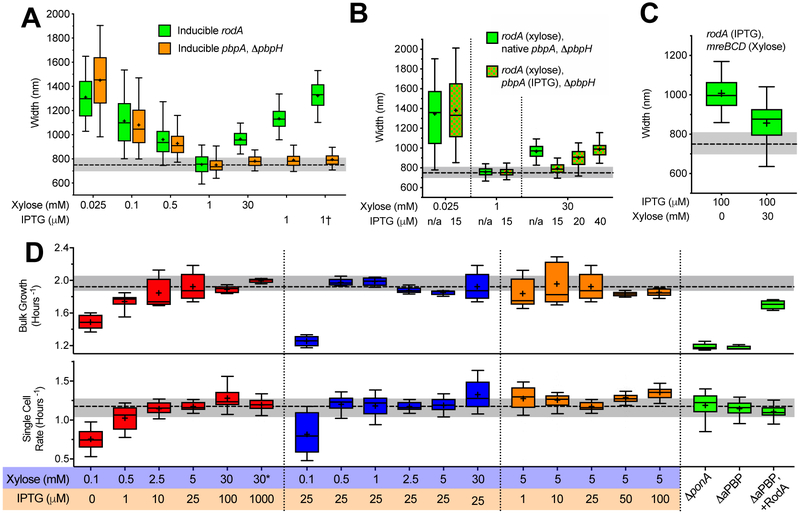
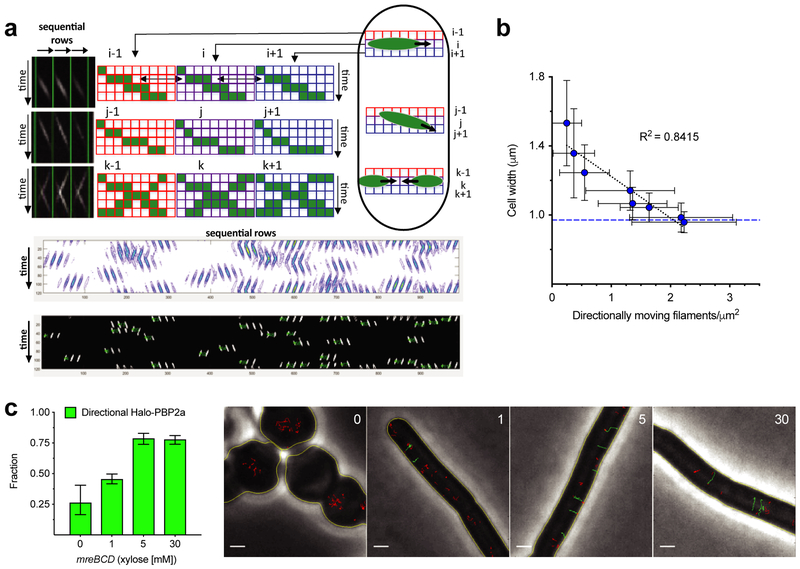
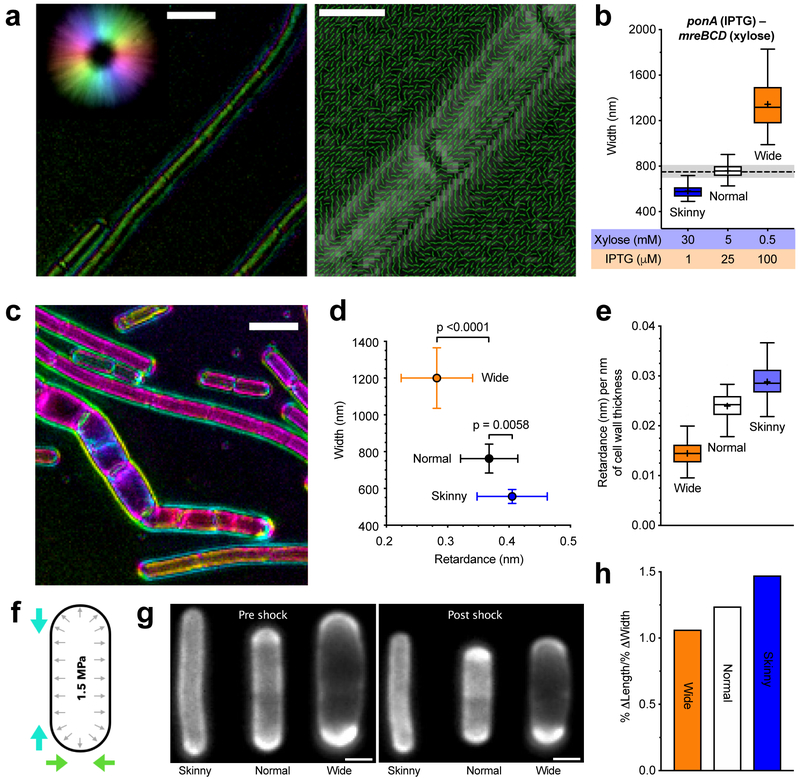
Rod-shaped bacteria grow by adding material into their cell wall via the action of two spatially distinct enzymatic systems: the Rod complex moves around the cell circumference, whereas class A penicillin-binding proteins (aPBPs) do not. To understand how the combined action of these two systems defines bacterial dimensions, we examined how each affects the growth and width of Bacillus subtilis as well as the mechanical anisotropy and orientation of material within their sacculi. Rod width is not determined by MreB, rather it depends on the balance between the systems: the Rod complex reduces diameter, whereas aPBPs increase it. Increased Rod-complex activity correlates with an increased density of directional MreB filaments and a greater fraction of directional PBP2a enzymes. This increased circumferential synthesis increases the relative quantity of oriented material within the sacculi, making them more resistant to stretching across their width, thereby reinforcing rod shape. Together, these experiments explain how the combined action of the two main cell wall synthetic systems builds and maintains rods of different widths. Escherichia coli Rod mutants also show the same correlation between width and directional MreB filament density, suggesting this model may be generalizable to bacteria that elongate via the Rod complex.
Rod 复合物在细胞周缘移动,而 A 类青霉素结合蛋白(aPBPs)则不会。为了了解这两个系统的联合作用如何定义细菌的维度,我们研究了每个系统如何影响枯草芽孢杆菌的生长和宽度以及它们的囊泡内物质的机械各向异性和取向。杆的宽度不是由 MreB 决定的,而是取决于这两个系统之间的平衡:Rod 复合物减小直径,而 aPBPs 则增加直径。Rod 复合物活性的增加与定向 MreB 丝的密度增加以及更多定向 PBP2a 酶相关。这种增加的周向合成增加了囊泡内定向物质的相对数量,使它们更能抵抗在宽度上的拉伸,从而增强了杆状形状。这些实验共同解释了这两个主要细胞壁合成系统的联合作用如何构建和维持不同宽度的杆。大肠杆菌 Rod 突变体也显示出宽度与定向 MreB 丝密度之间的相同相关性,这表明该模型可能适用于通过 Rod 复合物伸长的细菌。