Department of Infection, Immunity and Cardiovascular Disease, University of Sheffield, Sheffield, United Kingdom.
The Bateson Centre, University of Sheffield, Sheffield, United Kingdom.
PLoS Biol. 2019 May 14;17(5):e2006741. doi: 10.1371/journal.pbio.2006741. eCollection 2019 May.
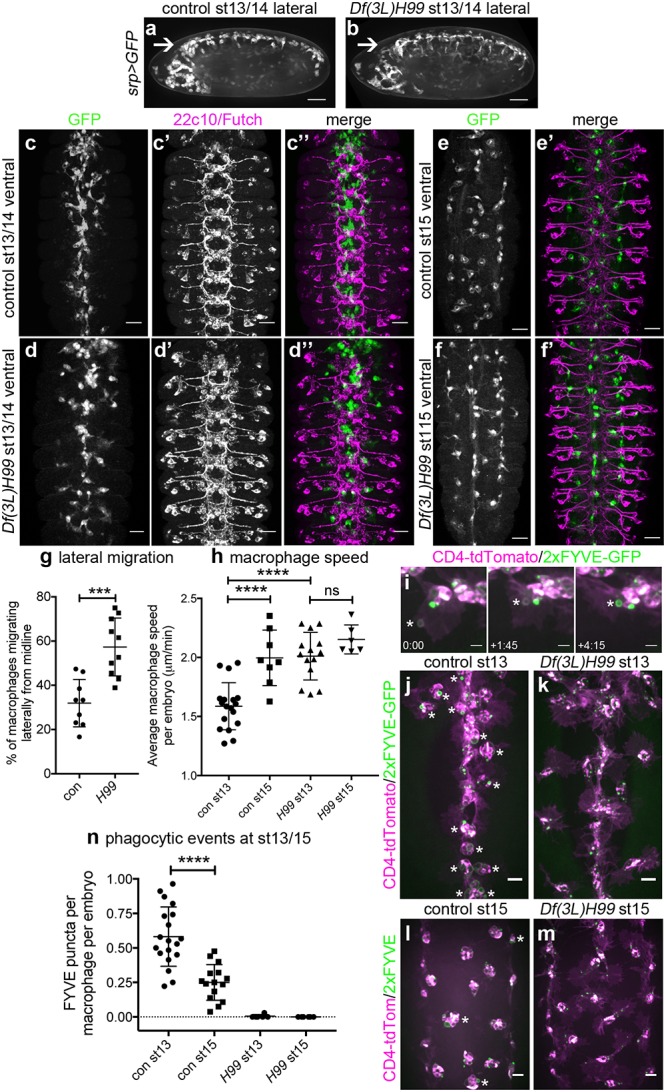
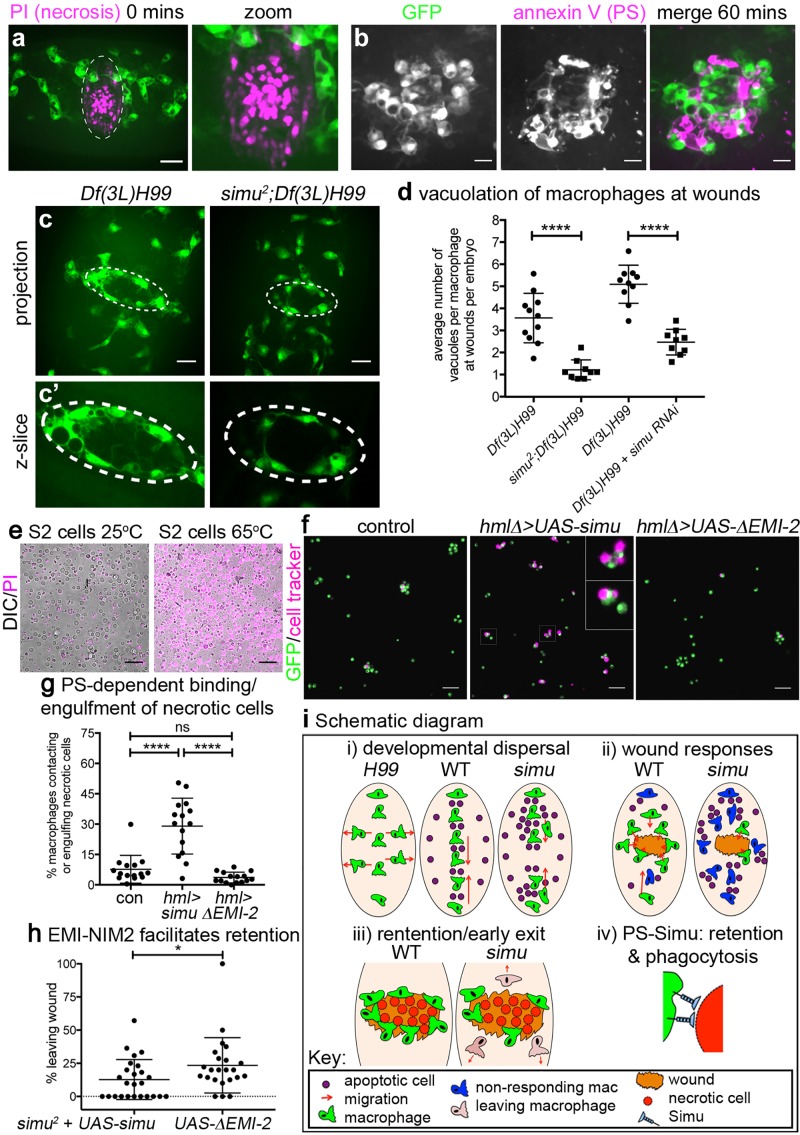
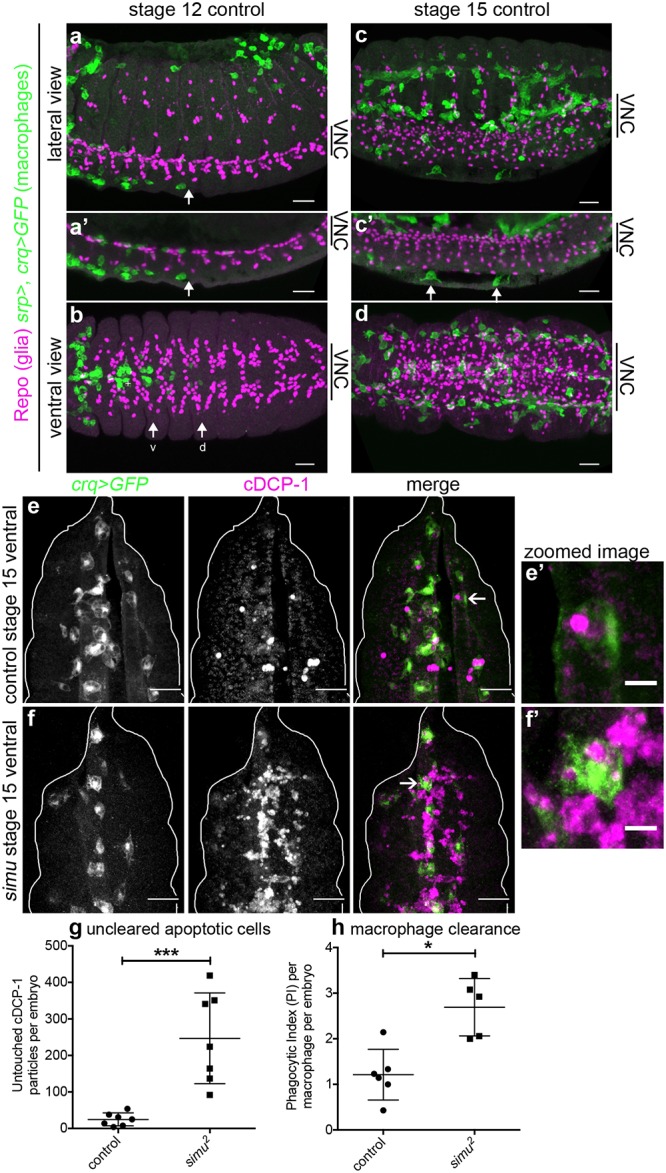
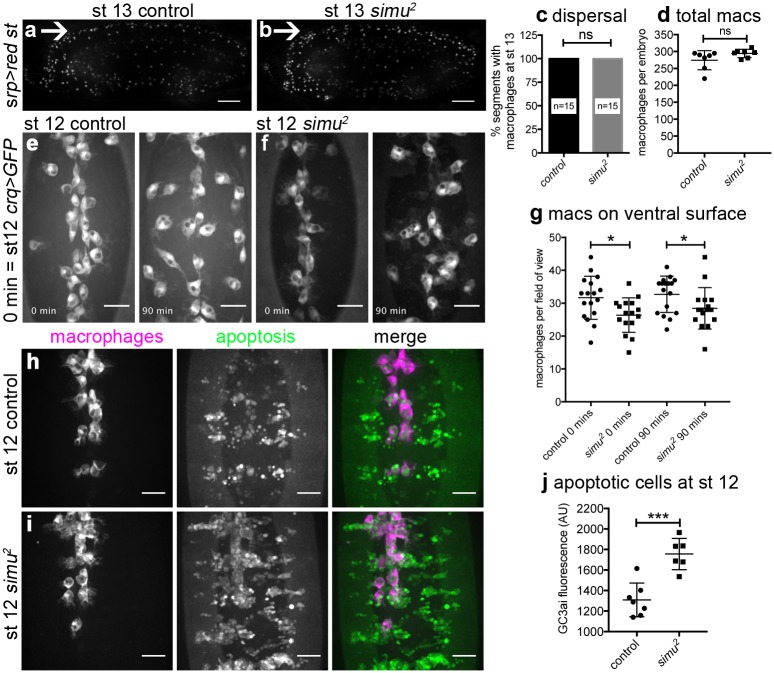
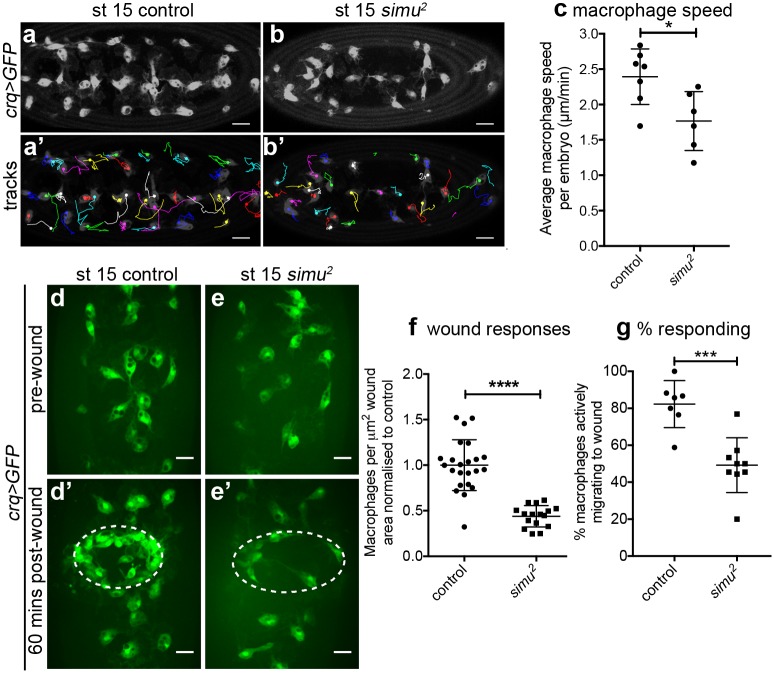
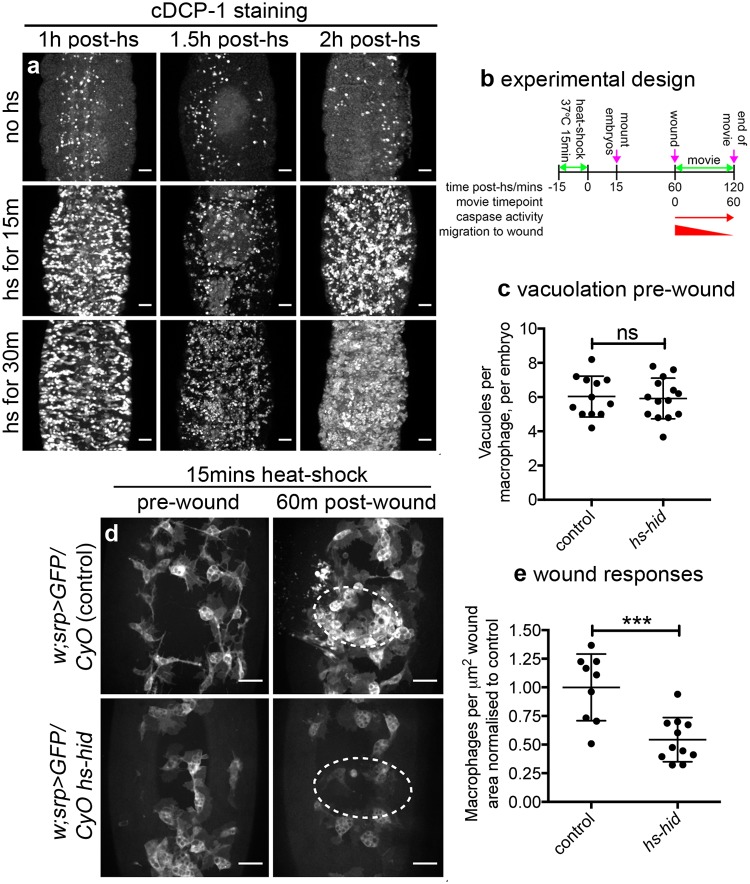
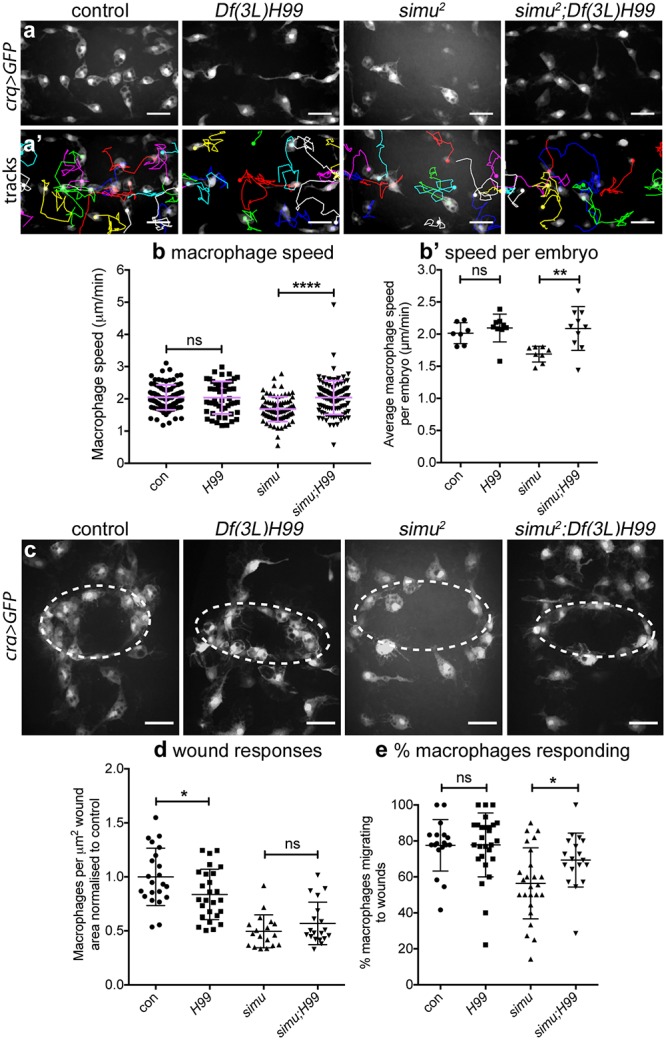
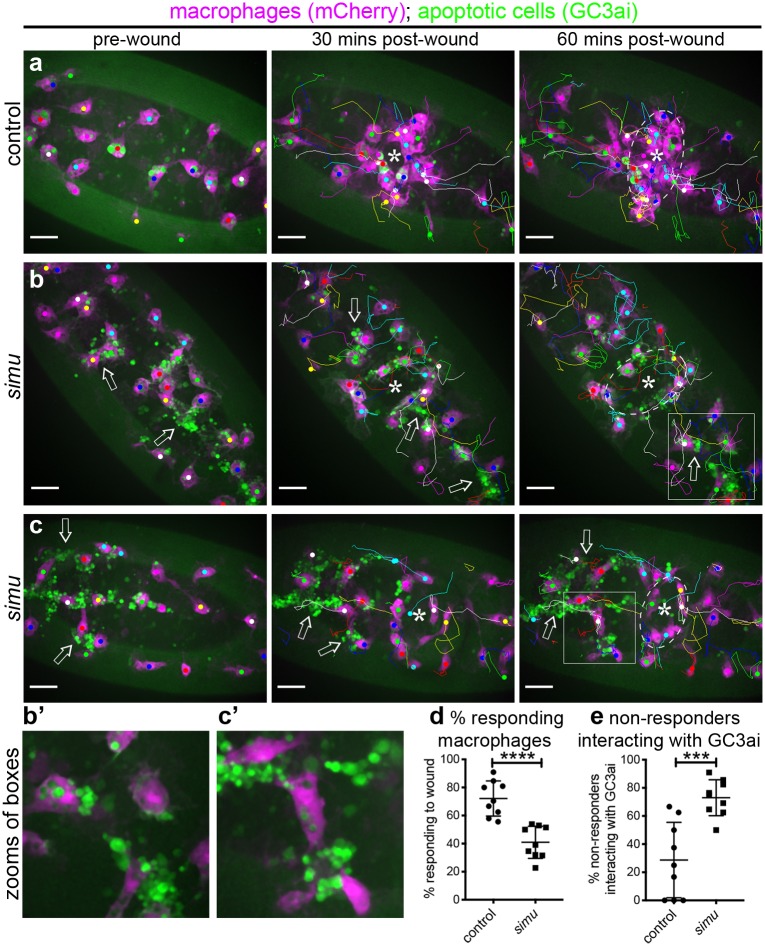
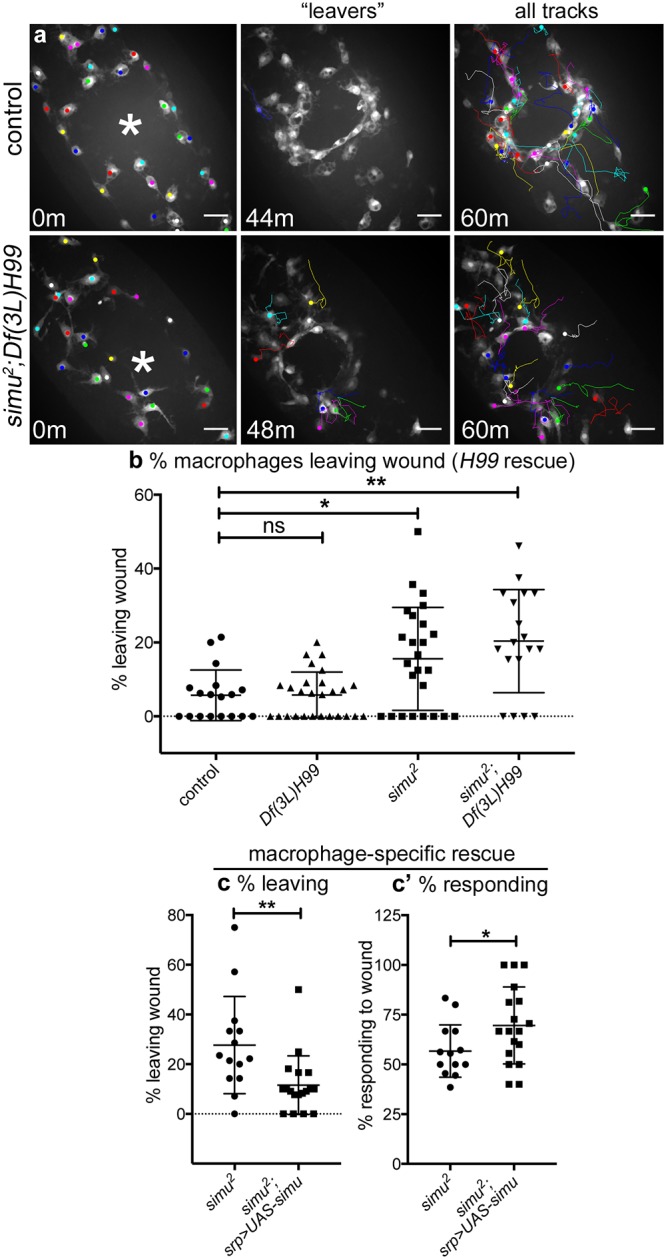
Macrophages encounter and clear apoptotic cells during normal development and homeostasis, including at numerous sites of pathology. Clearance of apoptotic cells has been intensively studied, but the effects of macrophage-apoptotic cell interactions on macrophage behaviour are poorly understood. Using Drosophila embryos, we have exploited the ease of manipulating cell death and apoptotic cell clearance in this model to identify that the loss of the apoptotic cell clearance receptor Six-microns-under (Simu) leads to perturbation of macrophage migration and inflammatory responses via pathological levels of apoptotic cells. Removal of apoptosis ameliorates these phenotypes, while acute induction of apoptosis phenocopies these defects and reveals that phagocytosis of apoptotic cells is not necessary for their anti-inflammatory action. Furthermore, Simu is necessary for clearance of necrotic debris and retention of macrophages at wounds. Thus, Simu is a general detector of damaged self and represents a novel molecular player regulating macrophages during resolution of inflammation.
巨噬细胞在正常发育和稳态过程中会遇到并清除凋亡细胞,包括在许多病理部位。凋亡细胞的清除已经被深入研究,但巨噬细胞-凋亡细胞相互作用对巨噬细胞行为的影响知之甚少。利用果蝇胚胎,我们利用这个模型中易于操纵细胞死亡和凋亡细胞清除的特点,发现凋亡细胞清除受体 Six-microns-under (Simu) 的缺失会导致病理性凋亡细胞水平导致巨噬细胞迁移和炎症反应的紊乱。清除凋亡细胞可改善这些表型,而急性诱导凋亡则模拟了这些缺陷,并表明吞噬凋亡细胞对于其抗炎作用并非必需。此外,Simu 对于清除坏死碎片和维持伤口处的巨噬细胞是必需的。因此,Simu 是受损自身的通用探测器,代表了一种在炎症消退过程中调节巨噬细胞的新型分子。