Netherlands Institute for Health Services Research (Nivel), Utrecht, The Netherlands.
Scientific Center for Quality of Healthcare (IQ Healthcare), Radboud Institute for Health Sciences, Radboud University Medical Center, Nijmegen, The Netherlands.
Eur J Public Health. 2019 Dec 1;29(6):1018-1024. doi: 10.1093/eurpub/ckz083.
The organizational model of out-of-hours primary care is likely to affect healthcare use. We aimed to examine differences in the use of general practitioner cooperatives for out-of-hours care in the Netherlands and Belgium (Flanders) and explore if these are related to organizational differences.
A cross-sectional observational study using routine electronic health record data of the year 2016 from 77 general practitioner cooperatives in the Netherlands and 5 general practitioner cooperatives in Belgium (Flanders). Patient age, gender and health problem were analyzed using descriptive statistics.
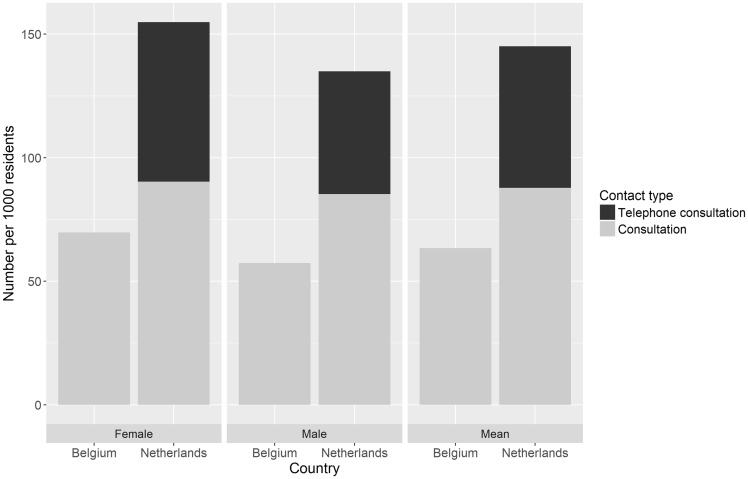
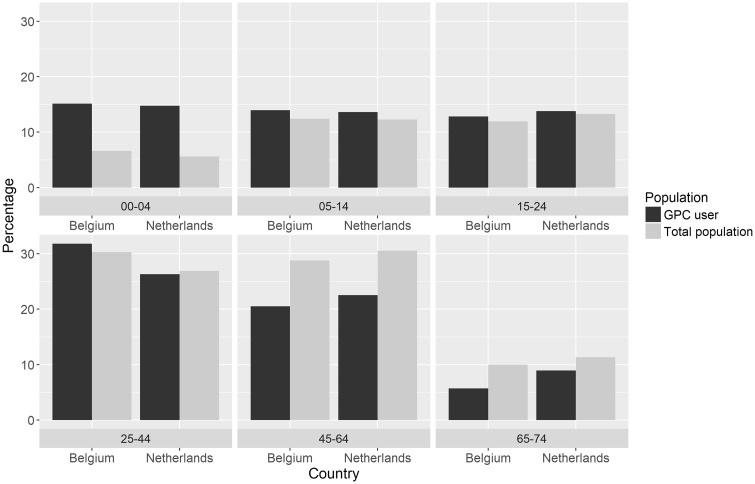
The number of consultations per 1000 residents was 2.3 times higher in the Netherlands than in Belgium. Excluding telephone consultations, which are not possible in Belgium, the number of consultations was 1.4 times higher. In Belgium, the top 10 of health problems was mainly related to infections, while in the Netherlands there were a larger variety of health problems. In addition, the health problem codes in the Dutch top 10 were more often symptoms, while the codes in the Belgian top 10 were more often diagnoses. In both countries, a relatively large percentage of GPC patients were young children and female patients.
Differences in the use of general practitioner cooperatives seem to be related to the gatekeeping role of general practitioners in the Netherlands and to organizational differences such as telephone triage, medical advice by telephone, financial thresholds and number of years of experience with the system. The information can benefit policy decisions about the organization of out-of-hours primary care.
非工作时间初级保健的组织模式可能会影响医疗保健的使用。我们旨在研究荷兰和比利时(佛兰德斯)的非工作时间医疗保健中使用全科医生合作社的差异,并探讨这些差异是否与组织差异有关。
这是一项使用 2016 年荷兰 77 家全科医生合作社和比利时(佛兰德斯)5 家全科医生合作社的常规电子健康记录数据的横断面观察性研究。使用描述性统计方法分析患者年龄、性别和健康问题。
荷兰每千名居民的就诊次数是比利时的 2.3 倍。不包括在比利时无法进行的电话咨询,就诊次数高出 1.4 倍。在比利时,前 10 位的健康问题主要与感染有关,而在荷兰则有更多种类的健康问题。此外,荷兰前 10 名的健康问题代码主要是症状,而比利时前 10 名的代码主要是诊断。在这两个国家,相对较大比例的 GPC 患者是幼儿和女性患者。
全科医生合作社使用情况的差异似乎与荷兰的全科医生守门人角色以及组织差异有关,例如电话分诊、电话医疗咨询、财务门槛和使用该系统的年限。这些信息可以为非工作时间初级保健的组织决策提供参考。