Department of Nutrition and Food Science, School of Public Health, Tianjin Medical University, Tianjin, China.
Tianjin Key Laboratory of Environment, Nutrition and Public Health, Tianjin, China.
J Cell Mol Med. 2019 Jul;23(7):4795-4807. doi: 10.1111/jcmm.14368. Epub 2019 May 13.
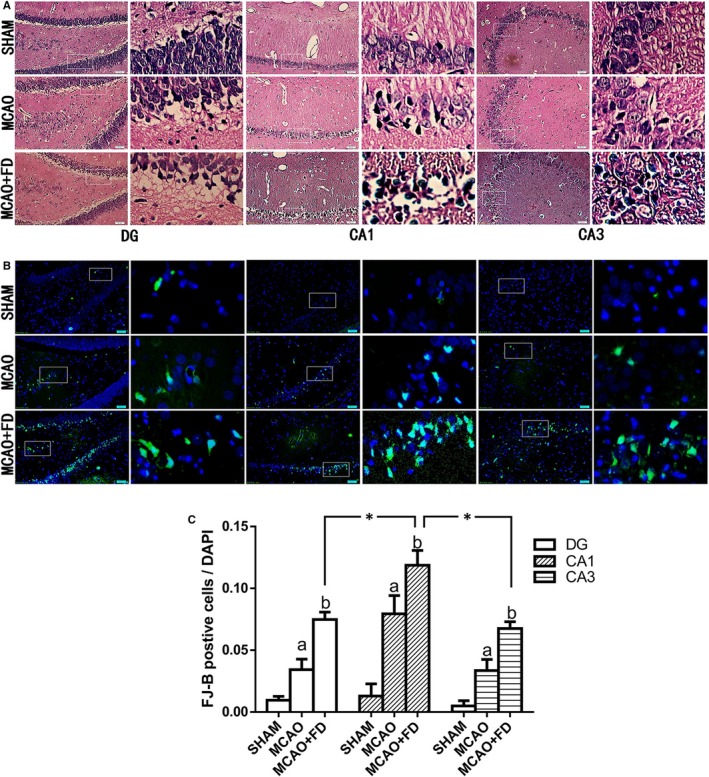
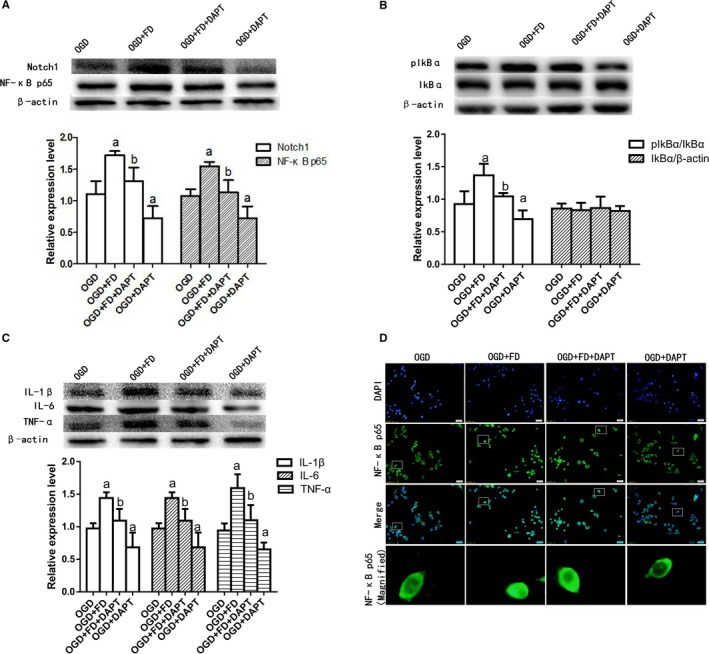
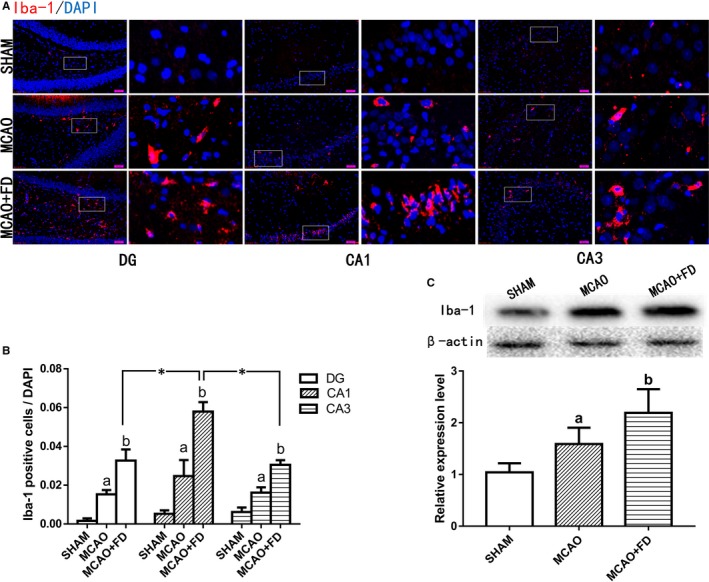
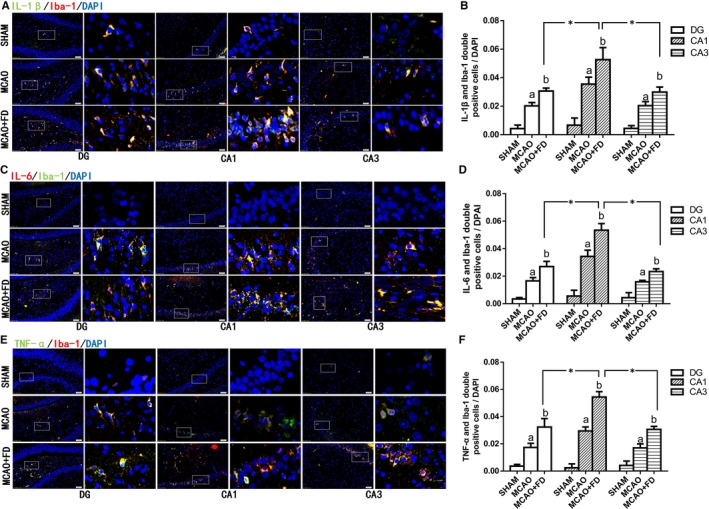
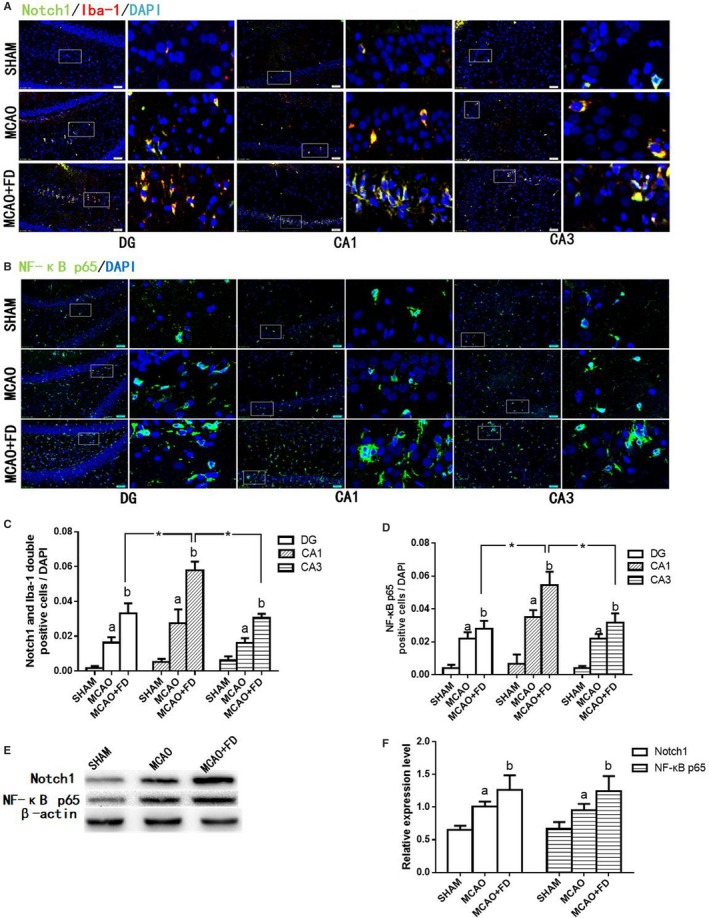
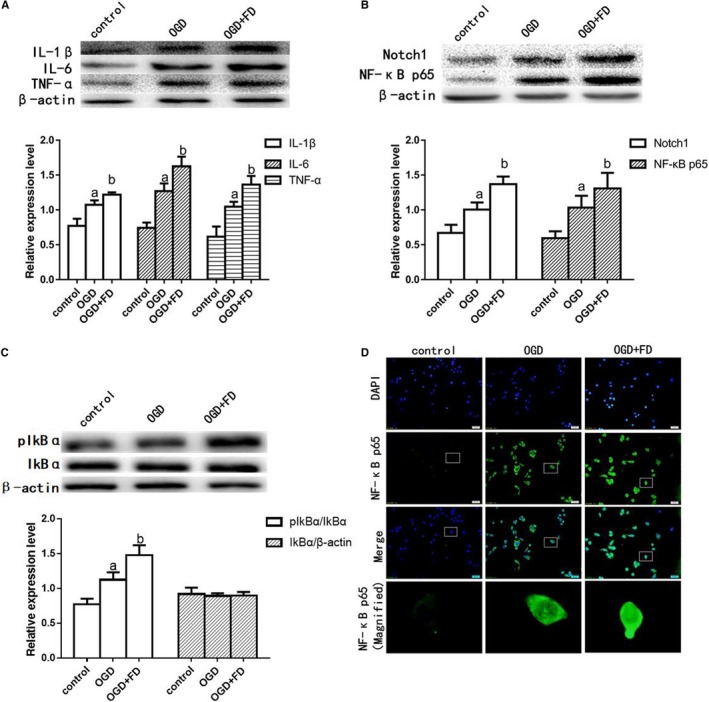
Recent studies revealed that folic acid deficiency (FD) increased the likelihood of stroke and aggravated brain injury after focal cerebral ischaemia. The microglia-mediated inflammatory response plays a crucial role in the complicated pathologies that lead to ischaemic brain injury. However, whether FD is involved in the activation of microglia and the neuroinflammation after experimental stroke and the underlying mechanism is still unclear. The aim of the present study was to assess whether FD modulates the Notch1/nuclear factor kappa B (NF-κB) pathway and enhances microglial immune response in a rat middle cerebral artery occlusion-reperfusion (MCAO) model and oxygen-glucose deprivation (OGD)-treated BV-2 cells. Our results exhibited that FD worsened neuronal cell death and exaggerated microglia activation in the hippocampal CA1, CA3 and Dentate gyrus (DG) subregions after cerebral ischaemia/reperfusion. The hippocampal CA1 region was more sensitive to ischaemic injury and FD treatment. The protein expressions of proinflammatory cytokines such as tumour necrosis factor-α, interleukin-1β and interleukin-6 were also augmented by FD treatment in microglial cells of the post-ischaemic hippocampus and in vitro OGD-stressed microglia model. Moreover, FD not only dramatically enhanced the protein expression levels of Notch1 and NF-κB p65 but also promoted the phosphorylation of pIkBα and the nuclear translocation of NF-κB p65. Blocking of Notch1 with N-[N-(3, 5-difluorophenacetyl)-l-alanyl]-S-phenylglycine t-butyl ester partly attenuated the nuclear translocation of NF-κB p65 and the protein expression of neuroinflammatory cytokines in FD-treated hypoxic BV-2 microglia. These results suggested that Notch1/NF-κB p65 pathway-mediated microglial immune response may be a molecular mechanism underlying cerebral ischaemia-reperfusion injury worsened by FD treatment.
最近的研究表明,叶酸缺乏(FD)增加了中风的可能性,并加重了局灶性脑缺血后的脑损伤。小胶质细胞介导的炎症反应在导致缺血性脑损伤的复杂病理中起着关键作用。然而,FD 是否参与实验性中风后小胶质细胞的激活和神经炎症,以及潜在的机制尚不清楚。本研究旨在评估 FD 是否调节 Notch1/核因子 kappa B(NF-κB)通路,并增强大鼠大脑中动脉闭塞再灌注(MCAO)模型和氧葡萄糖剥夺(OGD)处理的 BV-2 细胞中的小胶质细胞免疫反应。我们的结果表明,FD 加重了脑缺血再灌注后海马 CA1、CA3 和齿状回(DG)亚区神经元细胞死亡和小胶质细胞激活。海马 CA1 区对缺血性损伤和 FD 治疗更为敏感。FD 处理还增加了缺血后海马小胶质细胞和体外 OGD 应激小胶质细胞模型中促炎细胞因子如肿瘤坏死因子-α、白细胞介素-1β和白细胞介素-6 的蛋白表达。此外,FD 不仅显著增强了 Notch1 和 NF-κB p65 的蛋白表达水平,还促进了 pIkBα 的磷酸化和 NF-κB p65 的核转位。用 N-[N-(3,5-二氟苯乙酰基)-l-丙氨酰]-S-苯甘氨酸叔丁酯阻断 Notch1 部分减弱了 FD 处理缺氧 BV-2 小胶质细胞中 NF-κB p65 的核转位和神经炎症细胞因子的蛋白表达。这些结果表明,Notch1/NF-κB p65 通路介导的小胶质细胞免疫反应可能是 FD 治疗加重脑缺血再灌注损伤的分子机制。