Guizhou Biotechnology Institute, Guizhou Academy of Agricultural Sciences, Guiyang, Guizhou, 550006, China.
Guizhou Key Laboratory of Agricultural Biotechnology, Guiyang, Guizhou, 550006, China.
Sci Rep. 2019 May 14;9(1):7397. doi: 10.1038/s41598-019-43901-4.
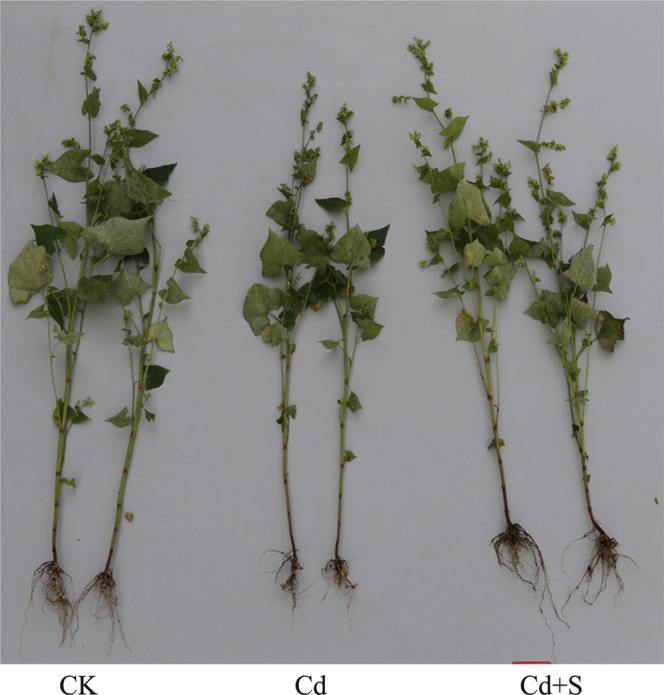
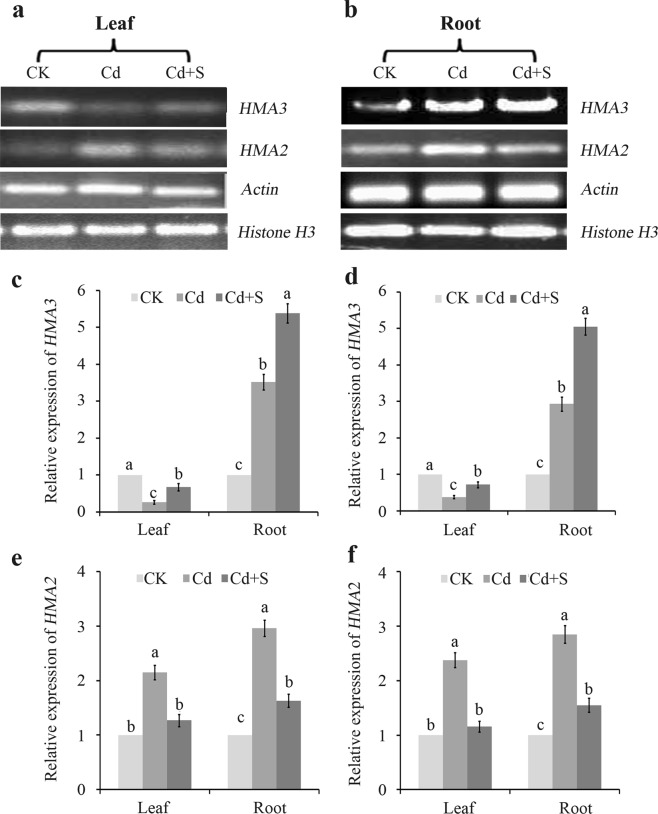
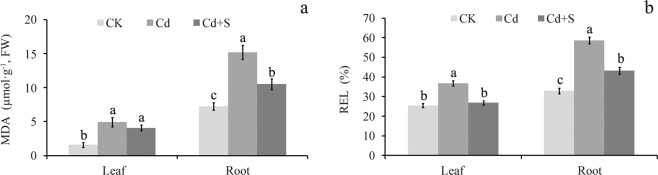
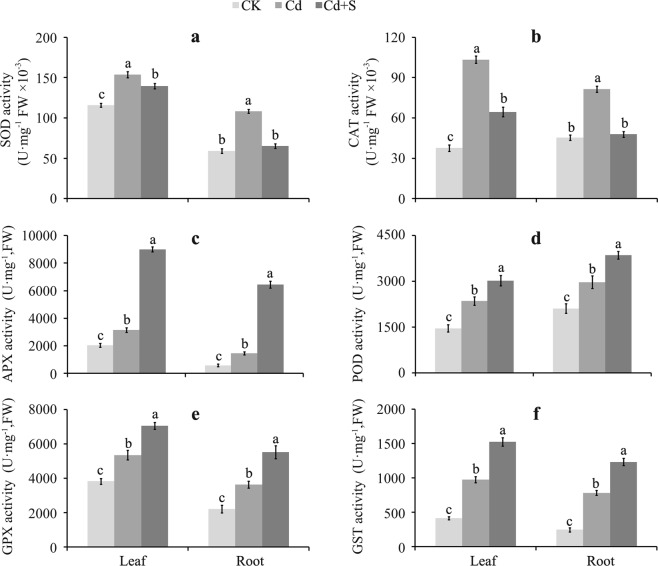
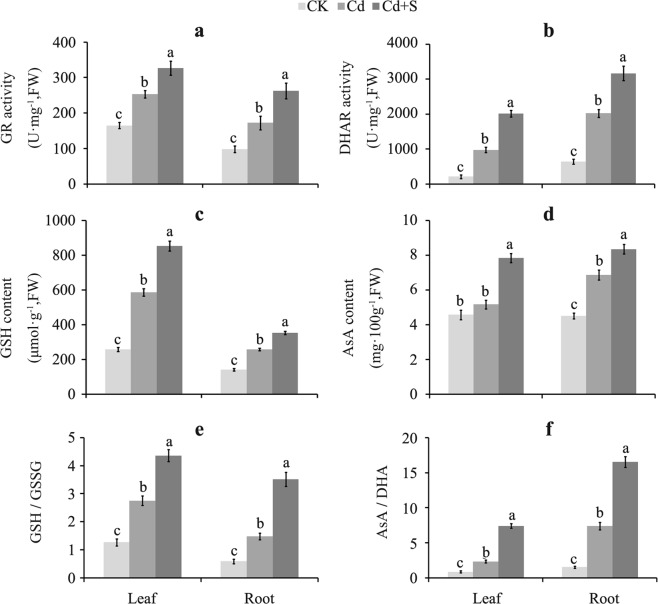
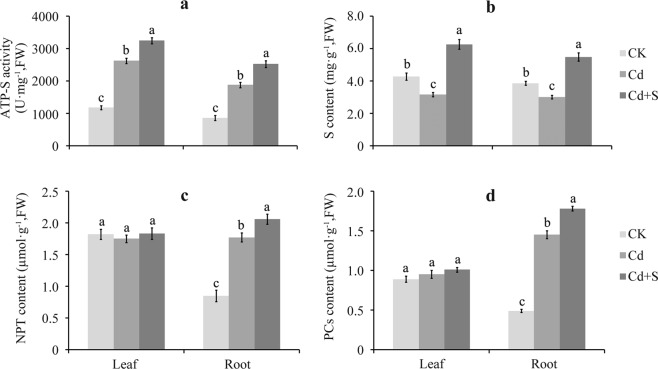
Supplying exogenous sulfur-rich compounds increases the content of glutathione(GSH) and phytochelatins(PCs) in plant tissues, enabling plants to enhance their cellular defense capacity and/or compartmentalize Cadmium(Cd) into vacuoles. However, the mechanism by which surplus S modulates tolerance to Cd stress in different tissues need further investigation. In the present study, we found that supplementing the tartary buckwheat(Fagopyrum tararicum) exposed to Cd with surplus S reversed Cd induced adverse effects, and increased Cd concentrations in roots, but decreased in leaves. Further analysis revealed that exogenous S significantly mitigated Cd-induced oxidative stress with the aids of antioxidant enzymes and agents both in leaves and roots, including peroxidase(POD), ascorbate peroxidase(APX), glutathione peroxidase(GPX), glutathione S-transferase(GST), ascorbic acid(AsA), and GSH, but not superoxide dismutase(SOD) and catalase(CAT). The increased Cd uptake in root vacuoles and decreased translocation in leaves of exogenous S treated plants could be ascribed to the increasing Cd binding on cell walls, chelation and vacuolar sequestration with helps of non-protein thiols(NPT), PCs and heavy metal ATPase 3(FtHMA3) in roots, and inhibiting expression of FtHMA2, a transporter that helps Cd translocation from roots to shoots. Results provide the fundamental information for the application of exogenous S in reversal of heavy metal stress.
供应外源富含硫的化合物会增加植物组织中谷胱甘肽(GSH)和植物螯合肽(PCs)的含量,使植物能够增强其细胞防御能力和/或将镉(Cd)区室化到液泡中。然而,过量的 S 调节不同组织对 Cd 胁迫耐受性的机制还需要进一步研究。在本研究中,我们发现,向暴露于 Cd 的鞑靼荞麦(Fagopyrum tararicum)补充过量的 S 可以逆转 Cd 诱导的不良反应,并增加根中的 Cd 浓度,但减少叶中的 Cd 浓度。进一步分析表明,外源 S 通过抗氧化酶和叶片及根中的抗氧化剂物质显著减轻了 Cd 诱导的氧化应激,包括过氧化物酶(POD)、抗坏血酸过氧化物酶(APX)、谷胱甘肽过氧化物酶(GPX)、谷胱甘肽 S-转移酶(GST)、抗坏血酸(AsA)和 GSH,但不包括超氧化物歧化酶(SOD)和过氧化氢酶(CAT)。外源 S 处理的植物根部增加了 Cd 向液泡的摄取,减少了 Cd 向叶片的转运,这可能归因于 Cd 与细胞壁的结合增加,以及与非蛋白巯基(NPT)、PCs 和重金属 ATPase 3(FtHMA3)螯合和液泡隔离,同时抑制了 FtHMA2 的表达,FtHMA2 是一种有助于 Cd 从根部转运到地上部分的转运蛋白。研究结果为外源 S 在逆转重金属胁迫中的应用提供了基础信息。