Ramezani Tayebe, Nabiuni Mohamad, Baharara Javad, Parivar Kazem, Namvar Farideh
Department of Animal Biology, Faculty of Biological Sciences, Kharazmi University, Tehran, Iran.
Research Center for Animal Development Applied Biology, Islamic Azad University of Mashhad Branch, Mashhad, Iran.
Iran J Pharm Res. 2019 Winter;18(1):222-231.
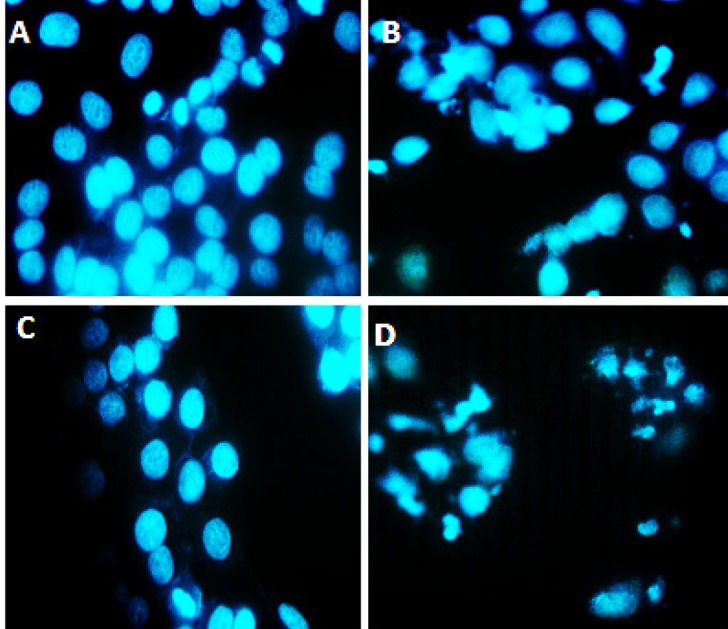
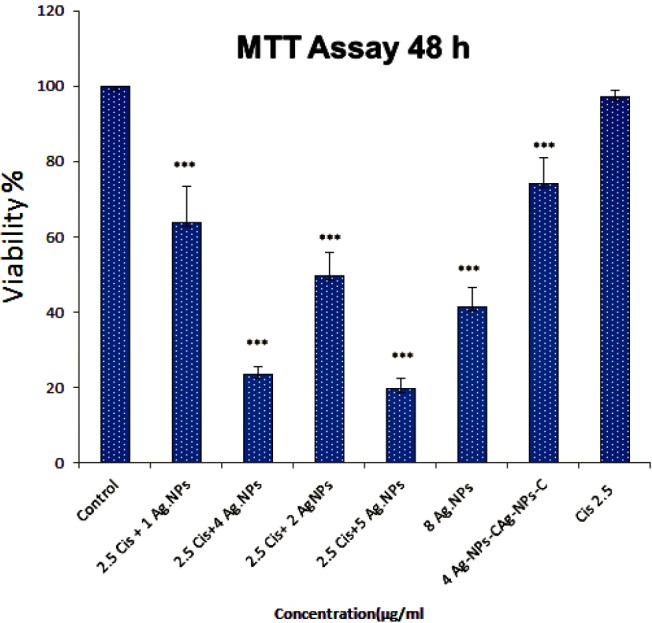
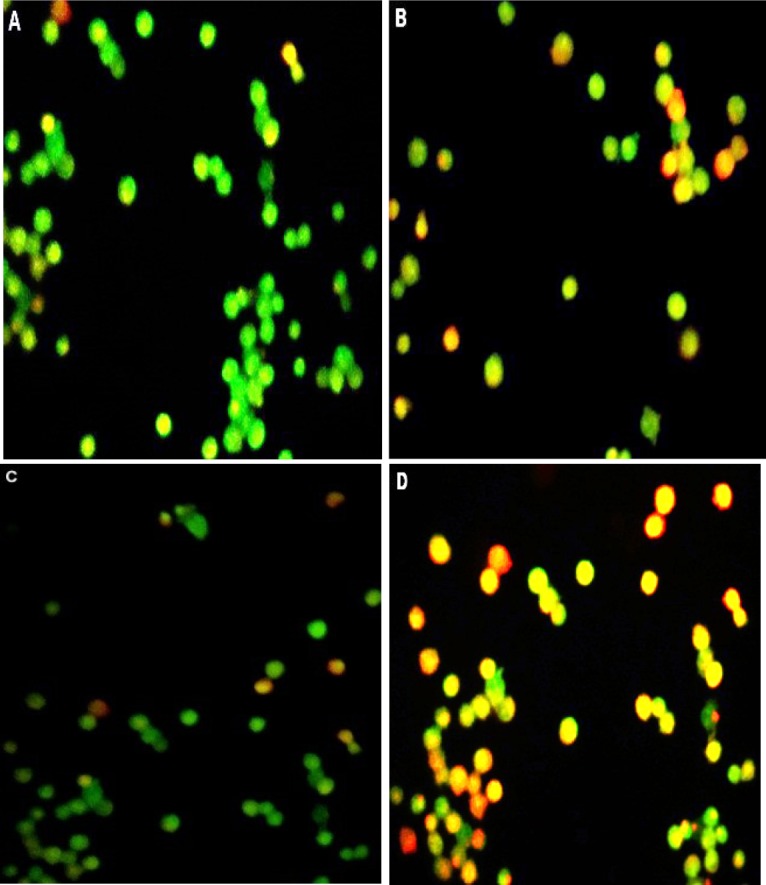
Today, drug resistance is one of the major problems in fight against cancer. Therefore, combination of therapeutic strategies was raised to effectively improve disease prognosis. In this regard, silver nanoparticles (AgNPs) are considered significant due to their anticancer properties. This study aimed to return sensitivity to cisplatin to A2780 cisplatin-resistance cell lines in the presence of biogenic synthesis curcumin-coated silver nanoparticles (cAgNPs). Synergic cellular effects of cAgNPs and cisplatin on ovarian carcinoma 2780 resistant to cisplatin cells were assessed using MTT assay, Acridine orange (AO)/propidium iodide (PI), DAPI staining, Annexin V/PI assay, and caspase 3/9 activation assay. Finally, expression of p53 and MMP-9 genes were evaluated using semi-quantitative reverse transcription polymerase chain reaction (RT-PCR). According to the results, 8 µg/mL and 62 µg/mL of cAgNPs and cisplatin led to 50% cell death in 48 h, respectively. Therefore, we combined non-toxic concentration of nanoparticles (1-5 µg/mL) with cisplatin (2.5 µg/mL). Decreased proliferation rate was about 50% for synergic use of cisplatin (2.5 µg/mL) and cAgNPs (2 µg/mL). According to the results, cell death induction significantly increased by AO/PI, DAPI staining and Annexin V/PI assay in the combined group. Moreover, activity of caspase 3/9 significantly increased in the mentioned group. The combined use of cAgNPs and cisplatin resulted in upregulated expression of p53 gene and downregulated expression of MPP-9 gene. As observed in this study, a combination of cAgNPs and cisplatin increased the efficiency of apoptosis induction in A2780 cells, compared to the independent use of cisplatin or cAgNPs.
如今,耐药性是抗癌斗争中的主要问题之一。因此,人们提出联合治疗策略以有效改善疾病预后。在这方面,银纳米颗粒(AgNPs)因其抗癌特性而被认为具有重要意义。本研究旨在探讨在生物合成的姜黄素包被银纳米颗粒(cAgNPs)存在的情况下,使A2780顺铂耐药细胞系恢复对顺铂的敏感性。使用MTT法、吖啶橙(AO)/碘化丙啶(PI)、DAPI染色、膜联蛋白V/PI检测和半胱天冬酶3/9激活检测,评估cAgNPs和顺铂对顺铂耐药的卵巢癌2780细胞的协同细胞效应。最后,使用半定量逆转录聚合酶链反应(RT-PCR)评估p53和MMP-9基因的表达。结果显示,8 μg/mL的cAgNPs和62 μg/mL的顺铂分别在48小时内导致50%的细胞死亡。因此,我们将无毒浓度的纳米颗粒(1-5 μg/mL)与顺铂(2.5 μg/mL)联合使用。顺铂(2.5 μg/mL)和cAgNPs(2 μg/mL)联合使用时,增殖率降低约50%。结果表明,联合组通过AO/PI、DAPI染色和膜联蛋白V/PI检测,细胞死亡诱导显著增加。此外,上述组中半胱天冬酶3/9的活性显著增加。cAgNPs和顺铂联合使用导致p53基因表达上调,MPP-9基因表达下调。如本研究所示,与单独使用顺铂或cAgNPs相比,cAgNPs和顺铂联合使用可提高A2780细胞凋亡诱导效率。