Institute for Cardiovascular Science & Department of Cardiovascular Surgery, First Affiliated Hospital of Soochow University, Suzhou, Jiangsu 215123, China.
Department of Cardiology, Shanghai Changzheng Hospital, Second Military Medical University, Shanghai 200003, China.
Oxid Med Cell Longev. 2019 Apr 8;2019:9739258. doi: 10.1155/2019/9739258. eCollection 2019.
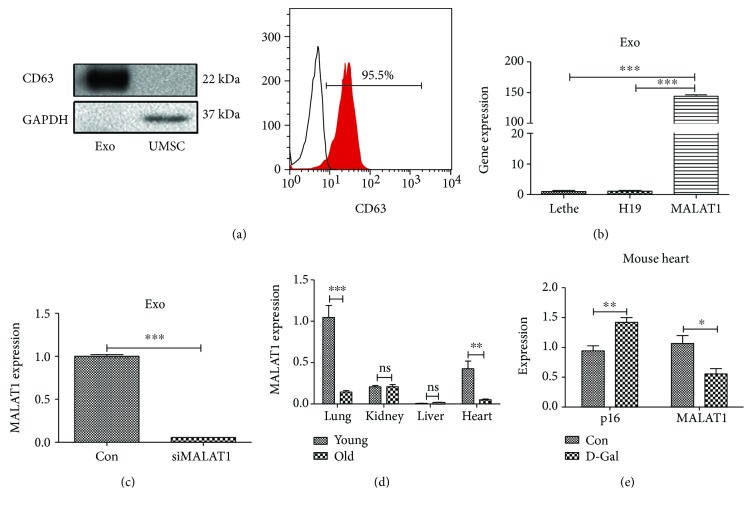
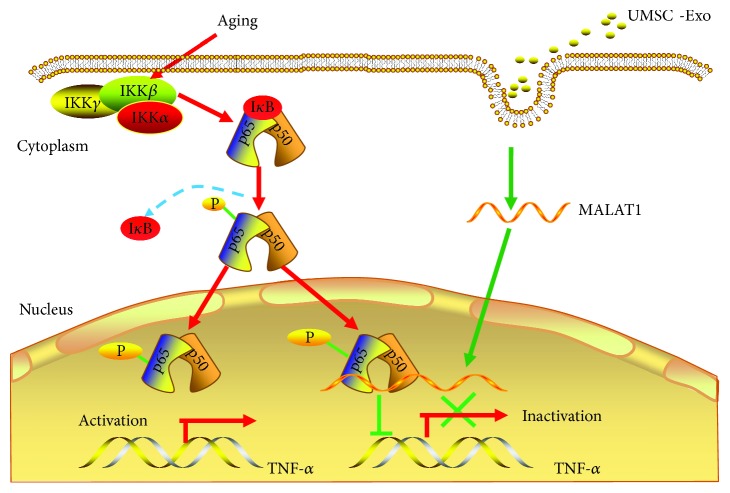
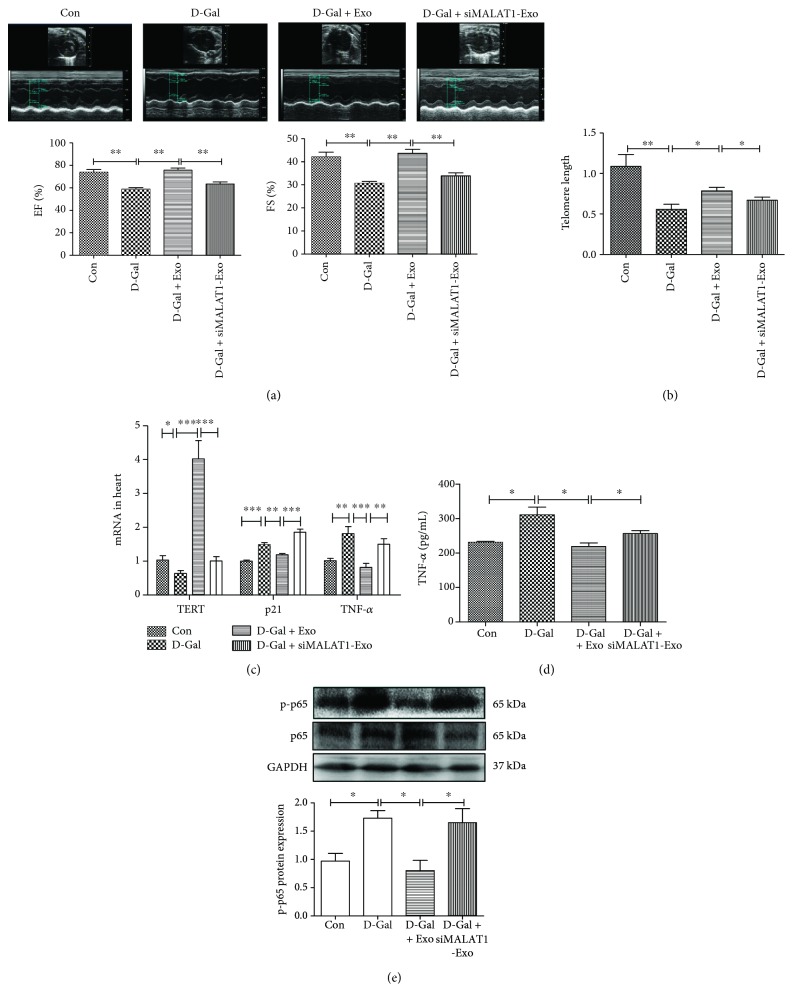
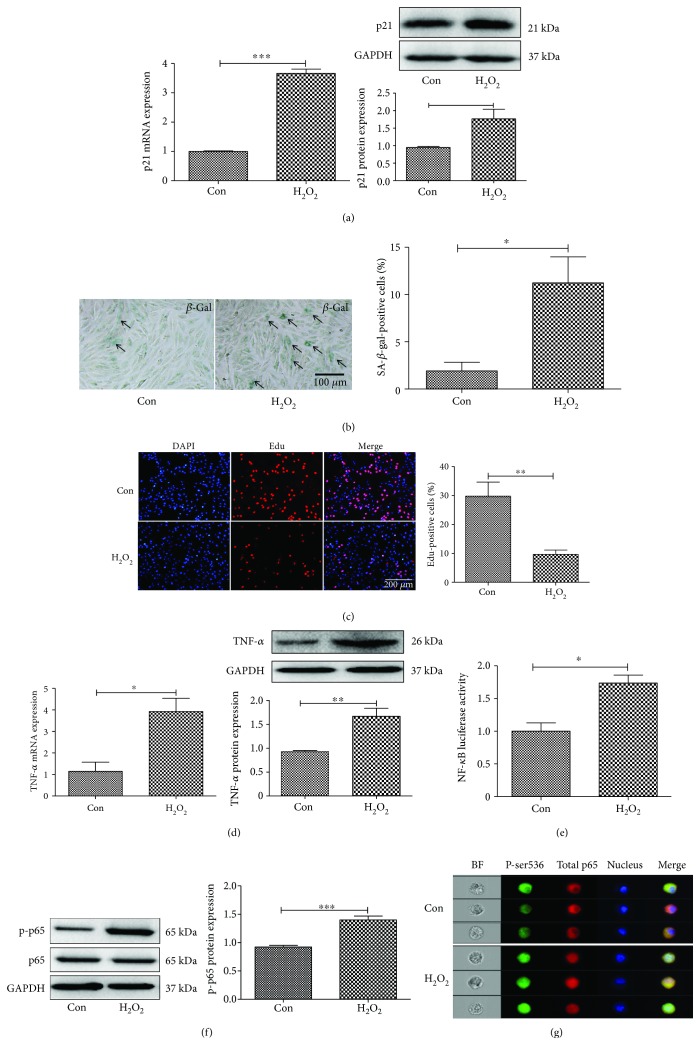
Aging is a risk factor for cardiovascular disease, and there is no effective therapeutic approach to alleviate this condition. NF-B and TNF- have been implicated in the activation of the aging process, but the signaling molecules responsible for the inactivation of NF-B and TNF- remain unknown. Exosomes have been reported to improve heart functions by releasing miRNA. Recent studies suggest that lncRNAs are more tissue-specific and developmental stage-specific compared to miRNA. However, the role of lncRNA in exosome-mediated cardiac repair has not been explored. In the present study, we focused on metastasis-associated lung adenocarcinoma transcript 1 (MALAT1), which is an lncRNA associated with cell senescence. We discovered that human umbilical cord mesenchymal stem cell- (UMSC-) derived exosomes prevent aging-induced cardiac dysfunction. Silencer RNA against lncRNA MALAT1 blocked the beneficial effects of exosomes. In summary, we discovered that UMSC-derived exosomes prevent aging-induced cardiac dysfunction by releasing novel lncRNA MALAT1, which in turn inhibits the NF-B/TNF- signaling pathway. These findings will lead to the development of therapies that delay aging and progression of age-related diseases.
衰老是心血管疾病的一个风险因素,目前尚无有效的治疗方法来缓解这种情况。NF-B 和 TNF- 已被认为与衰老过程的激活有关,但负责 NF-B 和 TNF- 失活的信号分子仍不清楚。外泌体已被报道通过释放 miRNA 来改善心脏功能。最近的研究表明,与 miRNA 相比,lncRNA 更具有组织特异性和发育阶段特异性。然而,lncRNA 在外泌体介导的心脏修复中的作用尚未得到探索。在本研究中,我们专注于转移相关肺腺癌转录本 1(MALAT1),它是一种与细胞衰老相关的 lncRNA。我们发现,人脐带间充质干细胞(UMSC)衍生的外泌体可预防衰老引起的心脏功能障碍。针对 lncRNA MALAT1 的沉默 RNA 阻断了外泌体的有益作用。总之,我们发现 UMSC 衍生的外泌体通过释放新型 lncRNA MALAT1 来预防衰老引起的心脏功能障碍,进而抑制 NF-B/TNF- 信号通路。这些发现将导致开发延迟衰老和进展与年龄相关疾病的疗法。