Center for Global Health and Infectious Disease Research, Department of Global Health, University of South Florida, Tampa, Florida, USA.
Center for Global Health and Diseases, Case Western Reserve University, Cleveland, Ohio, USA.
mSphere. 2019 May 15;4(3):e00194-19. doi: 10.1128/mSphere.00194-19.
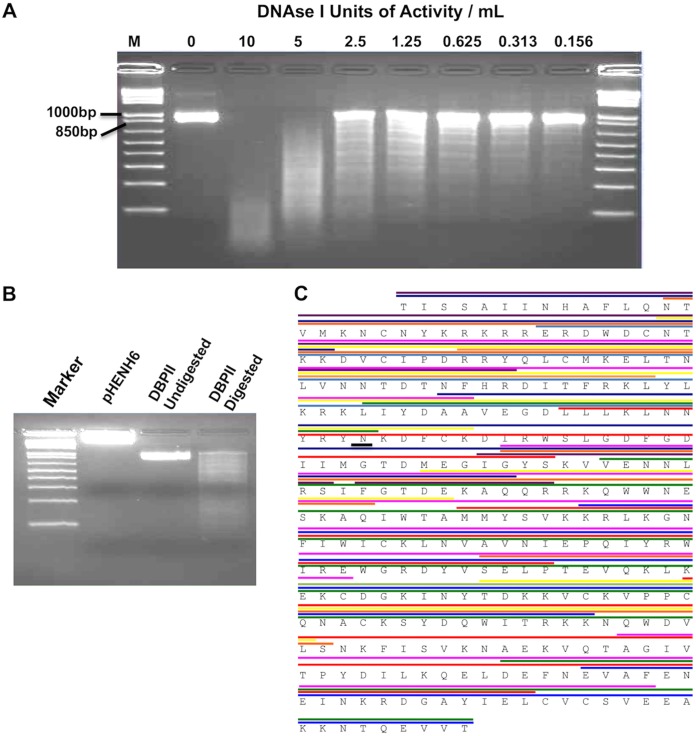
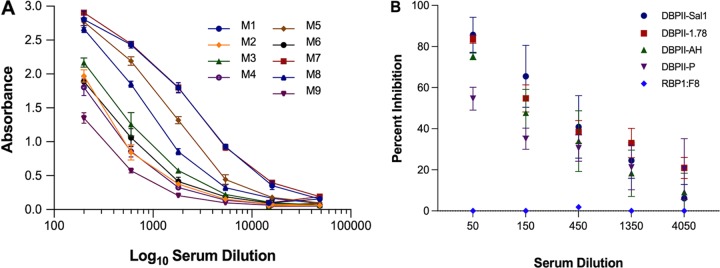
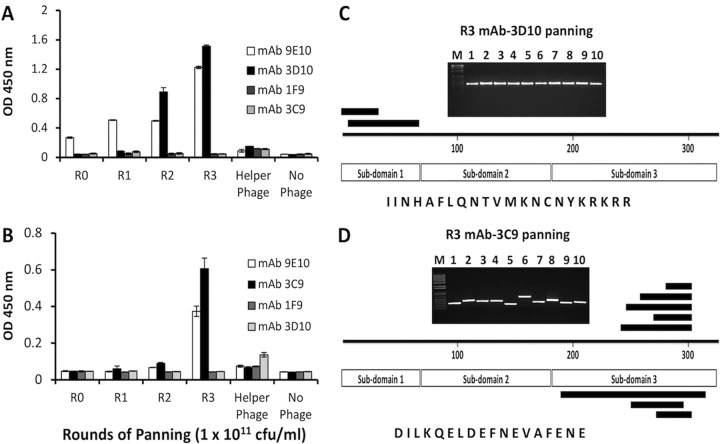
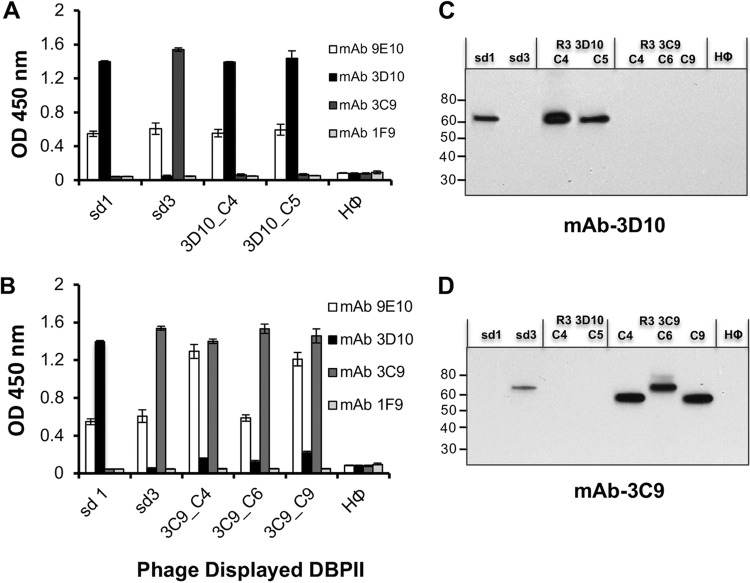
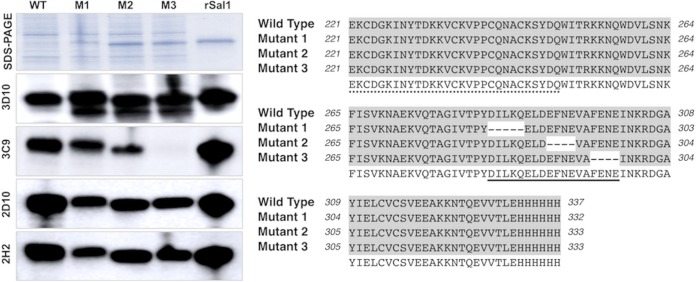
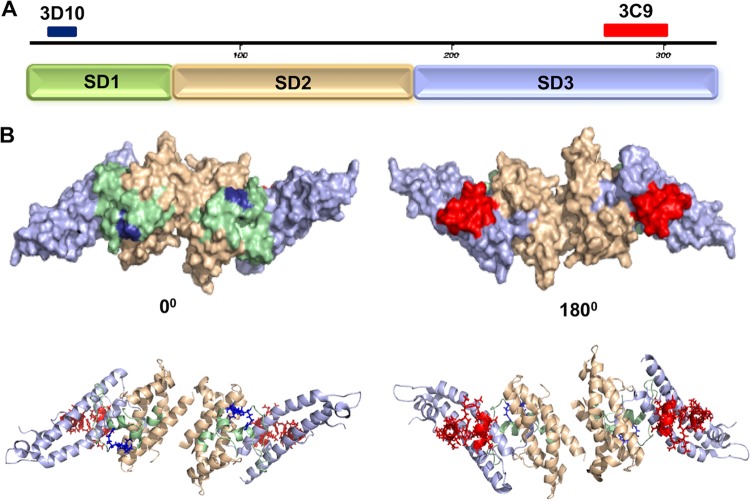
The Duffy binding protein region II (DBPII) is a vital ligand for the parasite's invasion of reticulocytes, thereby making this molecule an attractive vaccine candidate against vivax malaria. However, strain-specific immunity due to DBPII allelic variation in Bc epitopes may complicate vaccine efficacy, suggesting that an effective DBPII vaccine needs to target conserved epitopes that are potential targets of strain-transcending neutralizing immunity. The minimal epitopes reactive with functionally inhibitory anti-DBPII monoclonal antibody (MAb) 3C9 and noninhibitory anti-DBPII MAb 3D10 were mapped using phage display expression libraries, since previous attempts to deduce the 3C9 epitope by cocrystallographic methods failed. Inhibitory MAb 3C9 binds to a conserved conformation-dependent epitope in subdomain 3, while noninhibitory MAb 3D10 binds to a linear epitope in subdomain 1 of DBPII, consistent with previous studies. Immunogenicity studies using synthetic linear peptides of the minimal epitopes determined that the 3C9 epitope, but not the 3D10 epitope, could induce functionally inhibitory anti-DBPII antibodies. Therefore, the highly conserved binding-inhibitory 3C9 epitope offers the potential as a component in a broadly inhibitory, strain-transcending DBP subunit vaccine. Vivax malaria is the second leading cause of malaria worldwide and the major cause of non-African malaria. Unfortunately, efforts to develop antimalarial vaccines specifically targeting have been largely neglected, and few candidates have progressed into clinical trials. The Duffy binding protein is considered a leading blood-stage vaccine candidate because this ligand's recognition of the Duffy blood group reticulocyte surface receptor is considered essential for infection. This study identifies a new target epitope on the ligand's surface that may serve as the target of vaccine-induced binding-inhibitory antibody (BIAb). Understanding the potential targets of vaccine protection will be important for development of an effective vaccine.
对疟原虫入侵网织红细胞而言,达菲结合蛋白区域 II(DBPII)是至关重要的配体,因此该分子成为治疗间日疟的一种有吸引力的候选疫苗。然而,由于 Bc 表位的 DBPII 等位基因变异导致的菌株特异性免疫可能会使疫苗的效果复杂化,这表明有效的 DBPII 疫苗需要针对保守表位,这些表位可能是具有菌株跨越中和免疫的潜在靶点。使用噬菌体展示表达文库来定位与具有功能抑制性的抗 DBPII 单克隆抗体(MAb)3C9 和非抑制性抗 DBPII MAb 3D10 反应的最小表位,因为以前通过共晶方法推断 3C9 表位的尝试失败了。抑制性 MAb 3C9 结合于亚结构域 3 中的一个保守构象依赖性表位,而非抑制性 MAb 3D10 结合于 DBPII 的亚结构域 1 中的线性表位,这与以前的研究一致。使用最小表位的合成线性肽进行免疫原性研究表明,3C9 表位而不是 3D10 表位可以诱导具有功能抑制性的抗 DBPII 抗体。因此,高度保守的结合抑制性 3C9 表位具有作为广泛抑制性、跨菌株 DBP 亚单位疫苗成分的潜力。间日疟是全球第二大疟疾病因,也是非非洲疟疾的主要病因。不幸的是,针对的抗疟疫苗的开发工作在很大程度上被忽视了,很少有候选疫苗进入临床试验。达菲结合蛋白被认为是一种主要的血期疫苗候选物,因为该配体对 Duffy 血型网织红细胞表面受体的识别被认为是感染所必需的。本研究确定了配体表面上的一个新的靶表位,该表位可能成为疫苗诱导的结合抑制性抗体(BIAb)的靶标。了解疫苗保护的潜在靶点对于开发有效的疫苗非常重要。