Department of Biomaterials, Max Planck Institute of Colloids and Interfaces, 14424, Potsdam, Germany.
Center for Computational and Theoretical Biology, Universität Würzburg, Campus Hubland Nord 32, 97074, Würzburg, Germany.
Curr Osteoporos Rep. 2019 Aug;17(4):186-194. doi: 10.1007/s11914-019-00515-z.
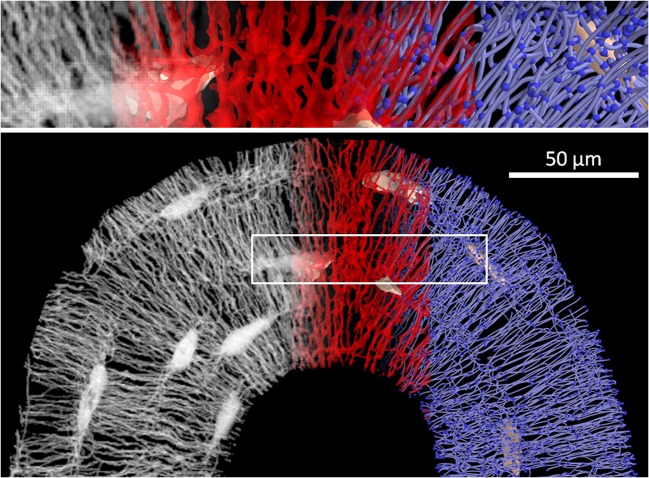
Osteocytes are the most abundant bone cells. They are completely encased in mineralized tissue, sitting inside lacunae that are connected by a multitude of canaliculi. In recent years, the osteocyte network has been shown to fulfill endocrine functions and to communicate with a number of other organs. This review addresses emerging knowledge on the connectome of the lacunocanalicular network in different types of bone tissue.
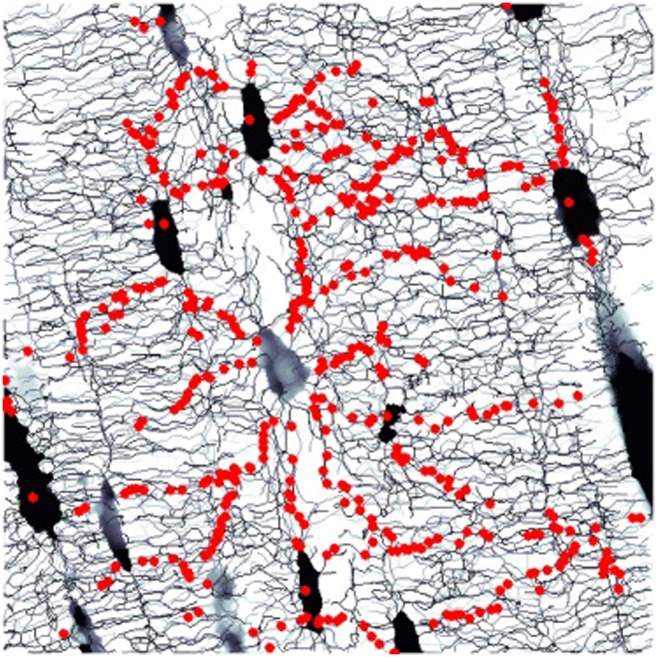
Recent advances in three-dimensional imaging technology started to reveal parameters that are well known from general theory to characterize the function of networks, such as network density, degree of nodes, or shortest path length through the network. The connectome of the lacunocanalicular network differs in some aspects between lamellar and woven bone and seems to change with age. More research is needed to relate network structure to function, such as intercellular transport or communication and its role in mechanosensation, as well as to understand the effect of diseases.
成骨细胞是最丰富的骨细胞。它们完全被矿化组织包裹,位于陷窝内,陷窝通过许多小管相互连通。近年来,成骨细胞网络已被证明具有内分泌功能,并与许多其他器官进行通讯。本综述介绍了不同类型骨组织中陷窝小管网络连接组的最新知识。
三维成像技术的最新进展开始揭示出一些参数,这些参数从一般理论就已经知道,可用于表征网络的功能,例如网络密度、节点度数或通过网络的最短路径长度。板层骨和编织骨的陷窝小管网络连接组在某些方面存在差异,并且似乎随年龄而变化。需要更多的研究将网络结构与功能相关联,例如细胞间运输或通讯及其在机械感觉中的作用,以及了解疾病的影响。